How do you grow succulents? Learn these few little tips, and every pot will be plump and beautiful
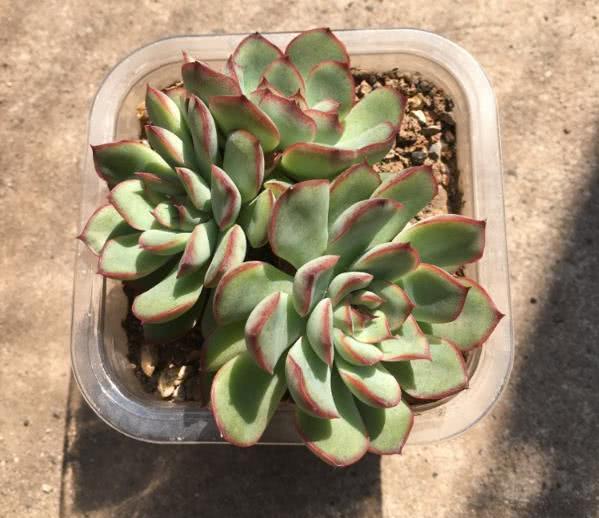
Succulents in the Crassulaceae family are mostly propagated by division and cuttings, and mainly include varieties such as Kalanchoe, Orostachys, and Rhodiola. When growing this type of succulent, note that the season for division and cuttings is mostly winter, and pay attention to keeping the temperature at around 15 degrees, controlling soil moisture, watering sparingly but not letting them go short of water. Aizoaceae: this type of succulent is also a sun-loving succulent and grows in clusters, that is, clustered colonies. Because it is clustered, it easily becomes crowded, and with insufficient light it can rot, so attention must be paid to thinning density, as well as to sensitivity to high temperatures in summer and heat dissipation.
There are many little tips for growing flowers and succulents at home. Break up crushed bricks and tiles to a diameter of about 2 to 5 mm. When planting, place the smaller powdery pieces near the root system, and the larger granules at the bottom of the pot or away from the roots. Crushed bricks and tiles have many gaps and strong adsorption capacity, and can quickly absorb the water and fertilizer applied, playing a role in retaining water and fertilizer. Second, because bricks and tiles have been fired, their texture is hard yet not dense, and they have the characteristic of not dissolving in water. The many tiny gaps inside can be retained for a long time, which helps the air in the soil circulate.
When potting or repotting flowers, first stand several hollow tubes in the pot (bamboo tubes, plastic tubes, iron tubes are all fine), then fill soil around them and press it firm. Next, pour coarse sand into the tubes, with the top level with the soil surface. Finally, gently pull out the hollow tubes, and sand columns form in the pot. Later, when watering, the water only spreads outward through the sand columns, thus preventing the soil from compacting. Sometimes little ants are also very active. If you smear a little sesame oil on the hole at the bottom of the flowerpot, you can prevent ants from crawling in.
In September, most succulents enter the second stage of their growth period, so once the potting soil dries out, they should be watered thoroughly. At this time, summer-growing types can have shading and ventilation reduced, but topdressing can be added. As for winter-growing types, ventilation and watering should still be maintained. When the autumn rainy season arrives, some varieties that are afraid of moisture and varieties whose places of origin are tropical regions, once they show stalled growth, should be kept from being directly rained on. In September, sowing, grafting, and cuttings are all very suitable. Varieties that bloom in winter can be repotted at this time. The difference between repotting at this time and in spring is that there is no need to prune the root system of the plant to a large extent.
The sunlight in late January is slightly stronger than in December. At this time, winter-growing varieties grow very vigorously, so do not be reluctant to water. Pay special attention that when thawing the plants, it is best to place them in a dark place to let them thaw slowly; this is better than placing them in sunlight. After late January, if the greenhouse encounters high temperatures, scorching of seedlings often occurs. For Lithops and Conophytum, they may turn yellow or even stop growing, so on sunny days the greenhouse vents or doors should be opened to maintain air circulation.
Regarding the issue of root trimming when potting succulents, generally speaking, cut off all the dried and aged fibrous roots, leaving only the robust main root, usually leaving a length of two cm. After trimming the roots, place them in a cool, ventilated place to dry for one to two days; drying for two extra days is also fine. The purpose is to let the wounds heal so as to avoid infection after planting. Many growers like to place the trimmed plants on the soil surface and wait for new roots to emerge before planting them, which is even safer. After root trimming is finished, they cannot be planted immediately, because when the fibrous roots are stripped off, wounds may very likely be caused to the plant, and planting immediately will lead to infection and root rot. Placing the plants in a cool, ventilated place to dry for at least a week before planting is the safest method, especially for plants with fleshy roots, where the drying time can be extended further. For plants grown from stem cuttings, also be sure to dry the wounds; their chance of infection is too high.
This is a gathering place for succulent lovers, sharing succulent care tips. Welcome to follow and exchange ideas.