Quick, check your kitchen. This thing is highly toxic. If you find it, throw it away right away.
Star anise is also called "dàliào",
and it is a common cooking seasoning in our daily lives.
But the commonly used star anise
actually has fake versions too,
and they are highly toxic!
"Fake star anise" - Illicium anisatum
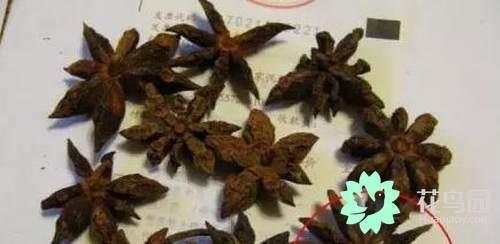
Illicium anisatum, also known as fake star anise or wild star anise, looks similar to star anise. It is highly toxic. If eaten by mistake, it can cause dizziness, nausea and vomiting; eating a large amount can cause symptoms similar to epilepsy, such as limb convulsions and foaming at the mouth, and in severe cases it can cause heart failure and death.
Star anise can sell for about 40 yuan per kilogram, while Illicium anisatum sells for only about 15 yuan per kilogram. As a result, some profit-obsessed manufacturers and vendors mix Illicium anisatum into star anise and sell it.
How to tell real star anise from fake star anise
1. Identify by shape
Star anise is usually plump, with the fruit exposed, and has 7-10 rounded blunt points, generally 8 points; the fruit of fake star anise generally does not protrude, the segments do not open, and it has 11-13 sharply pointed points, with the tip of each point curving upward, like an eagle's beak.
2. Identify by color
Real star anise is brownish red and glossy; fake star anise is lighter in color, with an earthy yellow tone.
3. Identify by taste
Real star anise has a strong fragrance and tastes pungent and sweet; fake star anise has the smell of floral water or camphor, and when licked, it tastes sour and gives a numbing sensation on the tongue.
Recognize "fake star anise" clearly!
The ones below are all toxic Illicium anisatum
↓↓↓
Be sure to tell your family!
If you come across this kind of "dàliào" on the market,
absolutely do not buy it!!!
Toxic plants that look extremely similar to food
Poison hemlock: leaves shaped like celery
Poison hemlock, with leaves shaped like celery leaves, is toxic in the whole plant, and the flowers are the most toxic. Once eaten by mistake, it can cause nausea, vomiting, cold hands and feet, and numbness of the limbs, and in severe cases can lead to death. When digging wild vegetables in spring, be sure to stay away from plants that look similar to celery.
Cocklebur: seedlings look like soybean sprouts
It grows in fields, roadsides and low-lying land. In March and April, small seedlings appear, and the seedlings look like soybean sprouts, while in sunny places they look like sunflower seedlings; when mature, it becomes thick and large, with heart-shaped leaves and serrated edges, and after autumn it produces seeds with hard spines. The whole plant is toxic, and the young buds and seeds are the most toxic. Eating it can cause death.
Arisaema: the root looks like ginseng
Arisaema is commonly known as big-head ginseng and can be used as medicine. However, it must not be eaten in excess. For medicinal use, adults generally should not exceed 1.5-4.5 grams, and more than 10 grams will cause poisoning. Because children weigh less, the dosage is half that of adults, and eating more than 5 grams will cause poisoning symptoms.