Detailed Explanation of the Key Cultivation Techniques for Coral Tree
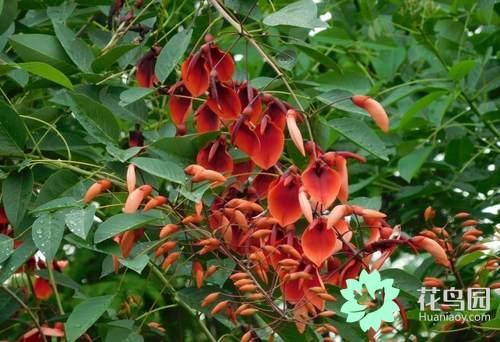
Coral Tree is so named because its flowers resemble a rooster's comb. It is a deciduous shrub or small tree. In China, Coral Tree flowers from about April to July; the blooms are red and the flowering period is long, so it is suitable for courtyard viewing and is also used for central road landscaping. Its trunk can reach 50 cm in diameter, and the tree grows about 5-8 m tall, and can even grow to around 10 m.
I. Growth Habits
It prefers light and also tolerates mild shade; it likes high temperatures but has fairly strong cold tolerance. It is highly adaptable, naturally vigorous, drought-tolerant and tolerant of poor soil, and can also resist salinity and alkalinity, but it is not tolerant of waterlogging. It is not demanding about soil, but grows best in well-drained fertile loam or sandy loam. When potted in the north, the temperature should be kept above 4°C in winter. It is not particular about soil when cultivated, and can grow rapidly whether planted in full sun or partial shade; the tree form is relatively small, making it suitable as a street tree or background tree.
II. Water and Fertilizer Management
Before planting in spring, sufficient base fertilizer should be applied first, mainly organic fertilizer. After planting, replenish water promptly. After the plants establish, apply organic fertilizer once each season and water with 00-fold diluted urea solution once a month to promote the growth of branches and leaves. After the plant matures, apply organic fertilizer or compound fertilizer once a year to ensure normal growth. The trunk naturally branches low; in landscaping, the trunk can be cultivated as a small tree by setting the trunk height and removing buds.
III. Propagation Methods
1. Seed propagation: it is best to sow the seeds as soon as they are collected. This is done in early summer. Soak the seeds appropriately before sowing, then sow them directly in the seedbed. The seedbed soil should preferably be loose sandy loam. After sowing, cover with soil to about twice the height of the seeds, and keep moist by spraying water. Seedlings emerge in about 10 days, and after 1 month, when the seedlings grow to 20 cm, transplant them.
2. Cutting propagation: cut semi-lignified branches about 20-40 cm long, insert them into a sand bed or loose seedbed, and keep them moist. In about 15 days they will take root and sprout, and in 1-2 months they can become seedlings. In the coastal areas of South China, long-branch cuttings are commonly used, and they can take root after 1-2 months.
IV. Main Value
Coral Tree has strong adaptability, a graceful tree form, a vigorous and rustic trunk, abundant and brilliant flowers, a unique flower shape, and a long flowering period, giving it high ornamental value. Planted in rows on lawns, it looks bright and eye-catching, and it is an excellent tree species for greening parks, squares, courtyards, and roads.
V. Disease Control
Bark rot is a fatal disease, often occurring together with bark beetles and damaging the bark of the trunk, large branches, root crown, and other parts of the Coral Tree. In the late stage of the disease, the bark in the affected area dries up, and the phloem of the dead bark separates from the xylem, making the bark very easy to peel off. When the diseased area encircles the trunk or branch for one full circle, the entire part above it dies.
For the Coral Tree gall wasp, first remove the rotten bark, spray the canopy and trunk with medication, and apply pesticide spray to the trunk and wrap it. Next, spray and irrigate the soil around the trunk with medication for thorough disinfection. Finally, organize personnel to comprehensively prune the canopies and young branches of Coral Trees with deformed and swollen branches and leaves, and centrally destroy the pruned branches and leaves.