After repotting a mature Clivia in July, how should you fertilize so it blooms in spring?
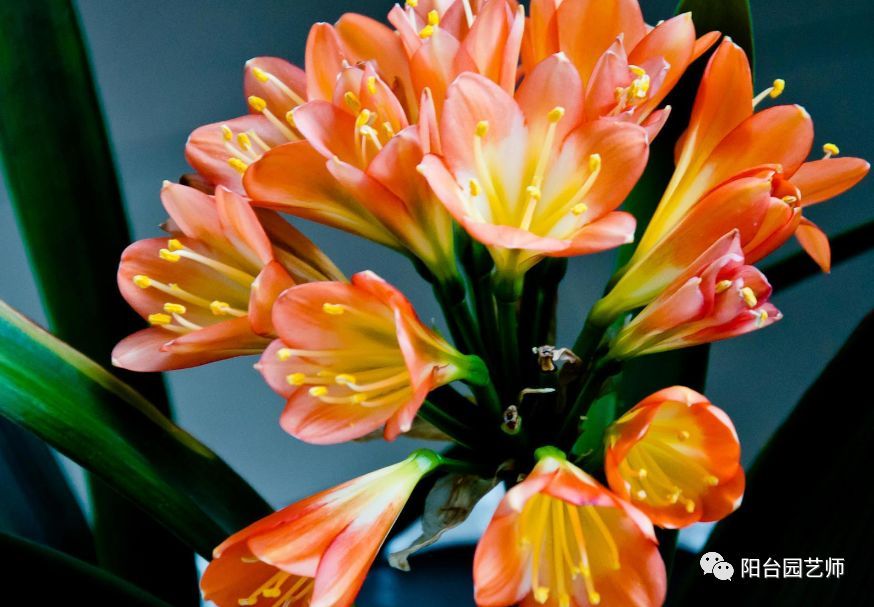
Thanks for following Balcony Gardener, where I share more knowledge and experience about growing flowers.
After a mature Clivia is repotted in pine needle soil in July, if it is cared for well, it will not need repotting again for one or even two years, and within two years there is no need to change the soil. Frequent repotting is not good for Clivia. Repotting is not something you do whenever you feel like it; generally, repotting is only done when a few specific reasons arise.
Most of the soil used for Clivia is leaf mold, pine needle soil and similar breathable, well-draining potting soil. When these soils are used for too long, their water permeability and air permeability become very poor, and the organic matter decreases steadily during use. The growth of the Clivia is then restricted, affecting the roots' absorption of water and nutrients.
During long-term use, potting soil also breeds bacteria and insect eggs, and the longer the time, the more they accumulate, greatly affecting the development and growth of the root system. During their development, some small insects also gnaw on the roots of the Clivia. This situation is generally caused by unhygienic fertilizing; if proper flower fertilizer is used, this generally does not happen, whereas using homemade fertilizers makes this situation more likely to occur.
As the Clivia grows, its root system gradually takes over the entire pot, and this usually takes three years to fill up. Clivia under normal care is generally repotted once every two years, checking the root system and pruning some damaged and rotten roots to avoid bacterial infection and eliminate some diseases that may be triggered.
As the Clivia grows larger, each repotting should go up one size. Only a sufficient root zone can support a sufficiently large Clivia plant; a pot that is too small will restrict the growth of the Clivia.
If you want your Clivia to bloom in spring, it still comes down to those two conditions. The first is phosphorus and potassium fertilizer: apply phosphorus and potassium fertilizer two months before the flowering period, water-soluble fertilizer once every half month, and compound fertilizer once a month. Do not just spray, because the absorption rate of spraying is too low. Then you need an environment with a temperature difference of more than 10 degrees, for example placing it outdoors in spring. Blooming is then very simple, and there is no need to be so nervous.
Friends who like growing flowers, hit follow, and if you have questions you can leave a comment below. Thank you, everyone!