Why can the small country of the Netherlands become the world's second-largest vegetable exporter?
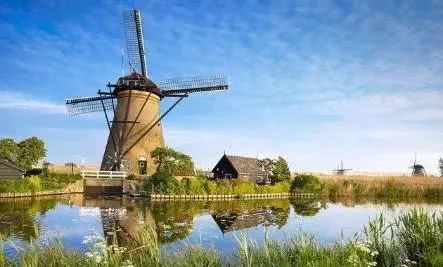
When I think of the Netherlands, the first thing that comes to mind is tulips. Especially when buying flower bulbs such as tulips, lilies, and hyacinths, sellers always note that these are flower bulbs imported from the Netherlands. It seems that the Netherlands is not only strong in vegetable cultivation, but its flower cultivation industry is also remarkable.
Why is agriculture in the Netherlands so developed?
First, let us look at the geographical location of the Netherlands. As already mentioned regarding the Netherlands' area, it is only two and a half times the size of Beijing, with a population of more than 17 million. This is actually already a very large population for the Netherlands, and the population density is very high. This is actually quite similar to the situation in our country, where there are many people and little land.
The climate of the Netherlands is a temperate maritime climate, the same as that of New Zealand. This kind of climate is warm in winter and cool in summer, with temperatures above zero throughout the year, and it is humid and rainy. In fact, these climate characteristics are not suitable for the growth of grain crops, but they are favorable for cultivation industries such as vegetables and flowers that require less light and heat. This fits the Dutch vegetable cultivation industry very well.
Reasons why the Dutch vegetable cultivation industry is developed
1. High-tech vegetable growing
In our country, many vegetable cultivation industries are generally rarely associated with high technology. Our country's vegetable cultivation industry still mainly relies on extensive agriculture based on human labor, and it is labor-intensive. But countries with relatively developed agricultural technology, such as Japan, Israel, and the Netherlands, apply high technology to agricultural cultivation and are countries that treat agriculture as scientific research. The Netherlands in particular applies high technology to agricultural cultivation.
The climate characteristics of the Netherlands were analyzed above, and it can be seen that the Netherlands has very insufficient sunlight and limited land conditions, which is very unfavorable for cultivation. However, in order to develop agriculture better, the Netherlands began to develop greenhouse cultivation. Dutch greenhouses are not mainly plastic tunnels like those in our country; they are mainly glass greenhouses. The interior of the greenhouses fully uses automated management, making agricultural cultivation more efficient.
2. Strong intellectual support
Wageningen University & Research is recognized worldwide as the capital of agricultural research. Every year it sends a large number of talents to Dutch agriculture, continuously provides development ideas for agricultural innovation, and pushes the development of Dutch agriculture to the world's top level.
3. An agricultural philosophy of harmony between humans and nature
Although Dutch agriculture is highly technological, in terms of cultivation philosophy the Netherlands greatly advocates ecology and nature. This also makes the quality of the Dutch vegetable cultivation industry higher and more in line with modern people's pursuit of healthy eating, so it is naturally very popular in the international market.
4. Convenient transportation and complete supporting facilities
The Netherlands is close to the Atlantic Ocean, and port transportation is very convenient. This is also a very convenient condition for the development of the vegetable cultivation industry. In addition, Dutch cultivation mainly adopts farming by farm owners, and many farms grow only one kind of vegetable, which is more helpful for growers to accumulate experience and improve vegetable quality.
The above comes from Science and Agriculture.