Lucky bamboo can only be grown in water? Wrong. Making it into a bonsai is really great.
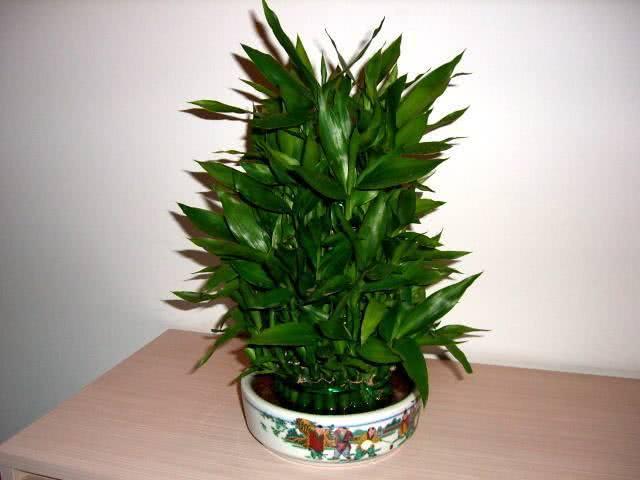
Most lucky bamboo we see is grown in water. That's how my mom cares for hers. But every time I have a plant with such a lovely meaning, I want to beautify my home with different growing methods. Through the efforts my husband and I made together, we finally created a lucky bamboo bonsai, and it really is beautiful. Want one for yourself? Hurry up and learn how with the editor.
Later we learned that making lucky bamboo into bonsai is very common, and there are many styles online. Let me talk about the lucky bamboo bonsai we made in a pagoda-like shape. First, when selecting lucky bamboo, try to choose stalks of similar thickness, without obvious differences, and then cut them. The length is up to you. If you want to grow it taller, cut longer pieces; if not, cut shorter pieces.
At the same time, when cutting, be careful to keep the bud eyes of the lucky bamboo so that during later care, branches and leaves can grow from the top and form a new pagoda. I made 4 layers. If you want more layers, you'll need to cut more pieces. I was being lazy. Each layer can use roughly the same length, but a staggered arrangement is also fine. After inserting the first layer, we can use gold paper to paste and secure it, then proceed with the cuttings for the second and third layers.
When choosing a flowerpot, we can choose an open-mouthed oval flowerpot, not too tall. The pagoda-style lucky bamboo bonsai is mainly for ornamental viewing. After making the bonsai, how should we care for it? Lucky bamboo likes a warm and humid environment, so it is relatively easy to care for in spring, summer and autumn, and it does not have high sunlight requirements. We can keep it on an office desk or a study desk.
In spring, normal exposure to light is fine, but moisture must be maintained. In summer, that won't do. It must be placed in a shady place. If the light is too strong, the leaves will turn yellow. Some friends think that in summer's high temperatures we need to cool it down by sprinkling water on the leaves. Actually, there's no need. Instead, after sunlight exposure, this can damage the leaves. In winter, because the temperature is relatively low, if it cannot often get sun, raise its own growing temperature to reduce yellowing of the leaves.
For bonsai, what matters most is ornamentation, so pruning and disease prevention are things we need to pay attention to. Lucky bamboo has strong plasticity and can be bent into whatever shape you want during care, such as a coiled shape or a grid shape. They are all very beautiful. This mainly depends on your own aesthetic taste. At the same time, use a red ribbon to secure it, and that's it. Disease is the most common issue in plant care, and we need to prevent it in advance. Leaf spot disease and anthracnose are the most common, and medication should be applied promptly.
Besides the pagoda style we talked about today, there are also jungle style, bottle style, and so on. Of course, we can also make other shapes ourselves.