If you don't pay attention to these 4 points when growing orchids in summer, they'll struggle to bloom, and few people know this
Promote Chinese orchid culture, spread orchid knowledge
July and August each year are the flower bud differentiation period for the vast majority of orchids, so if you want them to bloom, you must pay attention to these 4 points, otherwise many will only grow leaves without blooming. This is the experience summed up by veteran orchid growers, and today I'm sharing it with everyone, hoping it will be useful to orchid friends.
1. Not paying attention to fertilizing - no blooming
Summer is the peak growing season for orchids and also their blooming period. Many orchid friends fertilize heavily, and that's not wrong, but if the fertilizer you apply is nitrogen fertilizer, that's a mistake - it will only make your orchids grow leaves without producing flower buds. So what fertilizer should you apply?
For balanced consideration, apply a fertilizer with balanced nitrogen, phosphorus and potassium, or a phosphorus-potassium fertilizer. Some orchid friends during this period give their orchids water soaked with fermented sheep manure pellets twice a month, and the results are very good.
2. Not enough light - no blooming
Although orchids prefer shade, they still need appropriate sunlight to bloom every year. Wild orchids on the mountains are a living example, which is why indoor-grown orchids sometimes only bloom once every few years.
After experienced orchid friends learned this, they let their orchids get sunlight for about 3 hours every morning. The orchids not only grow well but can also bloom every year. Just remember never to expose them to scorching sun.
3. Overwatering - no blooming
Anyone who grows flowers knows that during the flower bud emergence period, you should water less, otherwise the plants will grow excessive branches and leaves without producing flower buds. Friends who have grown bougainvillea, jasmine and Christmas cactus especially know this best!
So during this period, we shouldn't let the potting medium get too wet when watering - it should be on the dry side. At the same time, spray the orchid leaves with monopotassium phosphate twice a month for 2 consecutive months, which helps the differentiation and formation of orchid flower buds.
4. Temperature difference too small - no blooming
Why do some orchid friends grow orchids for several years, and the orchids grow as sturdy as grass but just won't bloom?
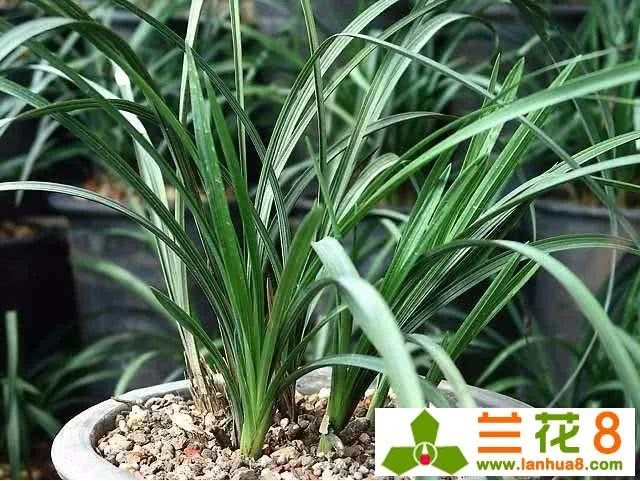
Besides the reasons mentioned above, it's the growing environment of the orchids - the temperature difference between day and night is too small. The organic matter produced by photosynthesis is an important element for flower bud differentiation.
If the temperature difference isn't large, then at night the orchid's respiration is very active and will consume the photosynthetic organic matter produced during the day. So how could it produce flower buds?
Friends who have grown clivia know this very well - clivia kept in a greenhouse only grows leaves but just won't bloom! So during the flower bud formation period, you should consider artificially creating a day-night temperature difference, and a difference of about 10 degrees is best. Author: Atao who loves growing flowers
Orchid Bar, your good teacher on the path of growing orchids