How Often Should You Water Succulents? Just Pay Attention to These Details
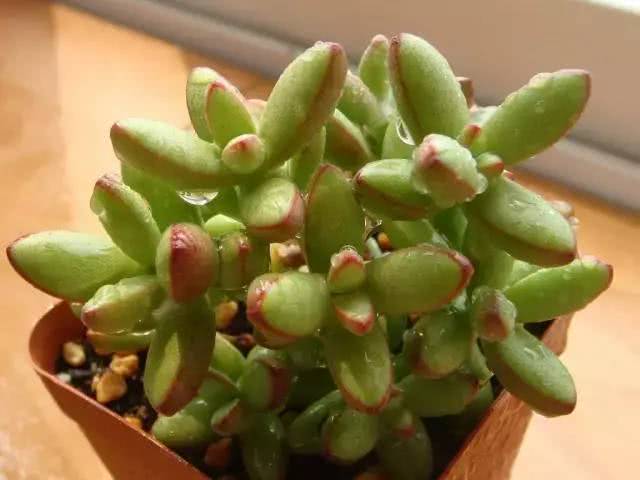
Succulent lovers often ask: how often should I water my succulents? This question is really hard to answer. Different seasons, different regions, the placement of the pot, and the frequency of the soil's wet-dry cycle all affect how often you water.
So how exactly should you water? Too much and you worry about drowning them, too little and you worry about thirsting them to death - such a dilemma. Actually, as long as you pay attention to the following points, your succulents will generally be fine.
1. Water when dry, let dry between waterings.
No matter what kind of succulent you grow, you should follow the principle of "water when dry, let dry between waterings." During the spring and autumn growing season, you can water succulents when the soil is 70-80% dry; water thoroughly, and never water only halfway - the soil surface may look moist, but the roots haven't absorbed any water yet. The faster the wet-dry cycle, the better your succulents will grow. In summer and winter, growth is slow, and some succulents enter dormancy. At this time they don't need much water, to avoid root rot - the soil is better kept on the dry side.
Newly rooted cuttings, beheaded plants, or succulents that have just been potted don't need a thorough soaking; just keep the soil moist.
Succulents in the Aizoaceae family are an exception. During the splitting period, Aizoaceae succulents should not be watered even if the soil is dry. Lithops (Lithops spp.) go dormant in summer and should have water cut off completely; Conophytum (Conophytum spp.) can be watered, but it should also be controlled appropriately. During the flowering period, water should also be controlled, and don't water the flowers.
2. Choose a suitable pot
Choosing a suitable pot is very important - it's like wearing shoes; only shoes that fit are comfortable. A large plant in a small pot will dry out too quickly; a small plant in a large pot will keep the soil moist for a long time, which easily causes root rot and is not conducive to increasing the frequency of the wet-dry cycle.
3. Don't water on cloudy or rainy days
On cloudy and rainy days, the air humidity is high and there is no sunlight, so the photosynthesis of succulents weakens, and the wet-dry cycle of the potting soil also slows down.
4. Observe the symptoms of your succulents
If a succulent is severely lacking water, its leaves will lose their gloss, curl, soften, wrinkle, or lean toward the center (except during dormancy). At this point, it's time to water. However, some drought-tolerant succulents with strong water retention still look very glossy even when equally short of water, such as Sedum rubrotinctum (Jelly Beans) and Sedum 'Hachiyo' (Eight Thousand Generations).
5. The bamboo skewer test
For beginner succulent growers, if it's hard to tell whether your succulents are short of water by looking at their condition, you can use a bamboo skewer to test. Insert the bamboo skewer into the pot, then pull it out and look at how much of it is covered with moist soil. Or weigh the pot in your hand - a dry pot will feel lighter.
6. The best time to water
In summer, when temperatures are high, you should water succulents in the early morning or evening.
In winter, when temperatures are too low, it's best to water at noon to avoid frost damage to your succulents. The optimal growing temperature for succulents is 15-28°C; below 15°C growth slows down, below 5°C they gradually enter dormancy, and below 0°C they will suffer frost damage or die. Therefore, you should water when your succulents feel slightly cool and not too hot, and the tap water you collect should be left to sit for a while and watered only once it's close to room temperature.
7. Symptoms after watering
If some time after watering the succulent leaves still show no sign of recovery, there may be a problem with the roots. You'll need to take it out of the pot, trim the roots, and change the soil.