What to do about yellow leaves on pennywort? Add a little of this to the water and it grows more vigorous the more it grows
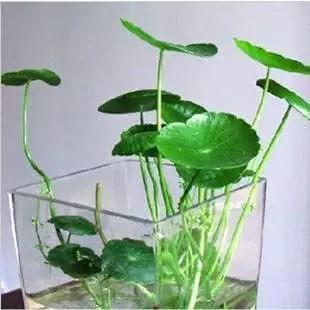
The leaves of pennywort (Hydrocotyle vulgaris) are round like ancient Chinese coins and also like miniature lotus leaves, very cute, adorable and fresh. We usually like to grow pennywort, and you can just find any container for it, even a drinking cup, then pick a few rhizome pieces, and it can grow into a big pot in the water. It is a potted plant that people really love,
Some netizens have reported that the pennywort in their homes has developed yellow leaves and is growing slowly with smaller leaves. What is the reason for this?
Yellow leaves and smaller leaves on pennywort have only three causes
First, lack of water,
The growth of pennywort requires plenty of water. Even in a half-water half-soil setup, never let it go short of water. Water it every day. If it lacks water even once, part of the fine roots will be damaged, then it will completely collapse, and after watering, when it stands back up, some yellow leaves will appear at the bottom. If it lacks water many times, there will be more and more yellow leaves
Second, lack of fertilizer
Because in summer, pennywort grows very fast. Its rhizomes keep multiplying, the leaves keep growing larger, and in summer it also produces so many flowers. So the nutrients it consumes are very many. For pennywort in our flower pots, or hydroponic pennywort, there is not much soil at all, and the pot soil is not much either, which limits its growth. If the nutrients in the soil are also gone, it will cause malnutrition and yellow leaves,
We need to replenish fertilizer in time, giving it nitrogen-based fertilizer two to three times a month. Because pennywort is mainly grown for its foliage, you can use fermented fertilizer water or rice-washing water. If you do not have those, we can use three or four granules of compound fertilizer mixed into a bottle of water, and apply it twice a month, or the kind of high-nitrogen high-potassium water-soluble fertilizer you buy will also work. Be sure to apply thin fertilizer frequently, because its fine hair roots are very small and thin. If the fertilizer is too concentrated, it will damage the fine hair roots
Third, natural aging,
Because pennywort keeps growing, the leaves below will also naturally turn yellow, especially for pennywort we have grown for a long time. If this kind of yellow leaf appears at the lower part, do not worry, just cut it off directly from the base. Soon new leaves will sprout. The color of aging yellow leaves first slowly fades to pale yellow, then gradually turns yellow. We just need to cut them off in time, which can reduce the consumption of nutrients
If the pennywort we usually grow develops yellow leaves, wilting, and a poor condition, we should not worry either. Just give it a big haircut and cut off all the leaves,
Place its root system in a somewhat larger container and spread it out fully. It is best to use nutrient soil, a loose and breathable soil, or a half-water half-soil method, so that its roots can go deeper. The soil contains rich nutrients, so the pennywort will grow very vigorously
For hydroponics, it will grow very well in the early stage, but later, as the nutrients in the water decrease, the fine hair roots, often soaked in water, are prone to rotting, causing yellow leaves to occur
Then, water it every day, place it in a spot with plenty of light, expose it to full sun every day, and apply a thin nitrogen-based fertilizer two to three times a month. Then the growth rate of the pennywort will surprise you. Exploding into a full pot in one month is not an exaggeration at all
Moreover, you only need to pick off one leaf of pennywort with roots and put it in a flower pot, and soon the leaves will fill the whole pot. The growth rate is especially fast
. Please help forward and support. Buyan thanks everyone here!