A rare yellow "rice" grows on a thorn tree, highly nutritious, yet farmers are somewhat afraid of it
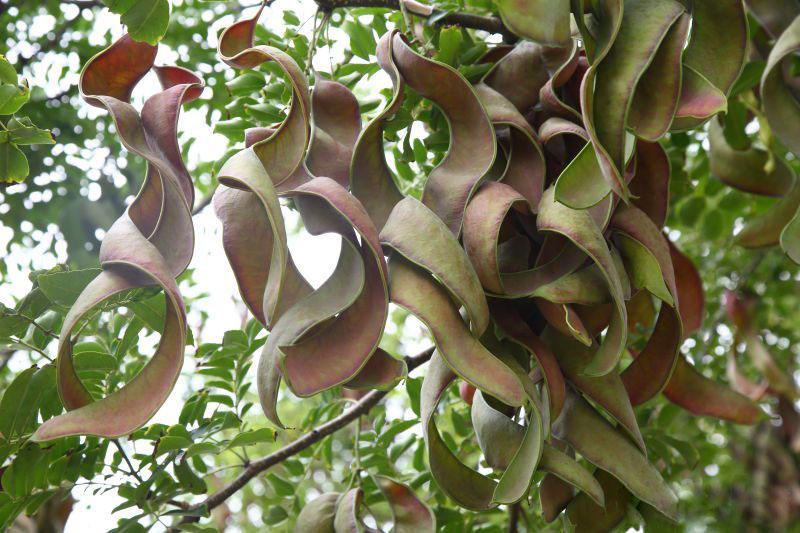
In our impression, rice and wheat grow on the ground, but today I want to tell you about a kind of "rice" that grows on a thorn tree. Some old farmers laugh when they hear about "rice" on trees - after growing rice for so many years, they really have no idea that any kind of rice grows on trees. This rice that grows on trees is what we commonly call "Gleditsia sinensis rice" (Chinese honeylocust rice). When it comes to Chinese honeylocust, everyone should be familiar with it - the Chinese honeylocust tree is a relatively common tree in China. Every summer, the Chinese honeylocust tree produces many flat pods. We all know that Chinese honeylocust pods can be used as a raw material for making soap, and farmer friends even use their juice directly as laundry detergent. However, many people may not know that the rice grains inside the pods are actually a food with extremely high nutritional value.
Chinese honeylocust rice, also known as snow lotus seed, is a food with high nutrition and low fat and low protein, rich in plant dietary fiber, and has a soft and glutinous texture. Generally speaking, Chinese honeylocust rice is usually used to make sweet soup, boiled together with red dates, goji berries and silver ear fungus, and is especially refreshing and nourishing. Young women who eat Chinese honeylocust rice can have the effect of shaping the body and preventing weight gain, and at the same time, patients with the "three highs" - high blood pressure, high blood lipids and high blood sugar - also benefit greatly from eating it.
Chinese honeylocust rice not only has edible value, but also extraordinary medicinal value. According to the "Compendium of Materia Medica", Chinese honeylocust rice can also be used to treat constipation, sores and ringworm and other conditions. In some places, farmer friends have also found that Chinese honeylocust rice is especially good for pregnant women, especially those young mothers during the postpartum confinement period - eating an appropriate amount of Chinese honeylocust rice can promote milk production.
Chinese honeylocust rice is good, but obtaining it is not like rice or wheat, which can simply be harvested directly with agricultural machinery. Instead, it needs to be peeled out of the pods one grain at a time by hand and then dried in the sun, so you can imagine how low the yield is. Moreover, not all Chinese honeylocust trees can produce Chinese honeylocust rice - most of the pods that can bear rice mainly come from the Yunnan region of China. Its pods are the crooked and curved kind, and when peeled open, the "rice" inside is yellow. This kind of Chinese honeylocust rice is very rare and hard to find in other regions, so few people have eaten it. Actually, it tastes quite good.
Although the edible and medicinal value of Chinese honeylocust rice is worthy of recognition, farmer friends are somewhat "afraid" of it - why is that? This is because the Chinese honeylocust tree is a thorn tree, and its trunk and branches are covered with sharp Chinese honeylocust thorns, which are also very hard - if you get pricked, it is no joke. When I was little, I liked climbing trees to play, but adults never let us climb Chinese honeylocust trees, just for fear that we would get pricked by the thorns. Every year when the Chinese honeylocust rice ripens, no farmer climbs the tree to pick it either - basically they just knock it down with bamboo poles, or wait for it to fall naturally, and then go pick it up from the ground.
Unfortunately, Chinese honeylocust rice cannot be produced in large quantities nationwide like rice, and it is almost difficult to form a related industry. If farmer friends find that there are Chinese honeylocust pods around them that can bear rice, they should be sure to treasure them well!