A noxious weed in rice paddies that farmers 30 years ago would dig up and eat as soon as they saw it, now sells for 8 yuan per jin
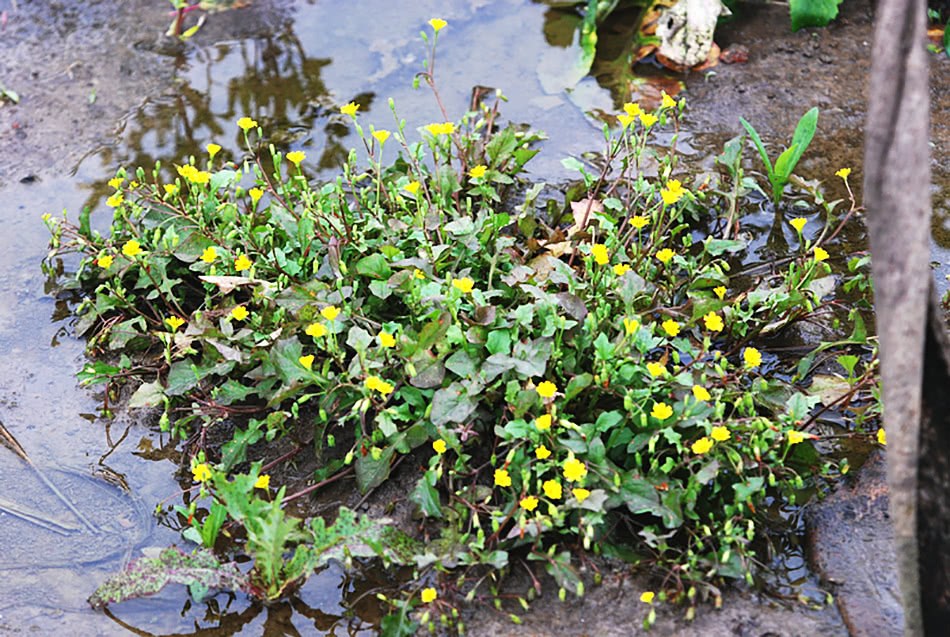
In rural areas there are many wild grasses, whether in front of or behind houses, along roadsides, at the edges of farmland, or in mountain forests and wooded areas, they can be seen everywhere. However, although these wild grasses are common, many people today are not familiar with them, and therefore do not know what use they have. Some wild grasses growing in crop fields are even routinely removed as harmful weeds. Below, the author introduces a wild grass that is often regarded as a harmful weed, yet its value is actually very high, and many older farmer friends are quite fond of it.
Many farmer friends who have planted rice have probably seen this kind of wild grass in their fields. It looks very much like a dandelion, and also very much like shepherd's purse. It spreads densely over the ground, sends up small stems in spring, and blooms like a dandelion, but its flowers are much smaller than those of a dandelion. Because it often grows in rice paddies, it is named "rice paddy cudweed" (Daocuocai). However, because this wild grass also looks like shepherd's purse and grows in rice paddies, in the author's hometown it is also called "field shepherd's purse" (Tianji).
Rice paddy cudweed often grows in fields, wasteland and along ditch edges. It occurs mostly in rice paddies, wheat fields, or rotational fields of rice and oilseed rape. When crops such as wheat and oilseed rape are in their early to mid growth stages, it emerges in large numbers and causes severe damage, making it a regionally malignant weed.
Reading this, many friends may think that since this wild grass is a "noxious weed" in rice paddies, farmer friends should greatly dislike it. In fact, in the past, many farmer friends not only did not dislike it, but were quite fond of it, because rice paddy cudweed is actually a very good wild vegetable. Thirty years ago, rural living conditions were poor, and many impoverished people who could not eat their fill would go out into the wild to dig up wild vegetables to stave off hunger, and rice paddy cudweed was one of them.
Back then, whenever spring and summer came, many farmer friends would go to wheat fields and rice paddies to dig up rice paddy cudweed. After digging it up, they could eat it directly as a cold dressed salad, and if the family's circumstances allowed, many farmer friends would also stir-fry rice paddy cudweed with free-range eggs, and the taste was truly wonderful.
In the past, farmer friends only knew that rice paddy cudweed could be eaten and used to stave off hunger, not realizing that its nutritional value is actually very rich as well. According to current records, rice paddy cudweed also contains protein, fat, vitamin C, phosphorus, calcium, magnesium and many other nutrients, so it is not only tasty but also nutritionally beneficial.
Besides being edible, rice paddy cudweed is also a very good medicinal herb for clearing heat and detoxifying. According to the "Compendium of Materia Medica", the whole plant of rice paddy cudweed can be used as medicine. It has the effects of clearing heat, detoxifying and promoting rash eruption. It can be used to treat sore and swollen throat, dysentery, sores and swellings, snake bites, measles with poor rash eruption and many other symptoms.
However, as rural life has gotten better and better, many people no longer go to rice paddies to dig up this wild grass, rice paddy cudweed. In addition, pesticides are now commonly sprayed in rice paddies, wheat fields and other crop fields, making wild rice paddy cudweed increasingly rare. As a result, if you want to eat rice paddy cudweed, you have to buy it from farmer friends who specially cultivate it. This is exactly the case in the author's hometown: cultivated rice paddy cudweed now sells for as much as 8 yuan per jin.
Dear friends, have you ever eaten "rice paddy cudweed"? You are welcome to leave a message and share your thoughts!