Why narcissus fails to bloom every year and what to watch out for when growing them indoors
Seeing snowflakes swirling outside in winter while the narcissus flowers bloom brightly indoors is sure to make you very happy. Growing narcissus indoors is very simple: a shallow bowl and a little clean water are enough. What else you need to pay attention to is providing a suitable environment, maintaining a suitable temperature and a certain intensity of light.
To grow narcissus at home, first choose a suitable container. For water culture, it is best to use a relatively shallow pot, and the water level should not be too deep; about 1/3 of the narcissus bulb is enough. For soil culture, use a pot with good drainage, and the soil should also be loose and airy.
You can also prepare a dedicated hydroponic container so that only the narcissus roots touch the clean water; the top of the bulb must not be soaked in water, otherwise the stem is prone to rot.
For hydroponic narcissus, you can add some gravel to the bottom of the container, which keeps the narcissus growing neatly and lets its bulb grow steadily upward, but be careful not to damage the small shoots.
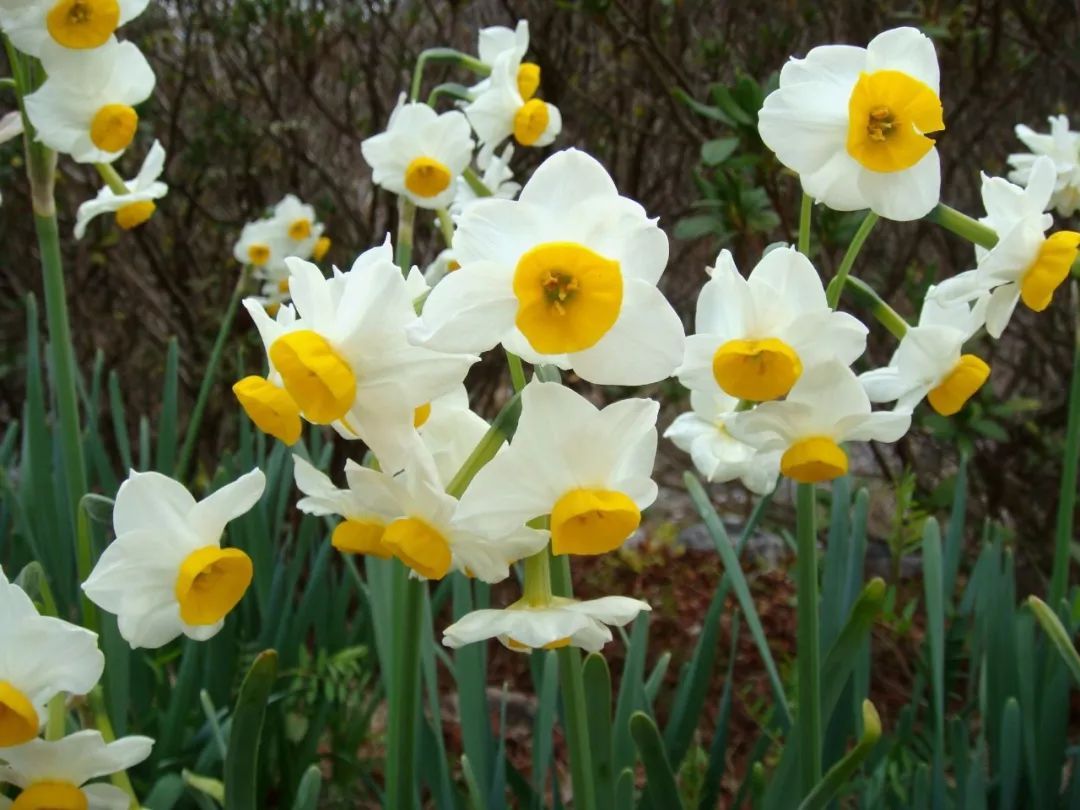
The photo above shows a daffodil
If the narcissus is grown in soil, place it in a suitable spot and cover about 2/3 of the bulb with soil, leaving 1/3 exposed above the soil surface. It does not need frequent watering and fertilizing; grown in a suitable spot, it will produce brilliant flowers.
The growing temperature must not be too high; keep it between 12 and 18 degrees. The most suitable spot can receive appropriate scattered light, and you should avoid scorching sun or excessive direct sunlight.
If the narcissus blooms poorly or does not bloom at all, it is very likely due to the following reasons.
1. Removing the leaves too early
After the narcissus finishes flowering, deal with the spent flowers promptly, but the leaves must not be cut off too soon. Removing the leaves too early may cause the narcissus to fail to bloom the following year, because these leaves store nutrients; only after the leaves wither can you cut them off, so that the narcissus bulb retains more nutrients.
After the narcissus flowers fade, these nutrients continue to develop in the leaves. Only after the narcissus leaves turn yellow can you cut them off, so that the narcissus keeps blooming every year.
2. Planting too late
Planting narcissus too late not only affects flowering, but the leaves also grow poorly; even if it blooms, the flowers will be very delicate and weak, with very low ornamental value.
Whether the narcissus is grown in water or in soil, check it regularly to see whether the bulb shows signs of rot. If the narcissus bulb is growing healthily, then after the flowers fade and the leaves turn yellow you can cut them off. When the weather turns cool in autumn, you can replant it and supplement fertilizer appropriately, and it will also keep blooming every year.
3. Too little sunlight
Among the causes of narcissus failing to bloom, too little light is also very fatal. If the narcissus is grown outdoors in the ground, to encourage flowering it needs about six hours of ample light per day to promote blooming; of course, avoid scorching sun or excessive direct sunlight.
If the narcissus is grown in a pot, you can place them on a windowsill with appropriate scattered light. If the narcissus is grown in water, it must not get too much light; appropriate scattered light in the early morning or evening is enough, which helps promote narcissus flowering.
4. Too much nitrogen fertilizer
You must not fertilize narcissus at random either. If there is too much nitrogen fertilizer in the soil, the narcissus will fail to bloom. If you give fertilizer with too high a nitrogen content, the narcissus usually grows very vigorous leaves and can hardly bloom at all.
The photo above shows a daffodil
When fertilizing narcissus normally, you can use fertilizer with a higher nitrogen content, and occasionally give a balanced fertilizer with an NPK concentration generally of 10:20:20, or a compound fertilizer of 0:10:10; you can also give some monopotassium phosphate before the flower buds form.
5. Overcrowded planting
Whether the narcissus is grown in pots or in the ground, if very few flowers bloom, it may be due to overcrowded planting. The bulbs at the base of the narcissus keep dividing; after flowering, you can dig up the bulbs and store them in a cool place, then replant when the weather turns cool in autumn.
Narcissus bulbs grown in pots also need appropriate spacing to ensure enough room to grow, which promotes flowering.
6. Withering bulbs
If the narcissus bulb withers and rots, that will also cause the narcissus to fail to bloom. So when growing narcissus, be sure to use a pot and soil with good drainage, and also avoid frequent watering, otherwise the bulb will rot.