The method for making a miniature thyme bonsai is simple, with a high success rate.
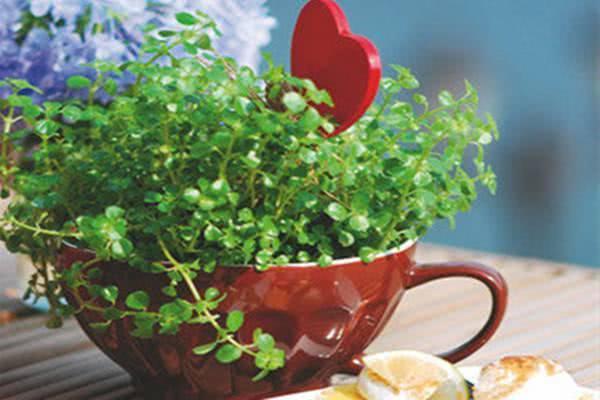
There are so many kinds of bonsai in our country, and there are many bonsai we may have never seen, but today I want to introduce to you a miniature bonsai. Its compact size is its greatest advantage. It will not take up much of our space, yet it can bring endless pleasure to our lives. This is thyme. Did you know it is a common small bonsai used as a decorative bonsai at home and on office desks?
1. Choose a flower pot of the right size
Because thyme is a miniature bonsai, we need to pay attention when choosing a flower pot. It cannot be too large, and it should suit the plant's growth. At the same time, to make it look better, we can choose blue, yellow, or red flower pots. Matching them with green is also a nice experience. At home, I used a teacup, the kind for drinking coffee, only it had a chip in it. The troublesome thing about choosing a porcelain cup is drilling a hole in the bottom. To care for the bonsai, we need to make a small hole in the bottom of the cup, which helps with drainage and airflow for the plant.
2. The planting soil is very important
Thyme bonsai is not demanding about soil, but for better care at home and easier survival, we can still dig some garden soil from the neighborhood and use it, along with some rotting leaves, which can increase the soil's fertility. Some friends ask, does it need acidic soil? Of course it does. Most plants adapt well to acidic soil. If we do not know whether the soil is acidic, we can test it, or add some vinegar when watering, which also works. This can effectively adjust the soil's pH, making it convenient for us to plant.
3. How to pot it
First, we need to put some coarse sand or plant ash with good drainage and aeration at the bottom of the pot, spread the soil we prepared earlier over it, then plant our thyme. At the same time, place some small stones around it so the soil will not be too loose, and it is also very suitable for making many shapes. We also need to water it and put it in a cool place for a week to let the thyme roots grow fully in the soil.
4. How to care for it after potting
The care methods for bonsai are mostly similar. The first issue is watering. We cannot let the thyme bonsai lack water, especially in spring and autumn. These two seasons are its growing period. To maintain the nutrients for its growth, we also need to fertilize appropriately, so it will not grow poorly. Then in summer, we need to keep thyme away from the balcony during the hottest noon period. Too high a temperature will speed up water loss and make the leaves turn yellow easily. At the same time, we also need to adjust the watering time and move it to the morning and evening.
Fertilizing needs to be done in spring and autumn. Do not fertilize in other seasons. At the same time, the fertilizer must be diluted before use, otherwise it will burn the roots and make it difficult for thyme to grow.
The above are the methods for making and caring for a small thyme bonsai. Friends, why not make one with me?