Cymbidium kanran has a rich fragrance and is not afraid of severe cold; all the key care points are here
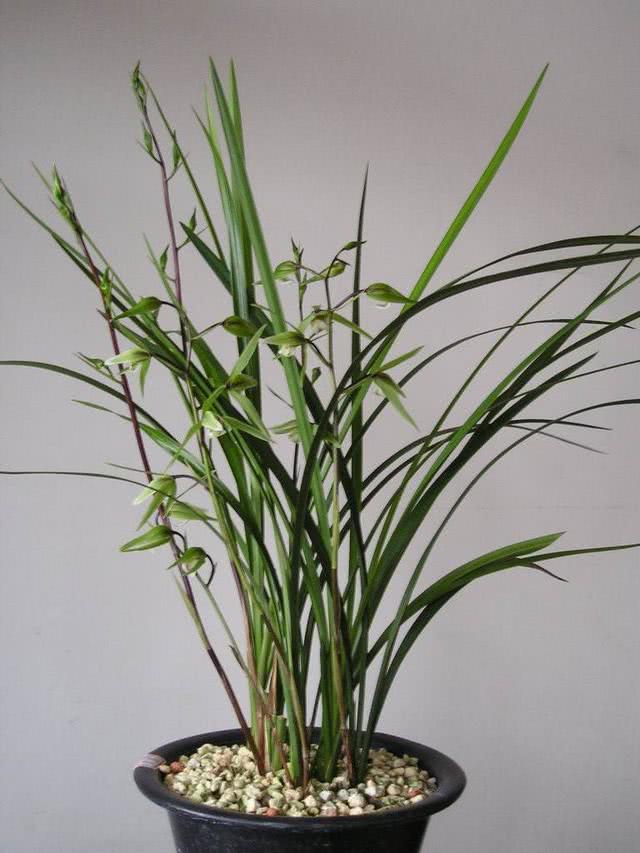
Orchid varieties have always been a kind of flower that people love, and Cymbidium kanran captures everyone's affection with its proud posture, but Cymbidium kanran is not very easy to cultivate, and the emergence of this problem has given many flower-growing enthusiasts a headache. Sometimes even after racking your brains you may not have come up with a good solution; the methods you use to treat other flowers do not work on Cymbidium kanran, and the emergence of this problem also gives planting enthusiasts a big headache. In order to satisfy everyone's desire to grow this richly fragrant Cymbidium kanran plant, the editor has specially written this article to introduce the key care points for Cymbidium kanran, so that growing Cymbidium kanran at home becomes a possibility for everyone, and you are no longer caught off guard.
When we grow Cymbidium kanran, it is often because the external environment has too great an influence, and the Cymbidium kanran plant cannot accept such an environment, which leads to the plant being unable to survive for long. But the distribution range of Cymbidium kanran is very wide, which shows that the plant's vitality and adaptability are not weak, so why can we not grow it at home? Let us start by understanding the plant's growth habits!
Cymbidium kanran lives in the south of our country and is widely distributed. The traces of this Cymbidium kanran that we generally find are near Linxia or beside some streams and valleys, and it is not hard to find that the areas where the plant grows are all relatively shady places. Precisely because of this, Cymbidium kanran is a plant that fears direct sunlight; direct sunlight will only cause the plant to die directly. So this is often why, when we grow it at home, the plant eventually dies because it receives direct sunlight.
Cymbidium kanran also has quite high requirements for the soil used in planting. We generally must choose some sandy soil containing humus; only soil with good drainage can let the plant grow better, otherwise the plant will die because of breathing problems. In addition, the plant has fleshy roots, so the soil requirements are even higher. We cannot let the plant die for this reason, and we must also remember that the soil pH value must be between 5.5-6.5; this is the most suitable acidity and alkalinity for the growth of Cymbidium kanran.
With a preliminary understanding of the growth characteristics of Cymbidium kanran, we can understand the key care points of the plant through its growth characteristics. The following are the key points for caring for Cymbidium kanran summarized by the editor, and I hope they are of some help to everyone.
1. Avoid direct sunlight
Direct sunlight is the thing Cymbidium kanran tabooes the most. Having grown for years in shady regions, it cannot adapt to direct sunlight. Therefore, when we grow it at home, we must likewise find a shady place to grow this plant. The growing environment for this plant should be relatively shady and moist, so we need a shady spot, and then water the plant often to create a shady environment.
2. Watering amount
Although the water requirement of Cymbidium kanran is not very large, the soil of the plant must still maintain a certain humidity, so as to ensure the normal growth of the plant. Therefore, at this time it is necessary to control the watering amount of the plant, and this is also where the problem lies. The editor has summarized for everyone that watering three times a day is the most suitable, dividing it into three waterings, so that the soil humidity is most suitable for the growth of the plant.
3. Soil management for the plant
Many times we feel that the care of Cymbidium kanran has already been done very well, but the Cymbidium kanran still dies as it is being grown. The reason among this is the soil. If the soil has not been loosened for a long time, or the pot has not been changed, the plant will die without us noticing. For this reason, we should pay regular attention to the soil, so that we can better care for Cymbidium kanran.