What to do when bougainvillea leaves wither? Three clever tips to keep it blooming continuously and easy to care for
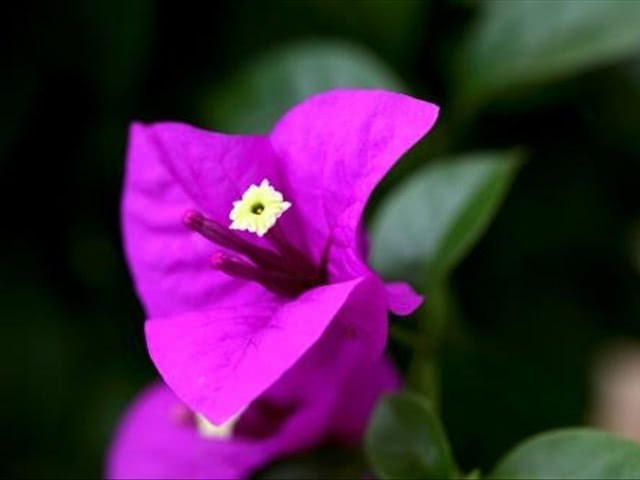
Original title: Bougainvillea withered leaves, these three clever tips tell you, keep bougainvillea blooming continuously and easy to care for!
Summary:
Now the summer sun is scorching, a wave of very high temperatures is about to hit, so bougainvillea care only needs to pay attention to these three points to stay away from yellow leaves and withered leaves. The half-month of thunderstorm weather will end, and most parts of the country will welcome very high temperatures, with temperatures in many places reaching above 35 degrees. Such sustained high temperatures are a very big test for many plants.
Recently many flower lovers have been asking about tips for bougainvillea care in summer high temperatures, as well as the phenomenon of yellow leaves and withered leaves appearing on bougainvillea. High-temperature weather is actually a very big test for many flowers, and plants like bougainvillea are very suitable for outdoor care and are plants that bloom in summer, so when encountering this kind of high-temperature weather you must pay attention, otherwise yellow leaves and withered leaves will appear, and dropping flowers is also very common.
Regarding high-temperature weather, bougainvillea care must pay attention to the following points. The first point is to pay attention to watering bougainvillea. First of all, plants must be watered in summer, otherwise they will definitely die from drought. But watering is also a technical job: the time of watering, the method of watering, and the amount of watering all require great care. As for the time of watering, because it is a high-temperature season in summer, we cannot water at noon; it is best to water bougainvillea in advance in the early morning or evening every day.
Do not think that watering bougainvillea at noon is cooling it down; this effect is exactly the opposite. At noon the pot soil is hot, and after watering the finer roots in the pot are as if soaked in warm water. Imagine this feeling: the root growth environment becomes poor, and naturally yellow leaves, withered leaves and dropping flowers will appear. The second point is the method of watering. Since evaporation is relatively large in high-temperature weather, we recommend watering once every 1 to 2 days.
Set the watering time in the early morning or evening for irrigation; it can also be in the morning or afternoon. If it is too dry, we can use a spray bottle to spray around the bougainvillea, which can increase air humidity and prevent bougainvillea from developing scorched leaves. That is also the amount of watering. Bougainvillea withered leaves, these three clever tips tell you, keep bougainvillea blooming continuously and easy to care for.
Before watering, be sure to check whether it is dry. The best way to check is to use a chopstick to check the dryness and moisture, to prevent water accumulation. We must uphold the principle of not watering if not dry, and watering thoroughly when watering. The second point is sometimes light. Although bougainvillea is very suitable for outdoor care, when encountering this kind of high-temperature weather, shading is also necessary. If it is exposed to too much sun, bougainvillea leaves will turn yellow and become scorched. Bougainvillea withered leaves, these three clever tips tell you, keep bougainvillea blooming continuously and easy to care for.
Therefore we all recommend moving bougainvillea to a shaded place for normal care. The third point about bougainvillea is fertilizing. Fertilizing is indispensable for every plant. If the temperature is too high, the plant's physiological cycle will slow down, and it does not need too much fertilizer, because in high-temperature weather we do not need to supplement fertilizer to the plant. Too much fertilizing will also cause fertilizer damage to bougainvillea, leaf drop and yellow leaves. When encountering high-temperature weather in summer, we should also pay attention to these three points when growing other plants. We must control water before bougainvillea blooms, the leaf flower.
Conclusion: In ordinary watering, you must master the principle of not watering if not dry, and watering thoroughly when watering. But if you want the flowers to bloom uniformly and abundantly, you must control water before blooming. We can start controlling water for bougainvillea from September. Each time, wait until the pot soil is dry, and the more it dries the better, then water again. Repeat this for half a month, and after half a month restore normal watering. During the control period, we must not fertilize, to avoid fertilizer burning the roots. In this way, after a month the leaf flower can bloom, and the blooming will be uniform and abundant. Caring for bougainvillea in this way is very simple.