The three-part summer care routine for gardenias: lush branches and leaves, a beautiful plant shape, beautiful even without flowers
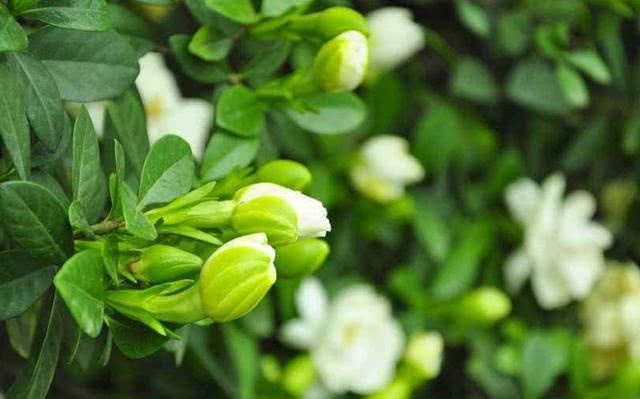
The flowering period of gardenias is concentrated in spring and early summer. Across China, the flowering period varies slightly depending on region and climate. But most flowering periods fall in April to June, except for the four-season gardenia. After early summer, many gardeners' gardenias have passed their flowering period and entered a period of vigorous branch and leaf growth. At this time, care and management must not be relaxed, because it determines the quality of the gardenia's plant shape and flowering effect the following year. When growing gardenias in summer, do the following three things well, and the branches and leaves will be lush and the plant shape beautiful, beautiful even without flowers.
1. Light. Gardenias prefer a warm and humid environment and plenty of scattered light. Summer sunlight is intense and temperatures are high, yet this is the time when gardenias have few diseases and are easiest to manage. For growing gardenias at home, the best placement is a balcony with ample scattered light or a small courtyard with shade, maintaining 6 hours of light per day, avoiding direct sunlight to prevent sunburn on the leaves. When many gardeners' gardenias show scorched leaf edges in summer, the cause is mostly sunburn from not providing shade in time.
2. Adequate fertilizer and water management. Some gardeners think that since the gardenia has passed its flowering period, its demands for water and fertilizer are not so high, and given the high summer temperatures, they are afraid fertilizing will burn the roots. In fact, adequate fertilizer and water management in summer is also the key to whether the gardenia can have lush branches and leaves and be covered with flower branches the following year. With high temperatures, the gardenia's branches and leaves grow rapidly, so we can apply light fertilizer frequently, giving it fermented soybean cake water or a compound fertilizer with comprehensive nitrogen, phosphorus and potassium every half month.
Watering gardenias in summer is also completely different from winter. Summer evaporation is high, and the gardenia's demand for water is also very great, so do not wait until the potting soil is completely dry before watering. Gardeners who are able can also mist the gardenia leaves once each morning and evening; on one hand this cools the plant, and on the other hand it maintains the air humidity it needs. Timely replenishment of water and fertilizer is what promotes the gardenia to sprout more new branches and leaves; even in the flowerless season, it still has great ornamental value. Gardenias prefer slightly acidic soil, so timely monthly supplementation with a 1:2000 ferrous sulfate solution helps acidify the soil and prevents iron-deficiency yellowing of the leaves.
3. Pruning. Gardenias grow rapidly in summer, making it a good time to prune and the time when pruning harms the gardenia least. Generally, after the flowering period ends in June, promptly remove the spent flowers, and regularly remove adventitious buds emerging from the lower part of the branches, and cut off old, weak, diseased and dead branches as well as crossing and parallel branches; this not only helps increase the plant's air circulation but also encourages new branches to sprout, making the plant shape fuller.
Some gardeners like to prune gardenias in autumn, but this is actually wrong. This is because the gardenia's flower primordia form in the terminal buds of robust branches in autumn; these terminal buds are very plump but no flower buds are visible, and a few flower buds also form at the forks of some terminal branches. If these branches are accidentally cut off at this time, the following spring there will be sparse flower branches or no flowers to enjoy.