Don't Throw Away Dead Balcony Flowers in Summer - Timely Rescue Can Still Save Them
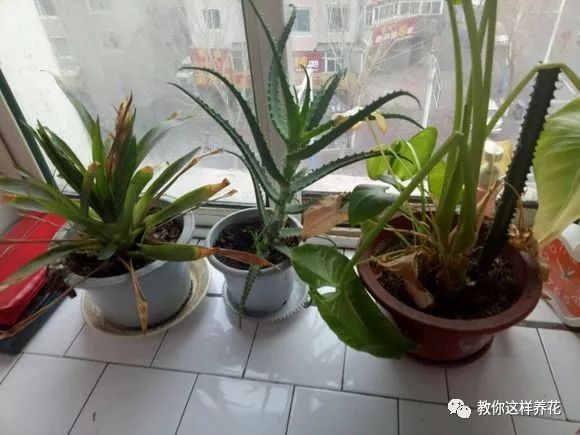
In summer, temperatures are high and flowers and plants easily run into problems. Some flower lovers said that after going away for a few days, all the flowers on their balcony died. If problems appear, rescue them quickly - you can still save a life and bring a few plants back.
“
Plant Rescue"
In summer, temperatures are high. With even a slight lack of water, many drought-intolerant flowers quickly wilt.
- Azalea -
Azaleas are beautiful but difficult to grow, and they rather like moist environments, so don't forget to water them in summer. Some flower lovers forget to water them, and when placed on a balcony they dry out in no time. In summer, azaleas must not lack water - for azaleas this is fairly fatal. Of course, potting soil conditions vary somewhat; you can check how moist the surface of the potting soil is, and if it's dry, water it. Generally in summer you can check morning and evening, and water whenever it's dry, which lets azaleas get through summer smoothly. Also note that above 30°C you should not fertilize azaleas - the azalea cannot absorb or use it, and fertilizer damage may occur.
A flower lover's azalea bloomed beautifully in spring, but in summer, as soon as it lacked water, it all withered.
A flower lover picked up a dried-out azalea from a roadside trash can. The leaves had already withered and died, and it had been dry for a long time. There were still some new leaves on the branches, showing it hadn't completely dried out and died. Trim off the withered leaves, and if the branches are also withered, trim those as well.
The flower lover checked and found that this waxy-skinned azalea was grafted, with mao juan as the rootstock. Try to keep as many scions as possible - of course, if the scions really have all withered and died, it would still be quite good if the mao juan rootstock can be kept alive.
Water thoroughly, watering thoroughly several times; you can also mist the leaves, and place it somewhere with a suitable temperature. An air-conditioned room or a cool, shady bathroom are both good choices. You can also cover it with a plastic bag and spray more water mist to increase air humidity, which helps recovery.
Place the azalea in an environment of 15-25°C and 70% humidity. If it can survive, it will grow small buds.
Both the scion and the rootstock survived, and their leaves differ greatly. The azalea that has just come back to life is still rather weak, so you can continue keeping it in an air-conditioned room. Only after the new leaves have all grown out can it be cared for normally.
- Kalanchoe -
Kalanchoe is fairly prone to black rot and root rot in summer. Black rot comes on very quickly, and is most likely to appear during the stuffy, hot periods of summer. Especially with sudden seasonal changes, intense sunlight exposure, or sudden rainstorms, if ventilation is also poor, kalanchoe quickly develops black rot and dies within a few days. Black rot is an infection caused by Fusarium oxysporum and needs to be dealt with promptly.
Once black rot is discovered, immediately isolate the affected plant. The growing soil should be thrown away, and the pot should be sterilized by exposure to strong sunlight. For the infected plant, promptly cut off the rotting parts; the remaining healthy parts can be kept by cuttings.
For the cut branches, apply carbendazim powder to the wounds, let them dry, and then take cuttings. They root very easily, preserving the kalanchoe's spark of life.
- Jade Plant -
Note that not all flowers need lots of water in summer. Flowers in a dormant state must be watered very cautiously; generally, watering just enough to meet minimal physiological needs is fine, as excess water easily causes root rot. The jade plant is this kind of flower. In summer, be careful to water less, and only water after the soil has completely dried out. Also, be careful to water in the evening, otherwise the high summer temperatures easily cause stuffy roots and root rot.
If a jade plant's roots rot, the branches will become soft and drop leaves, or even whole sections of branches will fall off, and the leaves may also turn yellow. Deal with it promptly, otherwise it will slowly rot away completely and die.
If root rot occurs, you can cut off the rotten roots, cutting all the way back to where there are no black spots. Apply carbendazim powder and place it in a shady spot to let the wounds dry. After the wounds have dried, place it in plain sand and wait for it to root. After new roots grow, it can be moved to a flowerpot for care.
- Pothos -
Pothos is a flower that rather likes moisture and water. In summer it must not lack water; a lack of water easily makes it wilt. However, some flower lovers grow pothos in garden soil, where water cannot drain away, and pothos easily gets root rot. Pothos potting soil generally needs especially good drainage; usually a large amount of coconut coir plus perlite is added to the potting soil, giving fairly good drainage and moisture retention. In summer, pothos should be kept in a ventilated place, the temperature must not be too hot, and water should be replenished promptly once the potting soil is dry, to prevent pothos from wilting from sun or drought.
If the degree of drying isn't very severe, promptly replenish water, or soak the pot, and it will recover quickly. If the sun damage is severe, or the drying is severe, then cut off some leaves and keep the healthy branches. Pothos grows fairly quickly and will soon send out new leaves again.
- Gardenia -
Gardenias like warm, humid environments. In summer, if placed in strong sunlight and exposed to the sun, with insufficient water supply, they easily develop drying-out. If all the leaves have dried up and dropped off, and the branches have also become brittle, that means it's dead and beyond saving. If the branches are still somewhat green and have moisture, it means it can still be saved.
A dried-out gardenia should be moved to a cool, ventilated place for care. After watering thoroughly, do not water again; wait for new buds to sprout.
Gardenias have strong sprouting and budding ability. If the roots are still alive, they will quickly sprout new buds. After pruning, it needs to be placed indoors in a ventilated, bright place, with reduced watering and no fertilizer.
When summer flowers run into problems
you must rescue them quickly
sometimes if you're a day slow, they may wither and die
Share it with flower lovers who need it!