Narcissus cultivation tips: once you master the method, growing them well is actually very simple
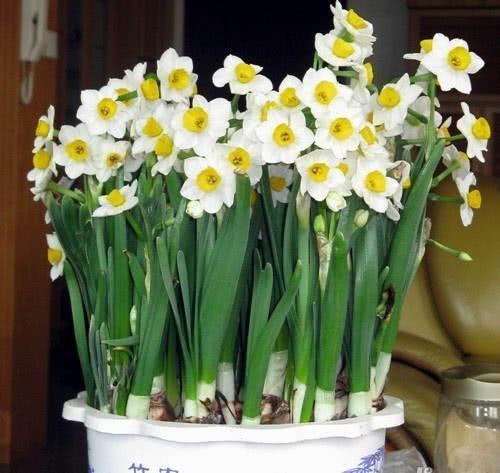
When people mention narcissus, they think of the traditional Chinese Spring Festival. During the Spring Festival, almost every household places a pot of narcissus on display. Narcissus is also known as "heavenly garlic" because before it blooms, the plant looks very much like a garlic plant. It has a bulb-shaped stem with a white, fleshy outer skin; the flower bud sits in the middle, and the base is connected to the stem plate. Its broad, linear leaves grow compactly, and white-and-yellow flowers bloom on the flower stems. The oval petals are mostly six in number, and the flowers give off a faint fragrance. Narcissus is a relatively easy flowering plant to grow, and you really should learn the following little tips.
I. Growth habits
Narcissus is a flowering plant that likes warmth and sunlight, and it has relatively high requirements for environmental humidity. Although its flowers bloom in winter, it is not a cold-tolerant plant. Besides being afraid of cold, it is also afraid of heat, which is why it has extremely high requirements for growing humidity. The growth cycle of narcissus differs from that of most flowering plants: in spring it stores nutrients in its branches and leaves, in summer it begins to enter dormancy, it only starts growing in autumn, and it blooms in winter.
II. Cultivation methods
There are two cultivation methods for narcissus: water culture and soil culture. Water culture means growing narcissus in a shallow-mouthed pot, placing the treated stems upright in the shallow pot for cultivation, with the water level covering 70 percent of the stems. Some ceramic stones or pebbles can be placed in the pot to fix the stems in place, and they also serve as decoration.
When growing narcissus in water, move it to a sunny spot during the day, and at night pour out the water in the pot. This is to prevent the leaves from becoming leggy. The next day, add some clean water; when adding water, do not easily move the position or direction of the stems. For narcissus that has just been put in the pot, it is best to change the water once a day, and once the flower buds grow, the frequency of water changes can be reduced. Narcissus can grow well in an environment of just over 10 degrees, and it generally blooms in about a month and a half, with the flowering period lasting as long as several months.
When caring for narcissus, there is no need to apply any fertilizer; just ensure the water quality is good. Since narcissus likes light, you naturally need to ensure it gets sufficient sunlight in daily growth so it can grow more robustly. If conditions allow, you can use some light for supplemental lighting at night, so that the narcissus leaves grow broader and thicker, and the leaf color becomes a deeper green.
Soil culture of narcissus is relatively uncommon in home care. Since narcissus is a tuberous flowering plant, using sandy potting soil for soil culture allows the tubers to grow freely. The tubers must not be completely buried in the soil; half should be left exposed on the soil surface. The management methods for water culture and soil culture are not very different. As long as the three key elements of temperature, light and moisture in the environment are ensured, and there is no infestation by pests or diseases, narcissus does not need any spraying of chemicals and can grow very robustly. If you want to delay the flowering period of narcissus, you can do so by adjusting the water temperature: lowering the water temperature can delay the flowering time, while raising the water temperature can hasten blooming.
Friends who like narcissus, are you still worried about not being able to grow them well? Once you understand its growth habits, grasp the key points of its growth, and learn a few little tips for care and management, all your worries are gone. What is there left to worry about?