Add this when watering succulents, and the leaves will change color effectively
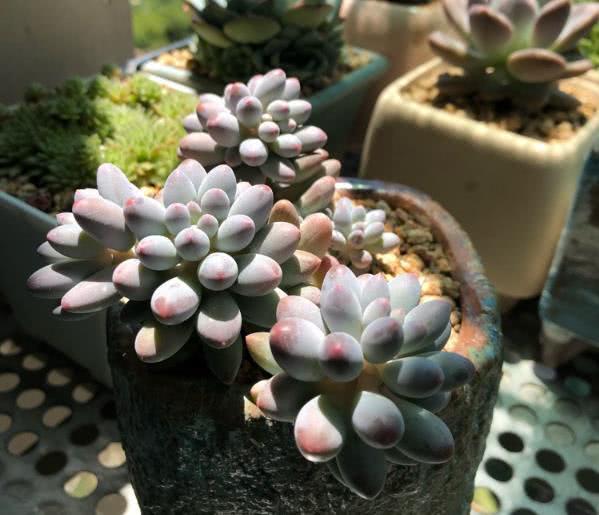
Carrots are very common, and succulents also absorb carotene. By changing the carotene content that succulents absorb, you can change the color of the leaves, turning succulents that originally could not develop jelly colors into jelly red-yellow. The fertilizer I make is very simple: wash the carrots, cut them into pieces, then put them in a pot and boil them, boiling them for a longer time, then ferment them. Once fermentation is done, you can fertilize the succulents with it. Leaves that originally could only be green may turn transparent yellow, those that are naturally prone to turning red may show semi-transparent yellow-red, and so on, with different colors that originally should not appear.
Give succulents controlled watering. Even if the succulent leaves are far from being in a long-term state of full water absorption, when they absorb less water, their growth color (green) naturally loses some of its luster, thereby reducing the formation of green pigment. Controlled watering is a routine that every succulent grower knows. I will just briefly mention it here to provide some reference for beginners. In summer, when the weather is so hot, the plant activity and growth speed of succulents slow down, but the growth and reproduction of fungi are actually at their most vigorous, especially when there is plenty of water. That is simply a paradise for fungi. Because various fungi grow wildly, succulents are very prone to black rot in summer. To avoid this situation, the idea of controlled watering came about.
People's understanding of the relationship between succulents and temperature is also somewhat biased. Both high and low temperatures inhibit the activity of biological enzymes and other proteins and reduce the growth speed of succulents, but this is only a reduction, not a stop. Any living thing, let alone succulents, as long as it has not completely died, will have metabolism. Even a speck of dust-like seed is breathing. Succulents need water at all times. If they are too dry for too long, the root system of the succulent will dry up and die.
Controlled watering for succulents has a purpose, and growers should act according to their own actual circumstances rather than blindly following online articles, because different regions have different climates, growers use different containers, and the media used to plant succulents are also different, resulting in different lengths of time for water in the pot to evaporate. If you blindly follow theory, you may achieve the opposite. In most cases, if controlled watering is needed, growers can reduce the frequency of watering. When they see the soil is dry, give it a little water along the edge of the pot, keeping the potting soil slightly dry but still with some moisture, so the succulents will not dry out and die.
In summer, the time to water succulents must be in the evening. Evening, not late at night, and not daytime, but the evening after the sun has set. This gives the water enough time to evaporate. By noon the next day, the succulents will not feel as miserable as if they were sitting in a steamer. When there is no standing water and the potting soil is breathable, the presence of water will definitely help cool the succulents. The principle of watering is to water when the soil surface is dry, keeping the soil in a moist state. If the evening wind is strong, you can water a little more appropriately. In autumn, when the temperature is suitable, plants with healthy roots will immediately recover their activity and speed up growth. Plants that have undergone controlled watering, however, need to consume the nutrients in their leaves to restore root health. Since the newly recovered roots are still relatively weak, succulents that have undergone controlled watering must not be given a heavy watering in autumn, otherwise these weaker roots will be damaged and may accidentally suffer black rot again. This is why many growers make it through summer but do not make it through autumn.
For succulents in the growing season, sunlight plays an absolute role in enhancing color. This is already known by many growers. If they can receive normal sunlight every day, 4 hours can achieve a moderately ideal color-enhancing effect. This refers to direct sunlight, not sunlight passing through glass and other transparent objects. The ultraviolet rays in sunlight are the plant's natural beautician. However, even this basic requirement is not something we can all achieve now. Many growers keep succulents indoors, and glass directly absorbs 90% of ultraviolet rays, which causes the effect that although there is light, it is difficult to enhance color.
This is a gathering place for succulent lovers, sharing succulent care tips. Welcome to follow and exchange ideas.