Want your succulents to fill the pot? Here's how you need to handle them
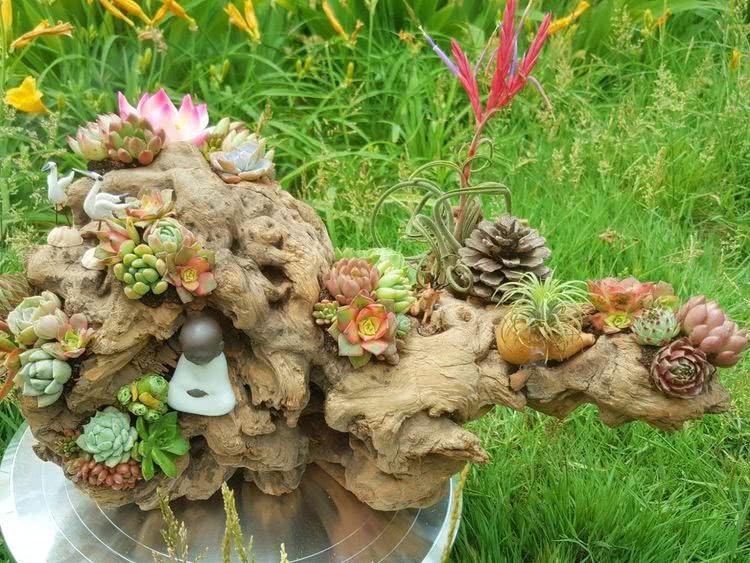
Getting succulents to fill a pot is no simple matter. First, they have to be in a good environment suited to their growth. Only then can you ensure the plants grow healthily. We often see that in the "cheat zones" for succulents, many of them are large old stems, or multi-headed plants that have filled their pots. This shows that succulents producing heads is closely tied to their environment.
The simplest method is to choose those succulents that are especially easy to produce pups, growing so densely that they fill the pot. With just a little attention to care techniques, they will quickly fill the pot. Varieties that easily fill a pot, such as peach egg (Graptopetalum amethystinum), small ball rose (Sedum multiceps), rainbow jade (Sedum rubrotinctum) and compact sedum (Sedum pachyphyllum), can let you quickly achieve a pot filled with succulents.
First, you have to provide good preliminary support for the succulents.
Light
Succulents like light, but they also fear strong direct sunlight. In summer, it is best to move them to a shaded place, while in spring and autumn they can take direct sunlight outdoors. But indoors, you cannot put them in a completely dark place either; it is best to place them somewhere with diffused light. If there is not enough light, watering can easily cause water accumulation, leading to root rot.
Watering
In summer, under high temperatures, succulents go into a dormant or semi-dormant state. To keep the plants safe, we need to appropriately control water at this time. Generally, when the temperature is below 30°C, the plants are in a semi-dormant state, and we can appropriately supplement some water. The amount of water at one time should not be too much; it is best to give small amounts more often. When the temperature reaches above 30°C, we should stop watering at this point, to avoid too much water accumulation and cause root rot.
Soil
Soil is extremely important for the growth of succulents. A fertile, loose, well-drained sandy soil is suitable; avoid soil that is heavily clayey and drains poorly. You can mix soil yourself by combining humus soil, coarse river sand and vermiculite, then adding a small amount of bone meal and a fungicide for disinfection and sterilization. If you do not know how to mix soil yourself, general flower markets will have soil specially for growing succulents for sale.
Temperature
Succulents fear hot, stuffy environments and prefer cool environments, so when caring for them in summer, pay attention to where you place them. It is best to place them in a cool spot. Maintain good ventilation.
Once the software is ready, it is time for the hard measures.
For succulents with better growth, carry out hard intervention, which means cutting off the part above the growth point, prompting the succulent to grow side shoots elsewhere. When the side shoots grow to a certain extent and can also be beheaded, then carry out the beheading operation. Through such manual intervention, you can quickly change a succulent from a single head into multiple heads, thus achieving the final goal of a pot filled with succulents.