Why Do Orchid Leaves Turn Yellow and Black? Causes and Prevention Methods
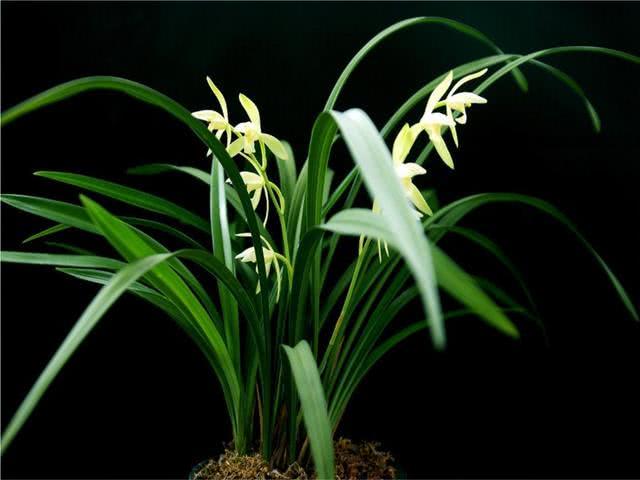
Orchid diseases occur throughout all four seasons, especially in summer when humidity is high and temperatures are high. It is the peak growing season for orchids, and also the season when orchid pests and diseases break out most frequently. At the same time, it is the most distressing season for us orchid lovers. A little carelessness, or failure to treat promptly or properly, will cause orchid death. Therefore, the management and care of orchids in summer is especially critical throughout the year. Today I will analyze with you the causes and prevention methods of common orchid diseases for your reference!
I. Yellowing and blackening of leaf tips
The leaves of orchids start to turn yellow and black from the tip, gradually developing downward. This generally belongs to physiological diseases, caused by poor external environmental conditions, improper cultivation methods, or inadequate nutrition for small shoots. It is not contagious, so there is no need to worry too much. Once this situation is discovered, the orchid should be placed in a ventilated and shady place, avoiding exposure to the sun or direct sunlight. If it is inconvenient to move, shade and cooling measures should be taken. Commonly used methods include shade nets, humidifiers, water curtains, water air conditioners, fans, etc.
Sprouting can also cause leaf tips to turn yellow rapidly. When particularly many small shoots emerge, only 1-2 well-formed shoots should be kept, and the rest can be pinched off. This is because when temperatures are high and new shoots need to grow, the roots cannot provide them with sufficient nutrients, so only the old leaves can provide nutrients through decline, causing the old leaves to retire, turn yellow and black. Note: there is no inevitable connection here. Yellow leaves do not necessarily mean sprouting, and sprouting does not necessarily mean yellow leaves. This requires specific analysis of specific situations.
Yellowing and blackening of new leaf tips is generally caused by overly frequent fertilizing or excessively high concentration, manifesting as thickened new leaves, scorched yellow leaf tips, uneven surfaces, and scorched yellow, withered old leaves!
II. Yellowing and blackening on leaf blades
Black spots appear on the leaf blades, then the area gradually expands, becoming sunken, commonly with concentric rings, and the junction with healthy tissue appears yellow or grayish-green. In the later stage, the leaf tip or leaf margin dries up, and the dried part is generally grayish-white. This is anthracnose caused by fungi. It is contagious and can spread through wind, diseased seedlings, potting medium, orchid pots, etc. Although it will not cause orchid death, it will greatly reduce the ornamental value of the orchid. Attention should be paid to shading, ventilation, and not spraying water on the leaves. Once a diseased plant is found, the affected parts should be cut off promptly to prevent them from becoming a source of infection, and fungicide should be sprayed. A small number of black spots are generally caused by burns from splashed fertilizer water or unclean matter adhering to the leaf surface!
III. Yellowing and rotting at the leaf base (bottom)
1. Yellowing and rotting at the leaf base is generally caused by pathogenic bacteria and fungi. The leaf base appears water-soaked, then gradually turns brown and black. Yellowing starts from the heart leaf and spreads from the leaf base upward. At the same time, the pseudobulb shrinks and turns yellow until it dries up. This is stem rot caused by fungi. These pathogens are contagious and can spread through diseased seedlings, potting medium, orchid pots, etc.
2. Water-soaked brown small spots appear at the leaf base, then rapidly expand, and finally deep brown rotting patches with a foul odor appear. If it falls off with a gentle pull by hand, it is soft rot caused by bacteria, mainly caused by wound infection and water entering the leaf heart without timely evaporation. It is not contagious.
3. The leaf base initially shows yellow to light brown running water lesions, then turns brown to dark brown and rots, and spreads on the soil surface around the roots and at the stem base, damaging the stem and infecting young leaves and roots. White mycelium appearing on the leaf sheaths and root mass indicates southern blight, which is also caused by fungi. It is contagious and can be prevented by sprinkling plant ash on top.
Orchid diseases caused by fungi are contagious, while those caused by bacteria are not contagious. Commonly used drugs for fungal diseases include carbendazim, chlorothalonil, thiophanate-methyl, potassium permanganate, etc. Commonly used drugs for bacterial diseases include copper preparations such as copper hydroxide, copper oxychloride, and copper succinate. Yellow leaves in orchids are caused by various reasons, requiring us to learn more, think more, and gradually investigate to determine the disease. Only by taking targeted measures or using drugs can we achieve twice the result with half the effort, safely and reliably! Author: Mei Fei, founder of the Orchid Bar Forum, secretary of the Jing Shan City Orchid Association in Hubei Province, and an internet celebrity in the orchid industry on major self-media platforms! I publish orchid knowledge and pictures every day, taking you to understand orchids in depth and teaching you to easily grow orchids well. If you have any questions about orchids, you can ask me anytime or leave a message below. If you like it, you can follow me or bookmark and forward it to help others!