What flower is freesia? Grown well, its blooms open as white as snow
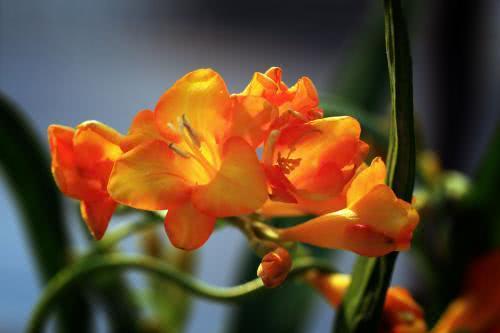
The flowers that freesia produces are as pure as snow, with an attractive flower shape. Its flower language also expresses purity. Freesia is a herbaceous flowering plant, and when it blooms it gives off a faint fragrance, usually only blooming around April to May.
First, if we want to grow a freesia well, we must first pay attention to its cultivation method. Freesia is propagated by dividing the corms. After a year of growing, the mother plant has some small daughter corms, and freesia relies on these daughter corms to grow. Once the freesia flowers have faded, we must dig out its corms and place them indoors to dry.
Around August, we can place its daughter corms in a flower pot to grow, and the potting soil can be rotted manure. Place the daughter corms into the potting soil, about 1CM from the soil surface. And one point we need to note is that when growing freesia, it should be planted densely to prevent sparseness. Before placing them in the potting soil to grow, the daughter corms should be disinfected, and the disinfecting solution can be: carbendazim, thiophanate-methyl, etc.
Temperature conditions: after the plant has produced a few leaves, its temperature should be maintained at around 15 degrees Celsius; when the flower buds are about to differentiate, control the temperature at around 20 degrees Celsius. After flower buds appear, the temperature can also be appropriately raised to promote the plant's flowering.
Light conditions: when we see that the daughter corms have produced one leaf, we should provide appropriate shading; at the flower bud differentiation stage, keep the plant receiving 10 hours of light each day, which is beneficial for differentiation; after the flower buds have differentiated, the light duration can also be increased a bit more to promote flowering. But during this period, direct sunlight should be avoided.
Water conditions: during the period from just planting the daughter corms to sprouting, the plant's potting soil should be kept in a moist state; only when flower buds appear should the watering amount begin to be reduced, keeping the potting soil slightly dry and staying vigilant against pests and diseases.
Fertilizer conditions: during the stage from planting the daughter corms to flowering, strictly speaking, the nutrients in the potting soil are enough for the plant to absorb and grow, but if the plant is found to be slightly weak, a little fertilizer can be applied to it. During the period when flower buds appear, fertilizer should not be applied, to avoid the leaves competing for fertilizer. When flowering, some potassium dihydrogen phosphate can be applied to promote flowering.
Soil conditions: use fertile, loose soil with good drainage, preferably sandy soil.
The above are the methods summarized by the editor for how to grow freesia well. If you are interested in freesia, then take action right away.