Underground pests pose a major threat to peanuts, so how can you kill the insects while keeping pesticide residue low?
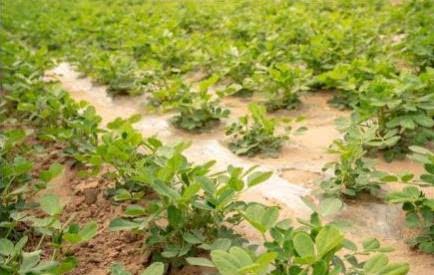
Growers who plant peanuts all know that the most troublesome part of peanut cultivation is the problem of underground pests. If underground pests are not handled well, it is not only easy to cause a reduction in peanut yield but also affects peanut quality. However, in the process of preventing and controlling peanut pests, attention should also be paid to avoiding excessive pesticide residue, which would affect peanut quality.
Common underground pests of peanuts
Mole crickets
Mole crickets are one of the underground pests of peanuts, and mole cricket damage is especially serious in North China. Mole crickets mainly bite and feed on the underground tender sprouts of peanuts, and because the underground activity of mole crickets causes the soil to separate from the peanut roots, peanut seedlings can die.
White grubs
White grubs can be said to be one of the underground pests that harm peanuts most seriously. White grubs are the larvae of scarab beetles. The period during which white grubs harm peanuts is very long; from the peanut seedling stage all the way to peanut maturity, white grubs will continuously damage peanuts. During the peanut seedling stage, white grubs bite and feed on the roots and stems of peanut seedlings, and during the peanut pod-setting stage they bite and feed on young peanut pods, not only causing a large reduction in peanut yield but also causing a serious decline in peanut quality.
Wireworms
The harm caused by wireworms also cannot be underestimated. Wireworms mainly bite and feed on peanut seeds, peanut seedlings and the roots and stems of peanuts, causing uneven emergence of peanut seedlings, missing seedlings, dead seedlings and so on.
Methods for preventing and controlling underground pests of peanuts
In the past, the prevention and control of underground pests of peanuts blindly emphasized the insect-killing effect while ignoring the pollution problem of insecticides, which not only led to the appearance of "toxic peanuts" but also caused pollution problems in water sources and land. It can be said that the loss outweighs the gain. Here are several insect-killing methods with relatively low pesticide residue for everyone.
First, when selecting seeds, growers should choose suitable peanut varieties according to local environmental characteristics and should choose peanut seeds with strong disease resistance. In addition, if the seeds have been stored for a relatively long time, the seeds should be sun-dried before sowing, and the seeds should be sun-dried together with the peanut shells. This can play a certain sterilizing role.
Pay attention to reasonable crop rotation. In areas where disease occurs relatively lightly, rotation can be done once a year, while in serious areas rotation should be done once every two years to avoid continuous cropping. Winter irrigation measures can be adopted to reduce the pest population. Deep plowing of the land can destroy places where pests overwinter. Farmyard manure must be composted at high temperature to reduce pests.
Another method is peanut seed coating, which can effectively protect seed germination and reduce pest damage. It can also reduce aphid damage. Generally, imidacloprid series or chlorpyrifos series are used for seed dressing. After seed dressing, the seeds should be dried in the shade and must not be exposed to strong sunlight.
The above comes from Science Xingnong.