What to do when rose leaves turn yellow? Do these few things to prevent yellow leaves and keep flowers blooming continuously
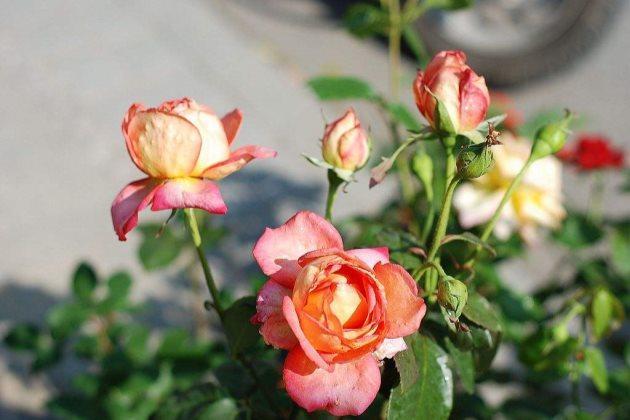
Those of us who love roses will occasionally buy a pot, so what is going on when the leaves of a newly bought rose turn yellow? We can judge by process of elimination whether it is overwatering or iron deficiency. Generally, newly bought ones will not show it so quickly due to iron deficiency; most likely it is yellowing caused by overwatering. If the yellowing leaves are caused by overwatering, we only need to control watering well. Generally, watering when the soil is dry and letting it dry between waterings will not cause rose leaves to turn yellow. If it lacks iron, we can appropriately supplement some ferrous sulfate, which can effectively prevent and control yellowing leaves caused by iron deficiency.
Roses like a moist environment, but they must not be soaked in water. If you water roses too much, the new leaves of the rose will turn yellow, look dull, and grow slowly. Therefore, when watering roses, you must pay attention to the amount of water, and it is best if the potting soil is thoroughly moist but not waterlogged. Each watering should follow the principle of watering thoroughly after the soil has dried out. When there is not enough light, it can also cause rose leaves to turn yellow. Roses are sun-loving plants and need quite a lot of light. If there is not enough light, it will also cause leaves to turn yellow. Therefore, give roses more sun. Generally speaking, the daily light duration should be more than 6 hours.
If old leaves naturally turn yellow, we only need to pick some off appropriately to make them look more attractive. However, note that fallen leaves should not be placed in the flowerpot, as they easily breed bacteria. If it is potassium deficiency, we can meet its growth needs by supplementing potassium sulfate solution. The growth of any plant involves the process of new replacing old, so there is no need to worry too much about old leaves turning yellow; just let them turn yellow. However, if the leaf tips turn yellow and dry up, it may be caused by potassium deficiency. At this time, the plant will appear thin and weak, with poor growth.
When roses are attacked by pests, they will become diseased, and the plant body and leaves will suffer varying degrees of damage, especially the leaves, which will obviously turn yellow and wither. Generally speaking, the main pests that harm roses include red spider mites, scale insects, and so on. Therefore, once pests are found on roses, corresponding pest control measures should be taken. Only by clearing the pests can the roses recover their health. To make roses grow luxuriantly, people generally apply some fertilizer to roses to give them sufficient nutrients. But if fertilization is improper or excessive, root burn can occur, which instead damages the health of the rose and makes the leaves turn yellow. Therefore, when fertilizing roses, you must grasp the right amount and fertilize according to the rose's growth season.
Although roses are not very strict about soil requirements, loose, fertile, organic-rich, slightly acidic loam is more suitable. They like warm, sunny, well-ventilated, and well-drained environments. If you want roses to bloom continuously, you need to give them long hours of light. Only under full-sun conditions can roses grow robustly. For potted roses, apart from needing appropriate shading during high summer temperatures, they can receive all-day sunlight at other times. Roses like a moist and warm environment, but they can also tolerate a certain degree of drought. Usually, you can water according to the principle of watering thoroughly after the soil has dried out. In summer, it is best to choose the morning for watering, while in winter it should be done at noon when the temperature is higher. In addition, potted roses are not tolerant of high temperatures. When the ambient temperature is high, you can spray water to lower the temperature, so as to avoid the phenomenon of leaves being scorched.
Roses grow relatively quickly, and throughout the entire growth period they need to be pruned at any time. This not only ensures a beautiful plant shape, but also avoids wasting nutrients and keeps flowers blooming continuously. The purpose of spring pruning is to remove excess young buds and retain two or three main branches to concentrate nutrient supply. Pre-flowering pruning is to remove excess flower buds and retain one main flower bud, so that the flowers can be large and colorful. Post-flowering pruning is to remove spent flowers and ensure a beautiful flower shape.
This is a gathering place for flower lovers, sharing flower-growing tips. You are welcome to follow and exchange ideas.