Taipei City Health Department random inspection: 9% of vegetables and fruits fail pesticide residue tests, with celery and Thai basil severely exceeding limits
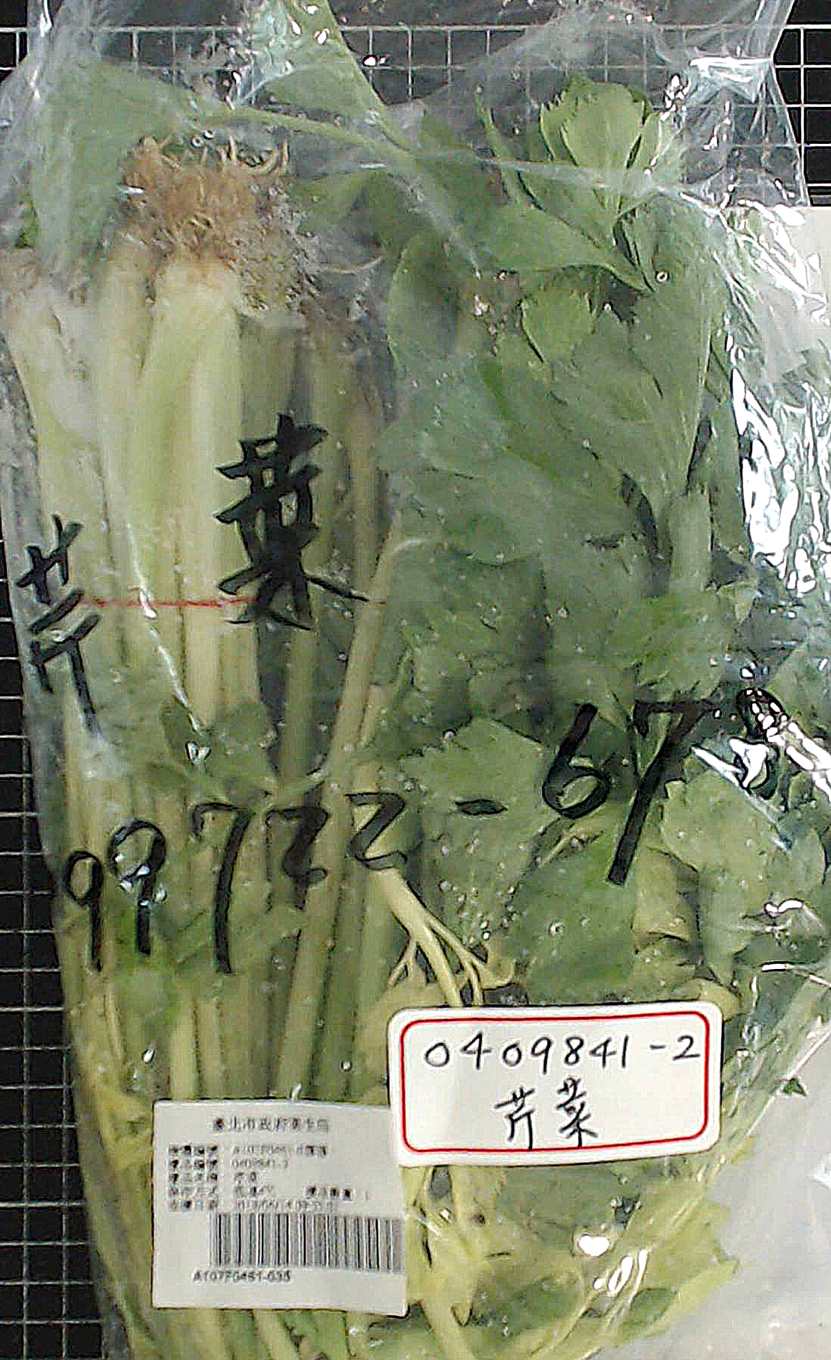
The Taipei City Health Department conducted random testing of pesticide residues on vegetables and fruits, with a violation rate of nearly 10%. The items included celery, Thai basil, passion fruit, okra, bird's eye chili, chive flowers and red chili peppers. Among them, celery exceeded the limits most severely, with fungicides and herbicides exceeding limits by nearly 60 and 40 times respectively. Fipronil, which must not be used on vegetables, was also detected in Thai basil products.
High temperature and humidity increase the likelihood of pesticide use
Among the pesticide residues found this time, fungicides and insecticides accounted for the highest number of violations. A staff member surnamed Lin from the Caohu Cooperative Farm in Yunlin County, which supplies the Taipei Agricultural Products Marketing Corporation First Fruit and Vegetable Wholesale Market, responded that celery has many insect pests and it is very difficult not to spray pesticides; however, he denied that the farm uses herbicides, saying, "How could we spray that! If we sprayed it, the celery would die." Regarding the herbicide levels exceeding limits in this test, he said he was unclear.
In addition, Director Lu of the Fuxing Cooperative Farm in Yunlin County, which was also involved in pesticide residue exceedances, said that after a preliminary investigation, a farmer growing Thai basil had mistakenly used an insecticide, and that in the future pesticide use education for cooperative farmers will be strengthened. However, he also explained that this year's climate has been hot and humid, and Thai basil is a crop harvested multiple times. The lower leaves are prone to bacteria and plant diseases under high-temperature conditions, so some pesticide spraying is inevitably needed.
Agricultural Improvement Station recommends: non-chemical pesticide materials can replace conventional pesticides
Wang Shih-hsien, director of the Tainan Agricultural Improvement Station, pointed out that pest damage is severe in the dry season, while disease problems are numerous in the rainy season, making it difficult to persuade farmers to completely stop using pesticides. But he stressed that pesticide use management techniques need to be strengthened. In particular, conventional farmers have more pesticides to choose from, and should use agents with lower risk.
Chen Sheng-kuan, associate researcher at the Tainan Agricultural Improvement Station, further explained that Thai basil is generally planted at high density, so the lower leaves do not get good ventilation and often have pest and disease problems; the stem base of celery (where the stem meets the soil) is also prone to pest and disease problems, and since celery is not heat-tolerant, pesticide use is even heavier in summer.
However, Chen suggested that non-chemical pesticide control materials can replace conventional pesticides. For example, emulsified oil agents and lime sulfur mixture can both resist disease and pests, phosphorous acid can also prevent bacteria, and neem oil can suppress pests. Although the effects are not as strong as chemical pesticides, they are less likely to cause pesticide residue problems.
In addition, if farmers choose to use pesticides, Chen Sheng-kuan also reminded them to establish correct concepts of pesticide use. For example, agents with longer efficacy should be used as early as possible in the growing period, while pesticides with shorter efficacy should be used near the harvest period. He also pointed out that there is no single method for pest and disease control, and diversified control should be carried out according to crop characteristics, season and environment.