How to grow Belgian azaleas? Detailed guide to cultivation methods and precautions
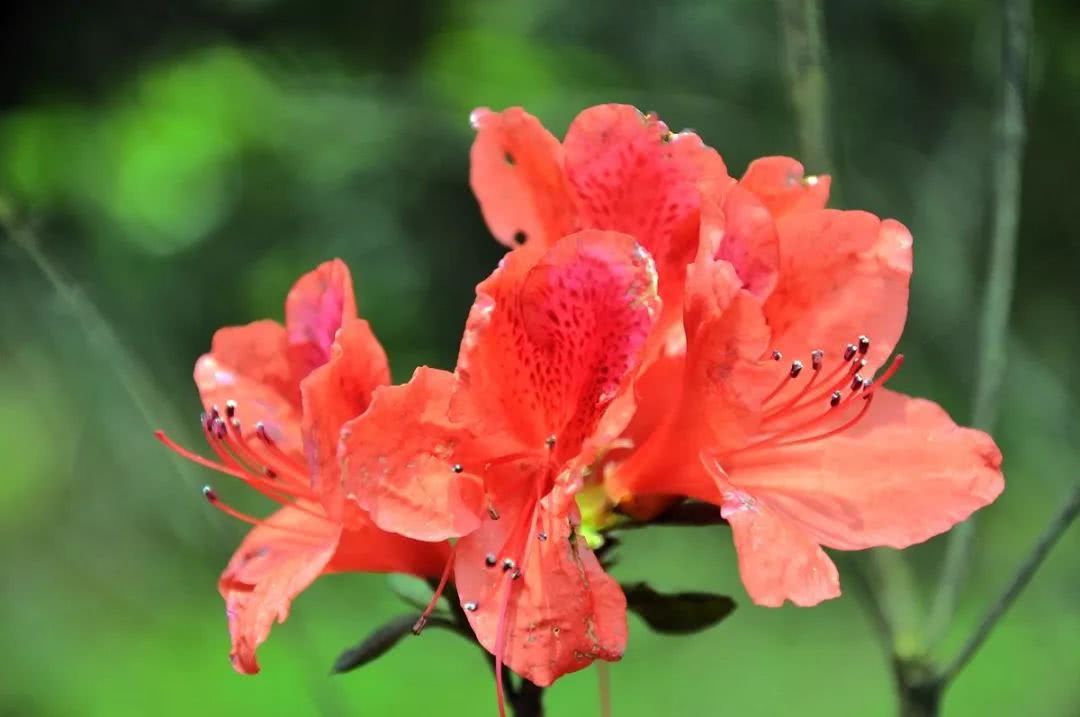
Belgian azalea is a hybrid azalea variety. Its ornamental value generally peaks around the Spring Festival. Belgian azaleas are usually artificially controlled for flowering period. Because of their beautiful flower colors, they are deeply loved by many people. Belgian azaleas prefer warm, humid environments, are not cold-tolerant, and fear heat. Now let Today's Nursery Stock Network introduce the key points of growing Belgian azaleas:
I. Propagation methods
1. Cuttings
Belgian azalea cuttings are taken from May to June. Choose semi-mature young shoots. The cuttings should be 12-15 cm long. Remove 2-3 leaves from the base, keep the top leaves and cut them in half. Insert into a cutting bed filled with leaf mold or river sand. The insertion depth should be half the length of the cutting. After inserting, press firm and maintain humidity. Healing begins in about 40-50 days, and roots gradually form in 60-70 days. If the base of the cutting is dipped in 0.2% indolebutyric acid solution for 1-2 seconds, the rooting rate can be increased.
2. Layering
Carried out from April to May using the air layering method. Choose 2-3 year old mature branches. At 15-20 cm from the tip, use a sharp knife to make a ring bark cut, with a ring width of 1.5 cm. Wrap with plastic film, fill with moss or leaf mold, and keep moist. Healing and rooting occur in about 4-5 months. When there are many roots, cut off and plant directly in pots.
3. Grafting
The plum rain season is best. Commonly use vigorously growing 2-year-old hairy azalea as rootstock. For scions, use healthy, vigorous young shoots of Belgian azalea that sprouted in the current year. Mainly use branch grafting. The cut should be 3 cm long. Take an 8-10 cm scion, keep 2 top leaves and cut them in half, whittle into a wedge shape 3 cm long, insert into the rootstock, tie and keep moist. Healing occurs after 50 days, with a high survival rate.
4. Seed propagation
Belgian azalea sowing time is in April for spring sowing. The seeds are very small. The sowing soil needs sterilization. The suitable germination temperature is 22-24°C. Use indoor pot sowing. After sowing, no soil covering is needed, just press lightly. Germination occurs in about 10-15 days. Seedlings grow slowly. When seedlings have 2 true leaves, transplant into 4 cm pots. Seedlings need 4-5 years to bloom.
II. Cultivation methods
1. Reasonable fertilization
During the seedling stage of Belgian azalea, around 20 days, apply 0.1%-0.2% multi-element foliar fertilizer solution. Starting one month before flowering, the fertilization amount should be appropriately increased, mainly with 0.2% quick-acting phosphorus and potassium fertilizer, applied once every 10 days to prevent excessive growth and promote more and larger flowers with brighter colors. Stop fertilizing during the flowering period to avoid promoting new shoots that are unfavorable for flowering. Note that fertilization should not be too concentrated or excessive to avoid fertilizer damage.
2. Summer management
Belgian azaleas prefer cool and humid climate environments. In summer and autumn, place them in a cool and ventilated place, and spray clean water on the branches, leaves, and surroundings. You can also place clean water in a shallow tray, put the flower pot on the tray, and let the flowers slowly absorb water from the bottom of the shallow tray. Therefore, the cultivation location should be chosen in a south-facing, ventilated, semi-shaded or scattered sunlight area. You can also use 60% shade net coverage. Especially in summer, achieve ventilation, moisture, sun protection, and heat protection.
3. Soil disinfection
In addition to requiring loose, acidic soil, Belgian azalea has strict requirements for soil environmental conditions. When preparing the seedbed for field planting, use 1.5 jin of carbofuran and potassium permanganate solution diluted 1000 times per mu for soil disinfection treatment, which can prevent cutworms, crickets, mole crickets, and diseases. For potting soil, before planting, use steam fumigation or potassium permanganate disinfection to make the soil meet the use requirements of being clean, hygienic, and free of pests and diseases.
4. Fertilizer and water management
Belgian azaleas grow fast, have many branches and leaves, and have a long growth period, requiring sufficient fertilizer and water. Because its fibrous roots are small and fine, fertilization should mainly be foliar fertilizer, supplemented by peanut bran as base fertilizer. Currently, the market mainly has foliar treasure, high-yield spirit, etc., which can be used alternately. Apply thinly and frequently, generally fertilizing once a week, spraying fungicide twice a month, and combining sterilization when applying foliar fertilizer. At the same time, depending on the greenness of the leaves, spray 5% ferrous sulfate to supplement acid. Water conditions are also very important for its growth. Except on rainy days, generally water field-planted seedlings once every two days, and potted seedlings once a day. When displayed indoors, do not water if not dry; when watering, water thoroughly.
5. Pruning, shaping, and flowering period control
Belgian azalea crown pruning and shaping are combined with cutting scions and flowering period control. Pruning and shaping means through cutting branches, removing buds, wiping off flower buds, and supporting the shape, organize the crown into a mushroom shape, and cut the pruned branches suitable for cuttings into cutting strips and insert them promptly.
Under normal temperature, Belgian azaleas need 180 days from transplanting surviving seedlings to flowering. After flowers fade or after artificially wiping off flower buds, they bloom again after another 180 days. By repeating this operation, decide whether to remove or keep flower buds according to different market times to control the flowering period. For bulk trafficking, package and transport to market 20-30 days before flowering. If decided to go on the market on National Day, then at the end of March remove flower buds and flowers, and by the end of September the whole tree can bloom simultaneously.
III. Precautions
1. Pests
Red spider mites are relatively common, caused by dry heat. They suck leaf sap, causing the whole plant to slowly yellow and wilt. Regularly check the leaf backs daily. If you find some reddish-brown dots like "zi zai," these are red spider mites, and there will be spider silk.
We should first isolate the Belgian azalea and use relatively strong water through a rubber hose to wash the leaf backs with pests. After slightly drying, you can crush more than ten fresh oleander leaves, add five cigarette butts (only take the tobacco) (about the amount of one cigarette) and one chopped fresh red chili pepper, soak in 500 ml of water for twenty-four hours, spray the stems and leaves every three days, and place in a ventilated place to dry, spraying three times in succession. Daily, maintain moisture and air circulation.
2. Yellowing leaves
This is a physiological disease caused by lack of iron, trace elements, and soil that is too alkaline. All azaleas prefer slightly acidic soil, which must be loose and well-drained, and not compacted.
In severe cases, change the soil, mixing "potting soil," peat soil, and black mud (humus soil) in three equal parts. In mild cases, bury a few rusty iron nails in the mud.
3. Early withering of flower buds
The leaf tips and edges of Belgian azaleas will also wrinkle, curl, and turn yellow-brown at the same time. This is caused by applying concentrated fertilizer when there are flower buds, or hot stuffiness without ventilation, or being too dry, or compacted planting soil. When buds appear, stop fertilizing, place in a cool, airy, ventilated place, and provide only sufficient scattered light, avoiding scorching sun. The potting soil should be appropriately moist, not dry. Change the soil once every year after flowers fade. Remove damaged buds and leaves.
4. Brown spots on leaf edges
This is the main disease of Belgian azaleas, called brown spot disease, caused by excessive moisture, lack of light, and hot stuffiness. Remove diseased leaves and spray "Dacotech" 600 times solution once a week, spraying three times in succession.