The head of the four great famous woods, imperishable for a thousand years, commonly known as wood gold, a windfall if you come across it
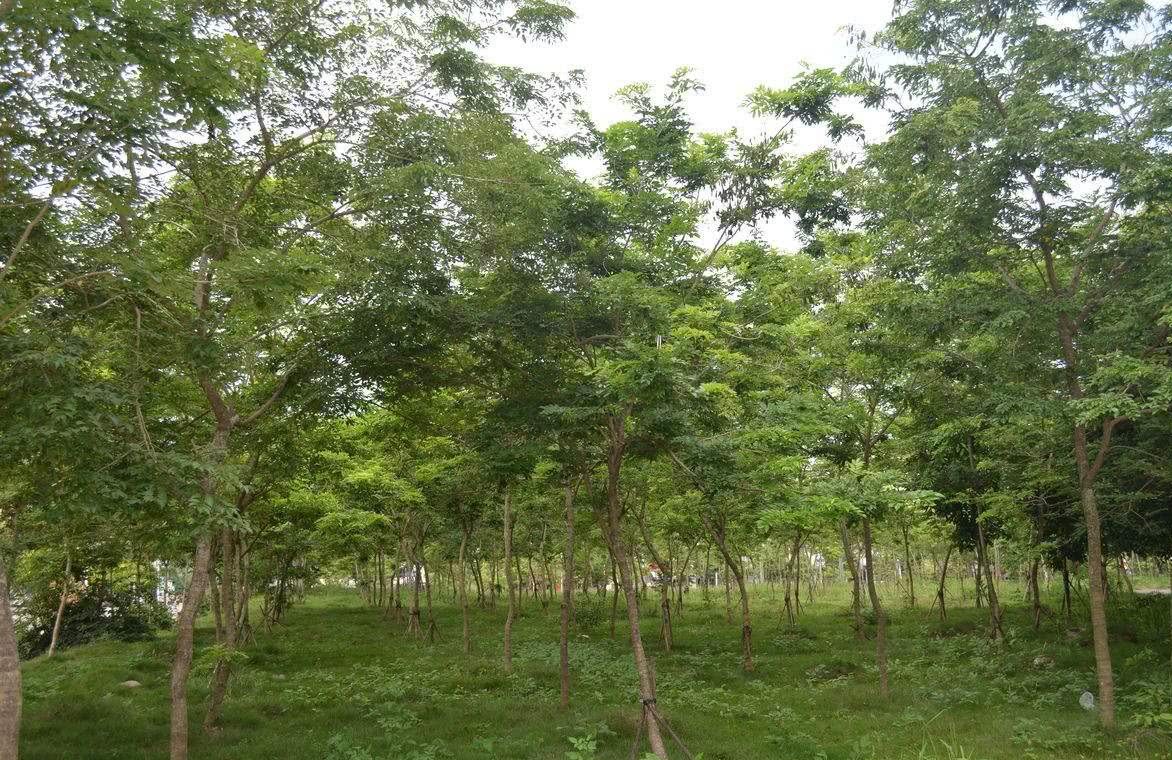
Today's society develops very fast, one could say it changes with each passing day. Things that were unimaginable in the past have now become essentials almost everyone cannot do without. For example, computers, mobile phones, smart furniture - this was unimaginable 20 years ago. In the past, most of what people needed was sourced locally; take furniture, for instance - it was all made of wood, unlike today's stainless steel or plastic versions. Although society develops quickly, that does not mean the things of the past were bad. On the contrary, the wooden items once found in every rural household have now become rare goods, especially woods that grow into usable timber particularly slowly - today they have been logged down to almost nothing left, and even with money you may not be able to buy them.
In our country's history, four kinds of wood have been honored as the "four great famous woods." Their timber is fine and stable, and their yield of usable material is low, so since ancient times they have been sought after by people. These "four great famous woods" areHuanghuali wood (rosewood, Dalbergia odorifera), zitan wood (red sandalwood), jichimu wood (chicken-wing wood) and tieli wood (ironwood), among which huanghuali wood is the head of the four great famous woods, extremely precious and rare. Huanghuali wood is a tree species unique to our country. According to the records in "Silva Sinica" (Zhongguo Shumu Zhi), wild huanghuali wood grows on Hainan Island, and once grew in large quantities in the areas where the Li people lived in concentrated communities. At that time, the door beams, door panels, cabinets, and even pot lids on old houses on Hainan Island were all made of huanghuali wood, and after a thousand years of wind and rain they still did not rot. After the Ming Dynasty, huanghuali wood became timber exclusively for the imperial family, and ordinary people rarely got to see it.
The name huanghuali is actually quite interesting - it sounds like the name of a fruit, but in fact its naming really does have a bit to do with the pear. Because its leaves resemble those of the pear tree, the color of the wood is mostly golden yellow, and the grain can show patterns such as "old man's head" and "fox head," people commonly called it "huanghuali." There are many reasons huanghuali is so precious. First, in terms of its timber, it fears neither cold nor heat; no matter how the weather changes, it basically will not warp or crack - one could say its timber is quite stable.
Second, it also has very high toughness and does not break easily. For example, the "three-bend leg" popular in Ming Dynasty furniture could only be made with huanghuali wood; other woods could not do it. So in the Ming Dynasty, huanghuali wood was extremely sought after, and many of the Ming-style furniture pieces seen today are made of huanghuali wood.
Huanghuali wood itself contains a certain amount of oil, which not only gives it a fresh fragrance but also has a bactericidal effect and pest-repelling properties. In ancient China, the wood shavings of huanghuali could also be used as medicine; in the "Compendium of Materia Medica" (Bencao Gangmu) it is called "jiangxiang" (dalbergia heartwood), and it can relax muscles and invigorate blood circulation, lower blood lipids and lower blood pressure. It is said that some nobles in ancient times filled their homes with huanghuali furniture, often inhaling its scent to help calm the mind and aid sleep, and also used its wood shavings to make pillows and to brew tea. Looking at it now, this was truly extremely luxurious - something one would not even dare to imagine.
Unfortunately, wild huanghuali wood resources are nearing exhaustion, while planted huanghuali has not yet grown into usable timber (it takes at least a hundred years to mature), so huanghuali wood is now called "wood gold." In the past 20 years, its price has risen at least 400-fold, and it is basically sold by weight, with the price per kilogram at over 10,000 yuan. If you could come across a huanghuali in the wild as thick as a bowl's rim, you would really be making a fortune.