Orchid watering has its rules: pay attention to these points in spring and summer
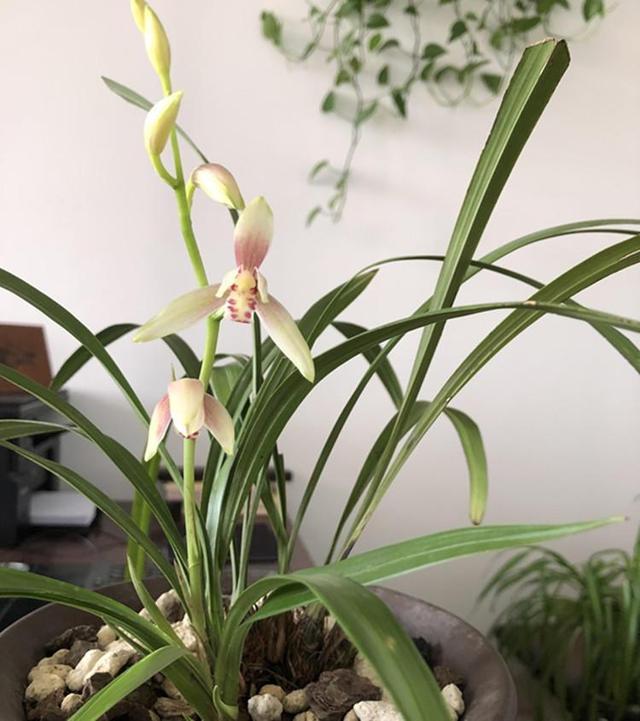
When growing orchids, everyone knows the saying "Understanding orchid care is easy, but watering takes ten years of skill." Watering has always been the most important part of orchid care. However, many people still cannot master the watering of orchids. In fact, when watering orchids, pay attention to "these points" regardless of spring or summer.
1. Pay attention to water temperature
When growing orchids, do not water with cold water in winter; the water temperature should be close to room temperature. Do not water with hot water in summer. If water is stored in a water tower, during extremely hot weather, be sure to prevent excessively high water temperature from damaging the orchid plants and orchid roots, and do not suddenly water with cold water, so as not to damage the orchid plants.
2. Pay attention to humidity
When the air humidity is too high and close to saturation, never water or mist. During the day, humidity of around 60% is suitable. Humidity should not be too high, otherwise it will weaken the roots' ability to absorb water. First, it will affect the number of new roots, and second, it will gradually cause orchid roots to lose the original driving force of the water tower's water storage in lowering water temperature.
3. Pay attention not to water only halfway
Some flower lovers mistakenly believe that orchids should not be watered much, so they dare not water them and often water only halfway. The potting medium stays wet on top and dry below for a long time, causing the roots to dry up and wither from lack of water. The principle of watering orchids is "if you water, water thoroughly," meaning the water should not only flow out from the drainage hole at the bottom of the pot, but also thoroughly wet all the growing medium in the pot. Often when watering, although water flows out from the bottom hole, it still does not meet the standard of "thorough."
To make the growing medium in the pot thoroughly wet, you can water in several rounds or use the soaking method. For dry granular growing medium, it cannot be watered thoroughly unless soaked, but do not use the soaking method continuously; leave a certain interval so the orchids have time to "breathe." In addition, to make watering orchids easier, when choosing growing medium for planting, flower lovers had best use a special orchid substrate, which helps with water drainage and air permeability.
4. Pay attention to watering less with standing water
If water is stored in a water tower for too long, water molecules form chain-like structures. The longer the time, the harder they are to break apart, making it difficult for them to participate in metabolic activities and unfavorable for orchid plants to absorb. If water is stored in a vat or other container, you can keep a few goldfish in the vat so the water is stirred.
5. Pay attention to watering with "revival water"
In the evening, after flower lovers use special organic liquid fertilizer for orchids diluted 500 times for fertilizing, the orchid plants can effectively absorb most of the nutrients through one night of absorption. At this time, watering once with "revival water" is beneficial for orchid absorption and can also prevent fertilizer damage.
6. Pay attention not to water too frequently
Orchids have a great tolerance for drought and are relatively drought-tolerant plants, so being slightly dry has little effect. On the contrary, being wet is not acceptable; waterlogging for 24 hours can cause suffocation. In daily cultivation, the vast majority of flower lovers love orchids too much and water too frequently, causing root rot and even plant death.
7. Pay attention not to spray water arbitrarily
Spraying water is necessary. In addition to supplementing water, it can also keep orchid leaves fresh and is beneficial to the respiration and photosynthesis of orchid leaves. However, water should not be sprayed arbitrarily: do not spray under strong direct sunlight; do not spray in high-temperature weather; spray less when there is no wind and it is hard to dry; do not spray water with impurities; do not spray on rainy days; do not spray on foggy days; do not spray when continuous rainy days make humidity too high, and so on.
Especially when orchid diseases have already been found, particularly leaf diseases, spraying water is strictly prohibited; otherwise, it will cause the spread of pathogens and an outbreak of orchid disease. For spraying water, it is best not to use river water with impurities, and even more so not to use alkaline groundwater; water that has been left to stand for 1~2 days is best.