Hydrangeas not blooming is mostly due to incorrect pruning methods
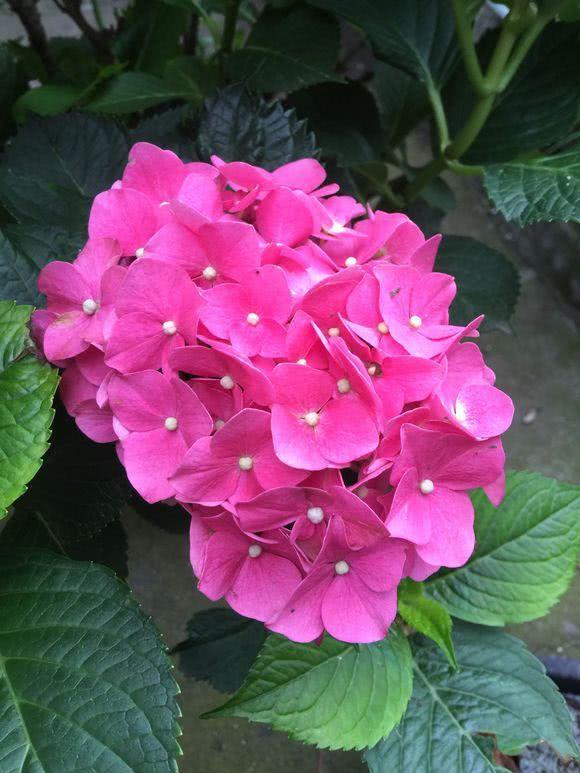
Isn't it said that hydrangeas need good pruning to bloom abundantly? Why won't my hydrangeas bloom when I've already pruned the old branches, weak branches, and damaged branches? That's because you didn't distinguish between old branches and new branches and pruned them all off together. Let me explain one by one.
Because for hydrangeas to bloom, you need to distinguish between new branches and old branches, and different varieties are different, so you need to be clear about this. Otherwise, if you prune incorrectly, it's normal that they won't bloom. Generally, new branches produce flowers, including bigleaf hydrangea (Hydrangea macrophylla), sawtooth hydrangea (Hydrangea serrata), oakleaf hydrangea (Hydrangea quercifolia), Endless Summer hydrangea (Hydrangea macrophylla 'Endless Summer'), etc. For these varieties, the branches that grow newly in early spring are the ones that easily bloom.
If you want the new branches that bloom to be able to flower, it's generally not recommended to prune in spring. Other times are all fine, and winter pruning is also acceptable, because if you prune in winter, new buds will sprout in spring, which are the new branches, and these are the main force for blooming. For hydrangeas that bloom on new branches, you generally need to keep 2-3 bud points on the main stem, and the plant height should be about 10 cm from the ground. After winter, the buds are relatively plump, ensuring strong buds can grow in spring. Every branch will have flowers. And Endless Summer hydrangea is a variety that blooms on both new and old branches, so pruning can be more casual.
Varieties that bloom on old branches include smooth hydrangea (Hydrangea arborescens), panicle hydrangea (Hydrangea paniculata), and climbing hydrangea (Hydrangea petiolaris), etc.
The requirements for varieties that bloom on old branches are like this: branches that grow in spring will not bloom that same year, and you have to wait until the spring of the second year for them to bloom. So when pruning, don't cut off all the new branches, otherwise what grows the next year will still be new branches, and they still won't bloom. For varieties that bloom on old branches, after the earlier pruning is finished, you can do a slight tidy-up in winter, removing diseased, weak, and unattractive branches.
For varieties that bloom on old branches, flower buds begin to differentiate in late summer and early autumn, and pruning is generally finished by the end of August. Generally, you should keep 2-3 nodes on the branch, and you should also do post-bloom pruning. After blooming, prune at the spot 2-4 leaves below the flower. If you want the entire hydrangea plant to become smaller, you can cut a bit lower down.
When caring for flowers, fertilizer is very important. It's best to choose ecologically safe organic fertilizer, rich and balanced in nitrogen, phosphorus, and potassium, with various organic matter, minerals, and amino acids added, promoting the plant to grow vigorously, producing more flower buds, blooming more, and having a longer flowering period.
Second stage: autumn pruning. After the first-stage pruning, new branches below the cut will quickly emerge. The node below the cut is where flower buds that can bloom the following year will differentiate in the second year. Carry out the second pruning slightly above that spot.