Spider plant leaves turning brown at the tips indoors: if left untreated, the leaves will easily turn yellow and wither.
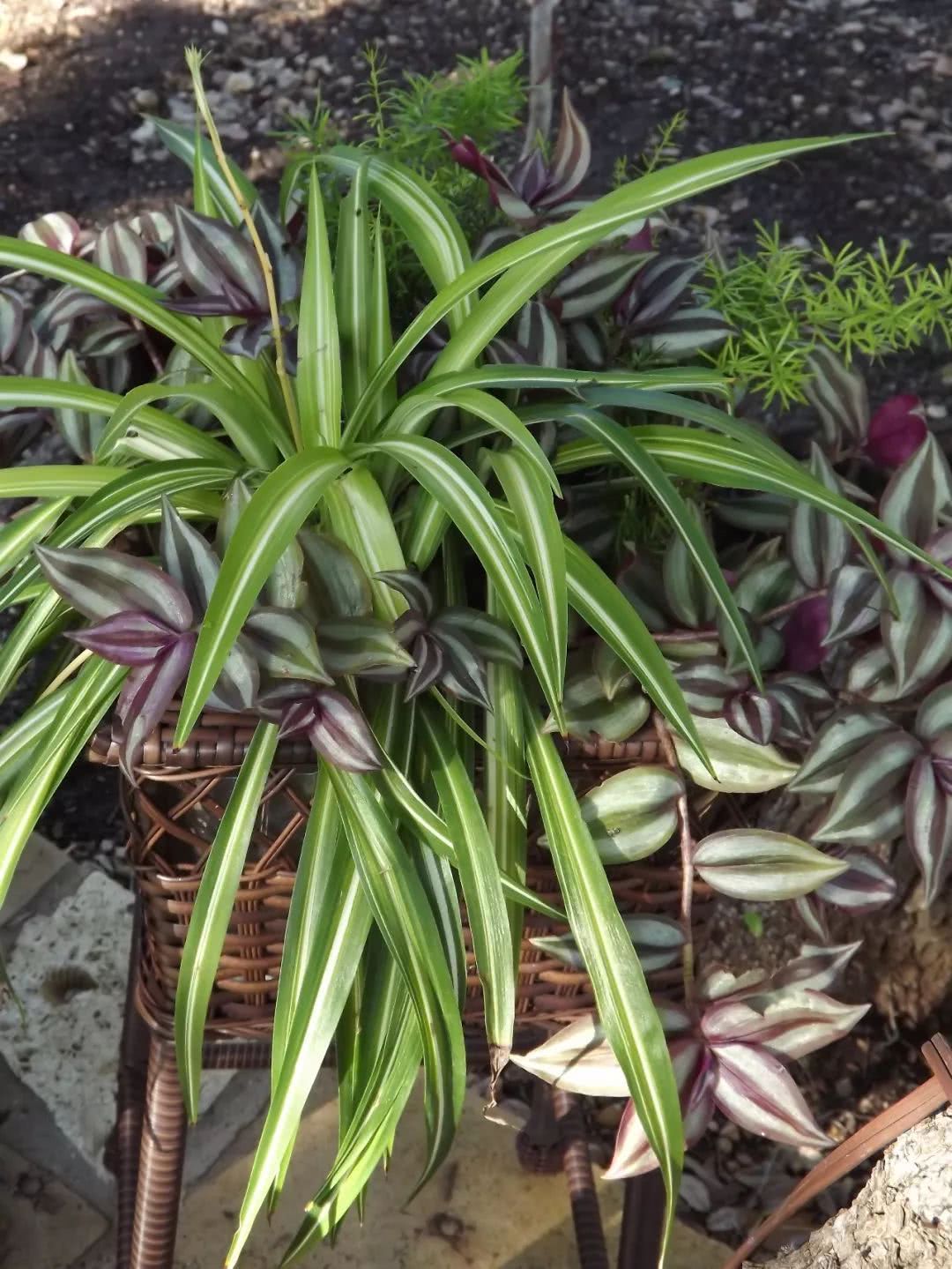
The spider plant (Chlorophytum comosum) is a common potted green plant indoors. It has always been called a beginner plant or a lazy person's plant, requiring no frequent care. It can be kept in a spot with proper light, or grown in a shaded environment. It has very low water needs and good drought tolerance, so simply watering thoroughly once the soil has dried out is enough.
Spider plants are generally kept at home as indoor potted plants. The most suitable spot is on an east-facing windowsill, with proper scattered light each day, but excessive direct sun exposure must be avoided, and some shade is needed in the afternoon.
Recently a gardening friend asked me about his spider plant developing yellow, withered leaves. The first sign was browning leaf tips, and because it was not dealt with in time, the condition of the leaves became more and more serious. Let's take a look below at the problems that commonly occur when caring for spider plants. If there is dust on the leaves of the spider plant, it should also be cleaned off promptly to avoid affecting photosynthesis, otherwise it will cause browning leaf tips.
There are many situations in which spider plants develop black tips. If the leaves dry out and turn black in summer, it is very likely caused by excessive direct sun exposure or excessive drought.
Of course, if your spider plant's leaves show signs of black rot or decay, that may be caused by overwatering, or by an environment that is too hot and stuffy, with no ventilation or light, causing the browning tips.
If the environment where you keep your spider plant is relatively dry, that can also easily cause browning tips. It is also very easy to improve this condition in spider plants. In this case, you need to promptly cut off the diseased leaves, and finally spray water around the planting site, keep watering regularly, but avoid the soil being wet for long periods or waterlogged.
The pot in the photo above is a spider plant with compacted soil. Even regular watering cannot save the leaves from continuously turning yellow and withering. What you need to do is promptly cut off the yellow leaves and remove all diseased leaves and branches. Plant it in loose, well-draining soil.
The root system of the spider plant is fleshy and stores a lot of water, so its water needs are very low. Root rot from too much water is really hard to deal with.
For spider plants grown in pots at home, you also need to check whether the soil has become compacted. Of course, it may also be that the plant has not been repotted for many years, resulting in too few nutrients in the soil. When growing spider plants, be sure to use loose, well-draining sandy soil, avoid using soils that easily become waterlogged, do not use heavy clay soil, and even more so do not directly use garden soil. There is nothing wrong with growing in these soils, but over time the soil becomes especially prone to compaction, and ultimately this easily leads to waterlogging and root rot.
When caring for spider plants, if they get several hours of light each day, they need regular watering to avoid the soil becoming too dry; during the growing season the soil can be kept moist. In summer, spider plants can be placed in a spot with scattered light in the morning or evening, and they need shade during the strong sunlight at midday and in the afternoon.