Hard to Tell Real Clivia from Fake? Here's How to Pick a Genuine Clivia
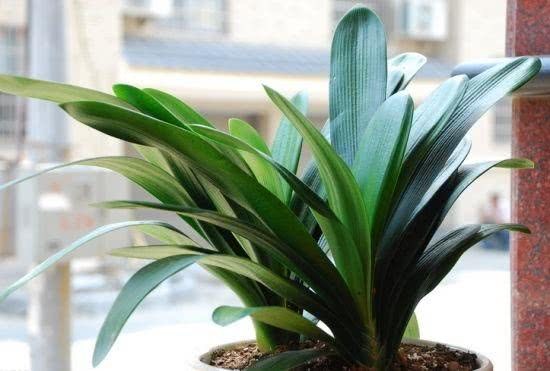
The leaves, flowers and fruit of Clivia miniata all have extremely high ornamental value. Judging the value of Clivia by its appearance alone puts it far above the ordinary. But besides its value, there is another question about Clivia that attracts flower lovers, namely whether it is real or fake. In fact, among Clivia of this variety, judging by what is available on the market, fakes are very rare. Since there is hardly any question of real or fake, what exactly is this real-or-fake talk about?
In fact, the real-or-fake question about Clivia concerns its ornamental quality and class. That being the case, let's talk today about how to pick a genuine Clivia.
If the leaves grow relatively wide and the gaps between the veins are fairly far apart, and the leaves look rather flat, it is very likely because potassium fertilizer was applied during cultivation. If the leaves feel harder than those of other green plants, and are thick, plump and glossy, in a state of vigorous growth, it is very likely a nitrogen-fertilizer flower. This whole category of Clivia has been grown with fertilizer care, which is what is called a fertilizer flower.
If a leaf grows out between the leaves of a Clivia plant that otherwise looks very neat and orderly, it not only spoils the plant's appearance, but actually reveals the unstable growth of that potted plant. If this crooked leaf is removed at this point, the lower end of the removed leaf will generally wither within a few days. Although the stub may not be visible, as long as you part the base of the leaf you can still tell whether a leaf has been removed.
Fake shine is a common trick used on Clivia flowers: wiping the leaf surface with sugar water or a chemical agent, so that after the moisture evaporates the leaves look even glossier. This is also the easiest thing to detect; just wipe the leaf surface with a wet wipe and you will know, or you can smell the leaf, because if a chemical agent was used for the fake shine, you can usually smell it. If a Clivia shows a waxy gloss on both sides of the leaf, it is a top-grade genuine variety.
To make the veins in Clivia leaves look clearer and stiffer, people generally use small objects to hold the growing plant in place. The main giveaway of this method is on the back of the leaf: if you can see traces of pressure, yellowing or cracks on the leaf back, then it is quite obvious.
Under normal circumstances, Clivia that grows naturally without artificial manipulation is rare; most of what is on the market is what is called chemical flowers, fertilizer flowers and hand-worked flowers. Still, the identification methods above can all tell real from fake: look at the veins for leaf width, look at the gloss for leaf hardness, and the roots are also an indispensable point for identification. So when choosing, you must examine the whole plant carefully so as not to make a mistake.