Can't get rid of mealybugs on your succulents? To control the pests, find the source first
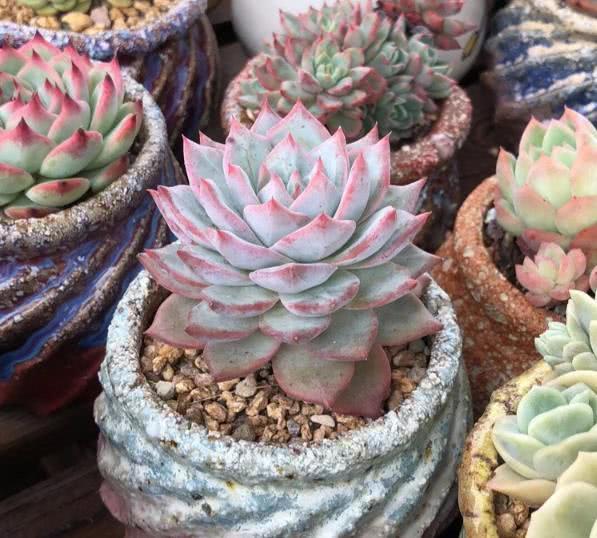
Mealybugs are actually a group of small insects, and most of their bodies are covered with a waxy secretion. Mealybugs are one of the most common pests on succulents. They often gather in clusters on the stems and leaves of plants, sucking the sap from the stems and leaves, causing the stems and leaves to wither, and in some cases even killing the whole plant. In addition, they can also trigger sooty mold, causing great harm to plants. Mealybugs have a very strong reproductive capacity: eggs hatch into nymphs, and after crawling around for a short time, they become mealybugs. The hot, humid environment of summer is the peak period for these pests. Mealybugs are undoubtedly the most hated creature among succulent growers, bar none, and as you keep growing succulents you gradually get used to their presence. But for beginners growing succulents, it is very hard to accept: how could my succulents possibly have mealybugs, and why do succulents get mealybugs?
In 90% of cases, the reason succulents get mealybugs is that the leaves, branches, roots or soil of the succulent you bought already contained mealybugs or their eggs; you just did not notice at the time, and only saw them after they had multiplied into a full-scale outbreak. Greenhouses themselves are high-outbreak areas for mealybugs; the pests are simply suppressed by various means, so it is entirely possible for roots, soil, or even the succulent itself to have a few lingering bugs or eggs. Mealybugs generally lay eggs in two places: one is on the leaves and branches of the succulent, and the other is in the soil around the roots. The eggs are extremely small. From egg hatching to adult, the fast ones take two to three months, and the slow ones take three to four months. Such a long time span may give you the illusion that your succulent had no mealybugs back then, and that the bugs only appeared after you started growing it outdoors.
How do you prevent and control mealybugs on succulents? Mix baijiu with water in a 1:2 ratio and pour it through the surface layer of the potting soil. You can do this once in mid-April, then about once every half month, for a total of 4 times for the best effect. You can also repeatedly wipe the affected leaves with alcohol, which can thoroughly remove mealybugs and even kill larvae invisible to the naked eye; the method is safe, simple and effective. Rice vinegar also works: dip a cotton ball in rice vinegar and gently wipe the affected leaves. This not only achieves a thorough insect-killing effect, but also makes the plant's leaves turn green again and look glossy.
Can succulents bought online that have already had their roots washed still have mealybugs? Succulents whose roots have already been washed can still have mealybugs. Overseas-ordered succulents all get their roots washed, and once, while unwrapping a succulent, I saw a huge mealybug coiled around the roots. Also, sometimes when you buy succulents online and they look like their roots have been washed (if no soil or dust falls off when you unwrap the tissue paper, then the roots have been washed), after you plant them, some succulents may still show mealybugs after a while. So unfortunately, root-washed succulents can still have mealybugs; the eggs may still be attached to the roots, or the larvae may be hiding in the gaps between the leaves. But root-washed succulents definitely have far fewer than unwashed ones, and no soil falls off when you unwrap the paper, which feels quite nice.
What should you do if there are ants on your succulents? The most fundamental reason there are ants on your succulents is that your succulent has something the ants want. As long as there is nothing the ants want, there naturally will not be any ants. The most common reason ants appear on succulents is that the succulent has a nectar source. For example, in spring succulents very easily bloom, and when they bloom there is nectar, so ants may come. The solution is to pinch off the flowers. Another reason ants appear on succulents is still that your succulent has a nectar source: when there are mealybugs or aphids, these two secrete honeydew, which ants like to eat. The solution is to kill the insects and wash the succulent clean.
Not all succulents grow in deserts, so you cannot have the idea that "watering once every half month is enough." Although quite a few succulents do grow in desert regions, this does not mean that all succulents are drought-tolerant. Many succulents are hybrid horticultural varieties and still very much need moisture. Many people think succulents are rather afraid of water, so when watering succulents they only sprinkle a little water on the surface, merely wetting the surface of the soil without soaking it through. This easily causes the succulent's roots to all spread out in the very shallow surface layer, which is very unfavorable for the healthy growth of the succulent. Of course, you also cannot water too much, otherwise the succulent is very prone to black rot.
This is a gathering place for succulent lovers, sharing succulent care tips. You are welcome to follow and exchange ideas.