What is going on with succulents going dormant in summer? Dormancy care is very important
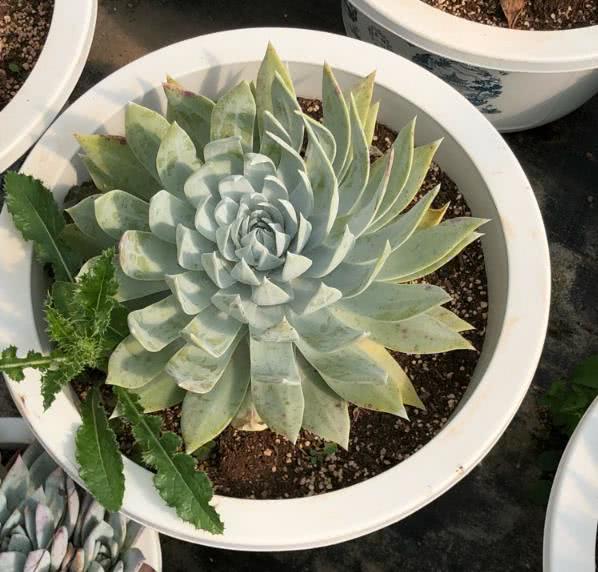
What is going on with succulents going dormant in summer? It depends on a unique metabolic system that native succulents developed to adapt to their living environment, called "Crassulacean acid metabolism." Unlike ordinary plants, which breathe and carry out energy conversion at the same time, this metabolic method opens the stomata at night to breathe and store energy, and closes the stomata during the day to focus on digesting energy (that is roughly how I understand it). Moreover, within a certain temperature range, the lower the nighttime temperature, the more energy the plant absorbs and stores, and the higher the daytime temperature, the more energy the plant digests and breaks down. This is also why a large temperature difference between day and night is good for succulent growth, but all of this is premised on being within a certain temperature range.
The dormant period is a dangerous time for succulents, and for growers it seems somewhat mysterious. Many plants die during dormancy or shortly afterward, mostly because they were too dry during dormancy or did not receive careful supervision. Dormancy is part of their life cycle; when light and temperature are no longer suitable for them to be active, they need to rest in order to maintain a healthy state. And your task is to accompany them through this period. The first sign that a plant is entering dormancy is that it stops growing. Then the leaves will quickly turn yellow and fall off, and the rosette will close up. Some types of succulents (such as mesembs) will retract their entire body into the soil and grow a papery outer skin to protect themselves.
The metabolism of succulents is itself a series of extremely complex chemical changes. During the operation of this chemical system, when the nighttime temperature exceeds 28°C, a series of enzymes used by most succulents to absorb and store energy begin to go on strike, which is to say the succulents find it too hot and start fasting. For a fasting succulent, all survival skills, including breathing, absorbing water and growing, stop as if a pause button has been pressed, and it can only rely on consuming its own reserves to preserve its vitality, which is what we call dormancy. At this time the plant stops growing and does not absorb water, so naturally it does not need frequent watering like during the growing season. If you water too much, the plant will not absorb it, and instead it becomes a hotbed for bacteria. This is why succulents need to have their water controlled in summer.
How should you water during dormancy? Again, it depends on your growing environment, that is, how quickly the potting soil dries out. If winters where you are are relatively cold and there is heating indoors, the soil will dry out quickly, so watering once or twice a week is reasonable. If the climate where you live is mild, perhaps watering once every other week is more suitable. The key point is to water, wait until the moisture has completely disappeared, that is, when the pot becomes light but has not yet dried to the point of smoking, then water again. Summer-growing types grow in summer, so they can have a little more light, but because summer temperatures are very high, excessive exposure will dehydrate the plant, so it is recommended to avoid the strong midday sun. Winter-growing types grow in winter, and at this time the temperature should not be lower than 5°C. They can receive full sun, which is good for succulent growth.
Identifying the dormant period and semi-dormant period is easy for experienced professional growers, but for hobbyists it seems a bit "tricky." In fact, when succulents are dormant, a series of physiological changes take place inside them, and these will inevitably show on the outside. As long as you observe carefully and attentively, see through the appearance to the essence, and judge based on changes in certain characteristics of the plant, you can identify it. Characteristics of succulent dormancy: leaf color is dull and lusterless; the leaf color of the whole plant is basically uniform; the color of the lower leaves changes, or the whole plant changes color; the color of the stem tips and branch tips is basically uniform; in fasciated and monstrose varieties, the color of the whole plant is uniform. There is a small amount of leaf drop, and the leaf tips or leaf apexes show signs of withering.
The dormant period of most succulents is in summer, because the temperature is relatively high and plant growth stalls. Having a ventilated environment is very crucial for succulents during dormancy, especially for winter-growing types. Because they go dormant in summer, when temperatures are high, and since water evaporation takes away heat, good ventilation can effectively cool the plants and reduce moisture in the soil, which can avoid root rot. Moreover, ventilation can effectively prevent and control pests and diseases.
This is a gathering place for succulent lovers, sharing succulent care tips. You are welcome to follow and exchange ideas.