What are the living habits of the roe deer? A comprehensive guide
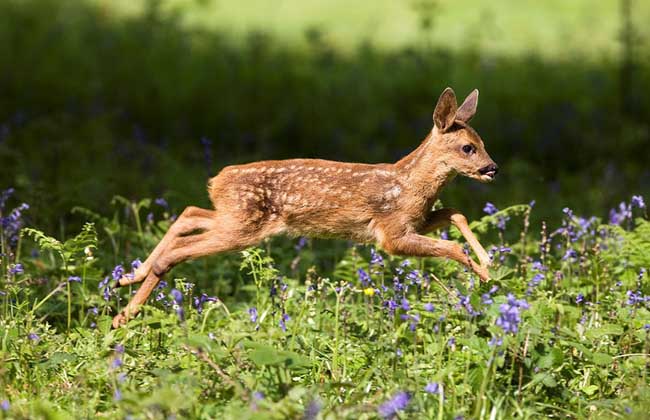
The roe deer is a herbivorous wild animal of the genus Capreolus in the subfamily Odocoileinae of the family Cervidae. It is relatively common in the forest regions of Northeast China and likes to eat the tender twigs, buds and leaves of shrubs, as well as various green grasses, small berries and mushrooms. It generally forms family groups made up of a mother roe deer and her offspring, usually 3-5 animals. It is active at dawn and dusk and feeds on grass, mushrooms and berries. Males join the group only in midsummer.
People from Northeast China jokingly call the roe deer "silly roe deer," because roe deer are very curious: whenever they see something, they always stop to look it over, and even if a pursuer suddenly shouts, they will stop to watch. So if an experienced hunter misses a roe deer with one shot, he will not chase the fleeing animal, because after running for a while the roe deer often runs back to the original spot to see what just happened. It really is "curiosity killed the roe deer."
Roe deer mate in July-August. During the breeding season, the male chases the female in circles, leaving wreath-shaped tracks on the ground. The gestation period is 8 months. Before giving birth, the mother drives away the fawns born the previous year and enters dense forest to give birth. The fawns are born from March to June, with 1-2 young per litter; if 2 are born in one litter, the birth sites are 10-20 m apart and they are nursed separately. Ten days after birth, the mother leads the newborn fawns back to the group. They reach sexual maturity at 1.5-2 years. They bark when startled. In the wild, they live 10-12 years, with a maximum of 17 years. Their antlers shed each year in November-December, new velvet grows in February-March, and the antlers are fully grown in April-May.
The roe deer has been included in the "List of Terrestrial Wild Animals under National Protection that Are Beneficial or of Important Economic or Scientific Research Value," issued and implemented on August 1, 2000, by Order No. 7 of the State Forestry Administration. Any hunting or capturing of roe deer is illegal, and hunting, trading or eating wild roe deer is strictly prohibited.