Roe deer farming technology video tutorial, teaching you how to raise roe deer well
The roe deer is a herbivorous animal of the genus Capreolus in the subfamily Odocoileinae of the family Cervidae, and is one of the common wild animals in the forest regions of Northeast China. It likes to eat the tender twigs, buds and leaves of shrubs, various green grasses, small berries, mushrooms and so on. It has relatively high economic value and great farming prospects. Let us take a look at the roe deer farming technology video together below!
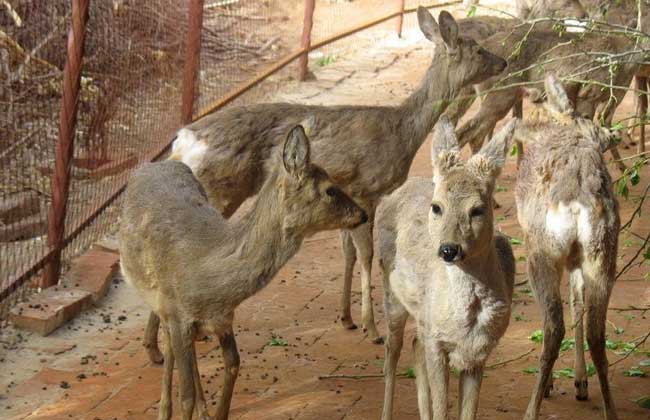
Living habits of roe deer
1. Feeding habits: The roe deer likes to eat the tender twigs, buds and leaves of shrubs, various green grasses, small berries, mushrooms and so on. In spring, like deer, it often goes to saline-alkali ground to lick salt and alkali. A family group is generally formed by a mother roe deer and her offspring, usually 3-5 animals. They are active at dawn and dusk and feed on grass, mushrooms and berries.
2. Reproduction: Male roe deer join the group only in midsummer, one male and one female. Mating takes place in July-August. During the breeding period, the male roe deer chases the female roe deer running in circles, and wreath-shaped tracks appear on the ground. The gestation period is 8 months. Before giving birth, the mother roe deer drives away the young roe deer born the previous year and enters dense forest to give birth. The young are born in March-June, 1-2 fawns per litter. If 2 fawns are born in one litter, the birth sites are 10-20 m apart and they are nursed separately. Ten days after birth, the mother roe deer leads the newborn fawns back to the group. Sexual maturity is reached at 1.5-2 years.
3. Lifespan: In the wild, the roe deer has a lifespan of 10-12 years, with a maximum of up to 17 years. The antlers shed each year in November-December, new antlers grow in February-March, and the antlers are fully grown in April-May.
Farming advantages of roe deer
1. The roe deer has a wide diet and tolerates coarse feed: when raised domestically, it can be fed straw, vine stems, twigs and leaves, weeds, forage grass, grain and so on.
2. Fast growth and development, low feeding cost: young roe deer begin to eat at 15 days after birth, are weaned at 60 days, can reach 10 kg in body weight at 3 months, can grow to 20 kg at 6 months, reach 40 kg at more than 400 days, and can reproduce once sexually mature.
3. Strong adaptability, wide suitable raising range, easy to raise and manage: the roe deer can withstand high temperatures of 38°C in summer and resist severe cold of -45°C in winter. It has strong adaptability and can be raised all over the country. Domesticated roe deer are fed 3-4 times a day in summer and 2-3 times a day in winter. As long as clean drinking water is maintained, hygiene is done well, and a quiet and clean feeding environment is maintained, anyone can raise them successfully.
4. The roe deer has strong disease resistance and a high breeding survival rate: the roe deer was originally a wild animal and has very strong disease resistance. Under artificial feeding, as long as the feed is reasonably matched and hygiene and epidemic prevention are done well, it will not get sick all year round. It produces one litter of twin fawns per year, and some produce 3-4 fawns. The kidding rate is more than 2 times that of other cervids. As long as it is raised reasonably, the mother roe deer gives birth and nurses on its own, and the survival rate can reach 100%.
Farming value of roe deer
1. Roe deer velvet produces sperm, replenishes marrow, nourishes blood and benefits yang. It can improve memory, promote growth and development and metabolism, improve immunity, resist fatigue, resist aging and strengthen the body.
2. Roe deer meat is fresh, tender and delicious, with high nutritional value. Its total amino acid content is 4.7% higher than that of beef, while its cholesterol is 33.8% lower than that of beef. Its high-quality meat is 3%-5% higher than that of beef and 10%-20% higher than that of mutton. It has the dual health-care function of nourishing yin and supplementing yang, and is known as the “king of lean meat”, famous at home and abroad. In ancient times there was the legend of “becoming immortal by eating roe deer meat”, which in fact means that roe deer meat has high nutritional and health-care value. Eating roe deer meat often makes the body strong and prolongs life.
3. The fur of the roe deer can be made into mattresses and has a moisture-proof effect. Summer fur lacks down and is called “sha pi”. After processing, it can be made into clothes worn in spring and autumn. If the hair is completely shaved off, the remaining leather board can be used to make summer clothes. Winter fur has more down and is suitable for making cold-proof fur clothing.
4. The blood, heart, liver, kidney, bone, meat and so on of the roe deer all have the function of nourishing the body and prolonging life, and have the dual health-care effect of nourishing yin and supplementing yang.
Farming technology of roe deer
1. Building the pen: The roe deer pen should be chosen in a place with flat, high and dry terrain, ventilation, sunshine and good drainage. The roe deer shed faces south and consists of two parts, a shed and an exercise yard. Each animal occupies an area of 2-2.5 [unit], and a 2 m high fence or wall is built around it with wooden poles or bricks. A feed trough and a water trough are set in one corner of the exercise yard, and trees can be planted outside the fence for shade.
2. Feed: Wild roe deer have a wide range of food sources. Various broadleaf tree leaves, wild weeds, crop straw, vegetables, fruit peels and so on are all feed they like. Feeding 20% leguminous forage (such as alfalfa) is better, but water grass must not be fed to prevent diarrhea, enteritis and so on. The feed ratio is preferably 95% coarse feed and 5% concentrate. During the mating period, gestation period, lactation period and so on, some concentrate feed and protein-rich feed should be appropriately increased. After young roe deer are 7 days old, they may eat soil, so clean soil from semi-shaded ground should be piled inside the shed for them to eat freely.
3. Feeding
① Fixed time: feed 3 times a day, at 7 a.m., 12 noon and 6 p.m. respectively.
② Fixed amount: the roe deer has a small food intake. The daily ration for an adult roe deer is 1.5 kg of coarse feed and 100 g of concentrate.
③ Fixed water: supply sufficient clean water without interruption and let the roe deer drink freely. In winter, warm water should be given.
4. Disease prevention: The roe deer has strong disease resistance and rarely gets sick, but prevention before disease is necessary. Clean the pen and remove feces every day. In spring and summer, disinfect the roe deer shed once a week with caustic soda or 20% lime milk. Brush and wash the feed trough and water trough every day. Do not feed moldy and spoiled feed, and do not feed water grass. Common diseases of roe deer include diarrhea, enteritis and so on. Once found, they can be treated conventionally.
5. Releasing from the pen: Release young roe deer from the pen at the proper time. They are weaned at 60 days, and breeding roe deer can be sold after weaning. Commercial roe deer are mostly male roe deer and culled roe deer. Attention should be paid to seed selection to maintain a superior population.
Note: It has been listed in the “List of Terrestrial Wild Animals under State Protection That Are Beneficial or of Important Economic or Scientific Research Value”, issued and implemented on August 1, 2000 by Order No. 7 of the State Forestry Administration. Any act of hunting and catching roe deer is illegal. It is strictly forbidden to hunt, trade in or eat wild roe deer.