How long do geckos live? How many years can they generally live
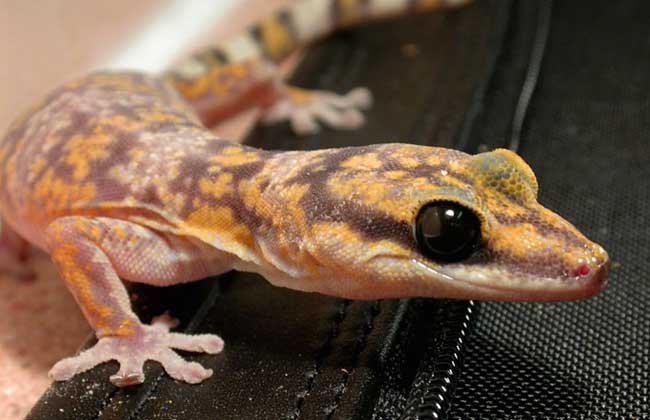
The gecko's body is flat on the back and belly, with granular scales arranged on its body or mixed with tubercular scales. The ends of its fingers and toes are expanded, and beneath them skin folds are formed, densely covered with glandular hairs, giving it adhesive ability, allowing it to crawl rapidly on walls, ceilings or smooth surfaces. Common species in China include the many-tubercled gecko, the webless gecko and the web-toed gecko, among others. Now let's take a look at how long a gecko's lifespan is!
How long is the lifespan of a gecko
The lifespan of a gecko is generally 5-10 years, and rarely exceeds 10 years. Modern biology holds that the average lifespan of a gecko is about 5-8 years.
What do geckos eat
The gecko has a very varied diet, mainly feeding on small live insects. It is a beneficial and harmless animal. Flies, mosquitoes, cockroaches and yellow mealworms are all good feed for geckos. Breeders can either catch them in the wild or raise them through artificial rearing.
The living habits of geckos
1. Environment: Geckos often inhabit forests, deserts, grasslands and residential areas. They hide by day and come out at night. During the day they hide in concealed places such as wall crevices, under eaves and behind cabinets, while at night they come out to move about and forage for various insects. The most suitable temperature range for activity is 25-33°C, and the relative humidity is 55%-70%. They have a hibernation habit: when the temperature drops below 15°C they begin to enter dormancy and hibernate, and when the temperature rises back to 15-18°C they begin to emerge from dormancy one after another to move about and forage.
2. Tail shedding: When a gecko is strongly disturbed, its tail can break off on its own, and a new tail will regenerate afterwards.
3. Reproduction: Geckos are oviparous animals and generally lay eggs once a year. In the wild, the egg-laying period is generally from late May to early August. In one breeding season they lay an average of 1.8 clutches, with a constant two eggs per clutch. Sometimes several females lay their eggs together. There is a significant positive correlation between the weight of eggs per clutch and individual size, and larger individuals also have a higher egg-laying frequency. The reproductive period of females can be changed by environmental temperature.