Do Geckos Eat Cockroaches? A Detailed Look at the Gecko Diet
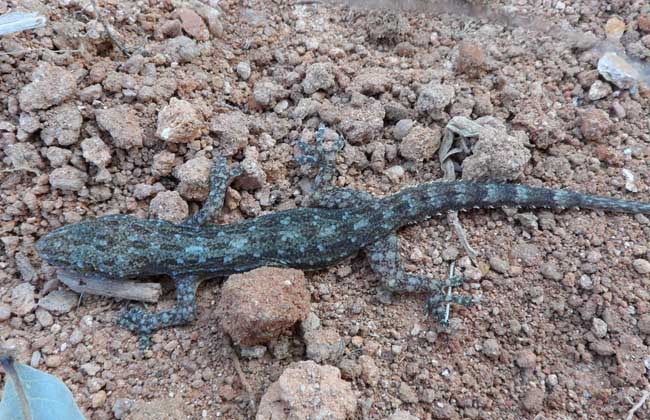
Geckos are found in warm regions, jungles, and deserts, and their traces can even be found in every household in tropical and subtropical countries and regions around the world wherever there are small holes under eaves. They feed on live small insects, such as cockroaches, flies, and mosquitoes. Let's take a look below at whether geckos eat cockroaches!
Do geckos eat cockroaches?
Geckos do eat cockroaches. Geckos are beneficial and harmless animals with a very varied diet. Larger geckos prey on insects and their larvae such as locusts, cockroaches, ground beetles, dragonflies, moths, and crickets, and some larger species occasionally even eat other lizards and small birds. Once they bite something, they often do not let go.
The Living Habits of Geckos
1. Environment: Geckos often inhabit forests, deserts, grasslands, and residential areas. They hide by day and come out at night. During the day they hide in concealed places such as wall crevices, under roof tiles and eaves, and behind cabinets, while at night they come out to move about and forage for various insects. The most suitable temperature range for activity is 25-33°C, with a relative humidity of 55%-70%. They have a hibernation habit: when the temperature drops below 15°C, they begin to enter dormancy and hibernate, and when the temperature rises back to 15-18°C, they begin to emerge from dormancy one after another to move about and forage.
2. Diet: Geckos have a very varied diet, mainly feeding on live small insects, and are beneficial and harmless animals. Flies, mosquitoes, cockroaches, and yellow mealworms are all good feed for geckos. Breeders can obtain them either by catching them in the wild or by raising them through artificial rearing.
3. Tail shedding: When a gecko is strongly disturbed, its tail can break off on its own, and a new tail will regenerate afterward.
4. Reproduction: Geckos are oviparous animals and generally lay eggs once a year. In the wild, the egg-laying period is generally from late May to early August. In one breeding season, they lay an average of 1.8 clutches, with a constant two eggs per clutch. Sometimes several females lay their eggs together. There is a significant positive correlation between the weight of each clutch of eggs and body size, and larger individuals also have a higher egg-laying frequency. The breeding period of females can be changed by environmental temperature.
Common Species of Geckos
1. Tokay gecko: The tokay gecko is also known as gejie, xianchan, duoge, haxie, and gejie snake. It is a type of small to medium-sized lizard with a total length of 300 mm, and its tail length is equal to or slightly longer than its head-body length. It is the largest species of gecko. In China it is distributed in Guangdong, Guangxi, Henan, Hong Kong, China, Fujian, and Yunnan.
2. Japanese gecko: The Japanese gecko is also known as the four-legged snake. Its body is flat on the back and belly, reaching 10-12 cm in length. Its back is dark gray with black banded markings. It often inhabits forests, deserts, grasslands, and residential areas. It is mainly distributed in eastern China, reaching west to Sichuan and north to Shaanxi and Gansu.
3. Chinese gecko: The Chinese gecko is an endemic species of China. It is not only a predator of agricultural and forestry pests but also a traditional Chinese medicinal material, with effects such as tonifying the lungs and benefiting the kidneys and relieving cough. It is distributed in Liaoning, Hebei, Shaanxi, Shanxi, Gansu, Henan, Shandong, Jiangsu, Anhui, Zhejiang, and other places.
4. Web-footed gecko: The web-footed gecko is also known as shougong and tianlong. It tastes salty, is cold in nature, and is non-toxic. It has effects such as dispelling wind and calming convulsions, and detoxifying and dispersing nodules. It is distributed in Fujian, Guangdong, Guangxi, Guizhou, Jiangxi, Zhejiang, and other places.