Why can a gecko's tail grow back after it breaks off?
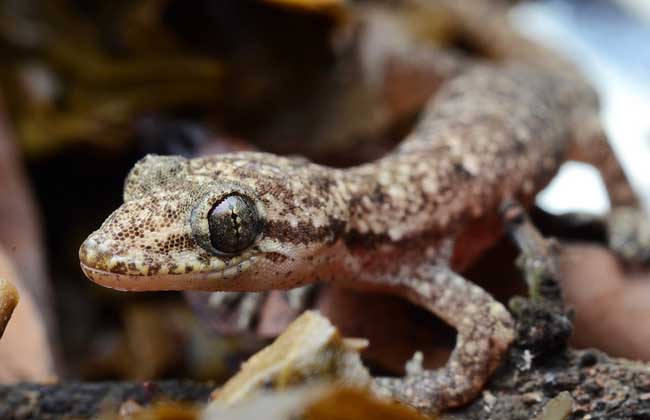
The gecko, also known as the house gecko, climbing gecko, wall-climbing gecko, four-legged snake and so on, is a type of lizard. When it is startled or when you try to catch it, as soon as you touch it, its tail breaks off immediately, and the gecko takes the chance to escape. The most amazing thing is that a gecko's broken-off tail not only keeps moving but can also regenerate. Let's take a look below at why a gecko's tail can grow back after it breaks off!
Why geckos self-amputate their tails
Tail loss in geckos is a form of “self-defense.” When the tail is pulled by an external force or the gecko encounters a predator, the tail muscles contract strongly, causing the tail to break off. Because the dropped segment still contains nerves, it can sometimes keep twitching. In zoology, this phenomenon is called “autotomy.”
A gecko's tail can still move after it breaks off
When a gecko is attacked by an enemy, its muscles contract violently, causing the tail to break off. Because the tail stores energy in the form of glycogen rather than simply as fat, and glycogen releases energy more easily than fat, the nerves and muscles of the freshly dropped tail have not yet died and will twitch on the ground, which can serve to divert the predator's attention.
Why a gecko's tail can regenerate
After a gecko loses its tail, it will grow a new tail within a few days, but compared with the original tail, it appears shorter and thicker. The reason a gecko's tail can regenerate is that geckos have a hormone in their bodies that enables tail regeneration. When a gecko's tail breaks off, it secretes this hormone to make the tail grow out, so the wound on the self-amputated surface heals quickly and forms a tail blastema. After a period of cell division and growth, it then enters the differentiation stage in which scales form, and finally a brand-new regenerated tail grows out. Once the tail has fully grown, the secretion stops.
What are the functions of a gecko's tail?
1. Protective function: When a gecko encounters a predator, it will break off its own tail. The tail contains many nerves, and after leaving the body, the nerves do not stop working immediately, so the tail can still writhe and attract the enemy's attention while the gecko takes the chance to slip away.
2. Gliding function: A gecko's tail plays an active role in vertical climbing and gliding. It can rely on its tail to prevent falling from a vertical, smooth surface. Even if it falls, it will use its tail to adjust itself in the air, like a skydiver, and finally land safely.
3. The fifth leg: When one of a gecko's legs loses traction, it will press its tail against the surface to prevent sliding backward until the toes regain their grip. All of this takes only a few milliseconds, because a gecko can climb a wall at a speed of 3 feet per second, changing its footing 30 times per second.