Gecko breeding technology video, with a detailed explanation of artificial breeding methods
The gecko, also known as shougong or tianlong, has the effects of dispelling wind and calming convulsions, and resolving toxins and dispersing nodules. It mainly treats conditions such as stroke with hemiplegia, arthralgia with wind, wind-phlegm and convulsive seizures, and scrofula and malignant sores. In folk medicine, this product is often used to treat esophageal cancer, stomach cancer, uterine tumors, and so on. As wild gecko resources are gradually depleted, artificial large-scale breeding has become more and more marketable. Let us take a look at the gecko breeding technology video together below!
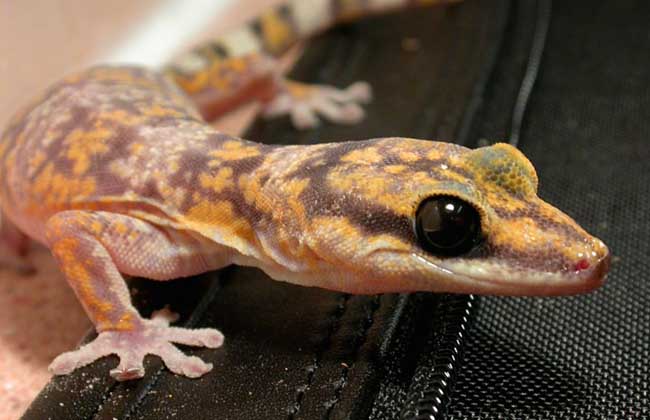
The gecko's living habits
1. Environment: Geckos often inhabit forests, deserts, grasslands, and residential areas. They hide by day and come out at night. During the day they hide in concealed places such as wall cracks, under tile eaves, and behind cabinets, while at night they come out to move about and forage for various insects. The most suitable temperature range for activity is 25-33°C, and the relative humidity is 55%-70%. They have the habit of hibernation. When the temperature drops below 15°C, they begin to go into dormancy and enter hibernation. When the temperature rises back to 15-18°C, they begin to emerge from dormancy one after another to move about and forage for food.
2. Diet: Geckos have a very varied diet, mainly feeding on small live insects, and are beneficial and harmless animals. Flies, mosquitoes, cockroaches, yellow mealworms, and so on are all good feed for geckos. Breeders can either obtain them by catching them in the wild or raise them through artificial rearing.
3. Tail shedding: When a gecko is strongly disturbed, its tail can break off on its own, and a new tail will regenerate afterward.
4. Reproduction: Geckos are oviparous animals. Generally, they lay eggs once a year. In the wild, the egg-laying period is generally from late May to early August. In one reproductive period, they lay an average of 1.8 clutches, with a constant two eggs per clutch. Sometimes several females lay their eggs together. There is a significant positive correlation between the weight of eggs per clutch and individual size. Larger individuals also have a higher egg-laying frequency. The reproductive period of females can be changed by environmental temperature.
Gecko farm construction
1. Site selection: Convenient transportation, a stable and sanitary water source, convenient power facilities, and no major noise pollution.
2. Site construction: The area of the gecko house depends on the scale of breeding. Generally, it is 4 m long, 2.5 m wide, and 2.2 m high. Each room can house 400 geckos. A gecko activity area 1.2 m high should be built on top of the breeding house, with wire mesh enclosing the surroundings and the top. The breeding house and the activity area are connected to make it easy for geckos to enter and exit. A 20-watt black light lamp is installed on top of the activity area. Turning on the lamp attracts insects, and a funnel for catching insects is installed below. Insects fall through the funnel into the activity area for the geckos to eat. Clean water is placed in the room for the geckos to drink, and a small water pool is set up for the geckos to bathe. A layer of straw paper is pasted on the four walls of the room, and several pieces of linen cloth are hung to make it easier for geckos to lay eggs and hide.
3. Anti-escape facilities: For rural tiled houses, a layer of plastic sheeting needs to be nailed on the roof to prevent escape. Nailing a layer of plastic sheeting around the walls and on the top of the house can prevent geckos from escaping. This is not needed for bungalows and buildings. Leave ventilation openings on the windows and fix them with iron window screens. At the entrance and exit of the doorway, a door curtain cloth can be modified by adding a long zipper.
4. Breeding facilities: Spread a layer of rearing soil on the ground, and stack a layer of bricks or tiles on the soil for geckos to rest on. At the same time, place an appropriate number of food plates and water plates in the breeding room. The method is to place ordinary vegetable plates on foam boards with hollowed-out centers. The food plate holds feed, and the water plate holds a clean sponge fully soaked with water. The surrounding edges of the foam board are cut into sloped surfaces with a knife to make it easier for geckos to go up and down to feed and drink.
Gecko breeding methods
1. Seed source selection: For gecko seed stock, you can buy gecko breeding stock weighing about 150 grams from a gecko breeding farm, or catch them in the wild in the mountains.
2. Egg-laying and reproduction: Geckos generally resume activity in April and carry out their first mating and egg laying in early May. During gecko reproduction, males and females are mixed in a ratio of 5:1 and allowed to mate freely. Males and females can be identified by everting the cloaca. Male geckos have a triangular protrusion in the cloaca. Female geckos lay two eggs at a time and lay eggs 3-4 times a year. When laid, the eggs have soft shells and only harden after being exposed to air for half an hour. They rely on natural temperatures above 30°C for incubation, and the incubation period is 50-60 days.
3. Rearing of young geckos: When small geckos hatch, their body length is 7-8 mm. After 3-5 days, they can search for food on their own. Within one week, feed them some rice porridge, white sugar water, skimmed milk powder, and so on. After one week, they can be fed some cooked mashed egg yolk, small insects, and so on, and should be transferred in due time to a small gecko house for rearing to prevent them from being harmed by male geckos. After one month, they can be reared together in groups. The rearing density is suitably 40-50 geckos per sq m. After growing for one year, their body weight reaches 150-200 grams.
4. Feeding bait: Gecko feed comes from sources such as trapping, artificial feed, and artificial compound feed. Normally, yellow mealworms, fly maggots, and ground beetles are raised. These nutrient-rich insects are placed in food plates on the ground for geckos to eat. When live food is in short supply, geckos should be trained to eat artificial feed. Cook corn, rice, pumpkin, winter melon, and so on into a paste and put it into food plates. During the feeding period, do not feed insects and do not provide drinking water. When hungry, geckos will eat large amounts. The best feeding time is in the evening.
5. Daily management: In addition to timely feeding and water supply, breeding management should also pay attention to disease prevention, heat prevention, and cold resistance. Disinfectants must be highly effective drugs with mild odors, such as Baidusha. Handle operations gently to avoid disturbing the geckos and minimize stress. In summer, water can be sprayed inside and outside the house, wet gauze can be hung at the air inlet to dissipate heat, ventilation should be increased, and thick grass should be added on the roof for shade and wetted. In winter, geckos enter a hibernation state, so pay attention to cold resistance and warmth. For example, close doors and windows tightly, thicken the cloth pieces on the walls, and reduce water plates.
6. Capture and processing: Generally, adult geckos can be captured and processed from April to August. Strike the head with a heavy object to stun it to death, use a sharp blade to remove the eyes, cut open from the abdomen to the chest, take out the internal organs, wipe away blood stains with a cloth, then immediately use bamboo strips boiled and disinfected in boiling water to stretch the gecko open, and then use bamboo strips to straighten and fix the limbs, head, and tail. Dry over gentle fire to obtain the finished product.