What types of pangolins are there? See them all at once in this complete picture guide
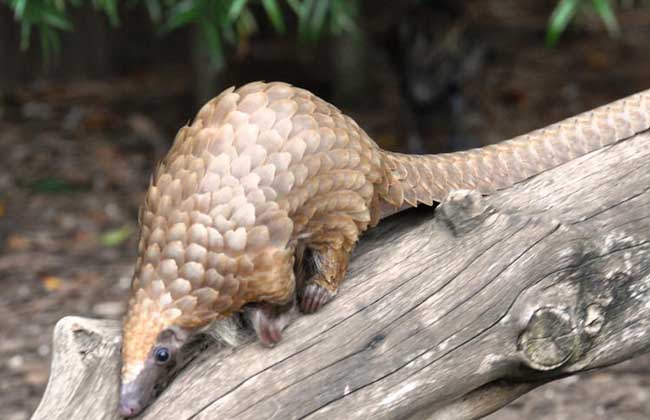
Pangolin is the collective name for the genus Manis in the family Manidae, a group of ground-dwelling mammals that mostly live in subtropical deciduous forests. There are 8 species in total: the giant pangolin, the ground pangolin, the tree pangolin, the long-tailed pangolin, the Indian pangolin, the Chinese pangolin, the Philippine pangolin and the Sunda pangolin. Let's take a look at the complete picture guide to pangolin species below!
Giant pangolin
The giant pangolin is a pangolin mainly distributed in Africa, named for its large size. It feeds mainly on ants and termites and is the largest pangolin species. Males are generally larger than females, with males about 1.4 m long and females about 1.25 m. It is mainly distributed in Uganda, Tanzania and western Kenya.
Ground pangolin
The ground pangolin, also known as the red pangolin, is a species in the order Pholidota, family Manidae. It is distributed in the tropical savannas and open woodlands of Chad, South Sudan, East Africa and Southern Africa. It is solitary and nocturnal, becoming active and foraging from the afternoon onward in winter. It feeds on ants and termites, walks slowly, can swim, and has a keen sense of smell. When threatened it curls into a ball, and occasionally strikes predators with its thick tail.
Tree pangolin
The tree pangolin, also known as the white-bellied pangolin, is one of the 8 extant pangolin species. It lives in secondary forests and is native to Africa. It is nocturnal and feeds on insects such as ants and termites, or other insects moving in trees. It is distributed from Senegal to western Kenya and from southern Africa to Zambia.
Long-tailed pangolin
The long-tailed pangolin, also known as the long-tailed scaly anteater, black-bellied pangolin, etc., has a slender body, with a body length of 30-92 cm, a tail length of 27-88 cm, and a body weight generally of 2-5 kg, with the heaviest reaching more than 25 kg. Males are often somewhat larger than females. It feeds on termites, ants and other insects, and is distributed in Angola, Guinea, Senegal, the Congo River mouth and other places.