What national protection level is the pangolin?
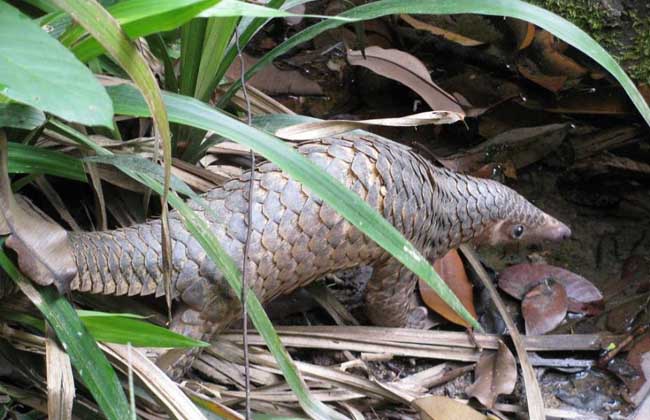
Pangolins mostly live in subtropical deciduous forests. During the day they often hide in burrows and block the entrance with soil, and at night they mostly come out to forage. They are nocturnal, and when encountering enemies they curl up into a ball. Their numbers in the wild are scarce, and private hunting and consumption are prohibited in China. Let's take a look below at what protection level the pangolin is!
What protection level is the pangolin?
The pangolin is a national second-class protected animal. Pangolins are protected by law throughout Asia, and in 2002 the Convention on International Trade in Endangered Species of Wild Fauna and Flora also banned all international trade in pangolins. However, judging from the current distribution of pangolins in China, in order to call on people to better protect pangolins, the pangolin should be upgraded to a first-class protected animal.
The pangolin's living habits
1. Diet: The pangolin's main food is termites. In addition, it also eats ants and their larvae, bees, wasps and other insect larvae, and it has a very large appetite. The stomach of one adult pangolin can hold up to 500 grams of termites. According to scientists' observations, in 250 mu of woodland, as long as there is one adult pangolin, termites will not cause harm to the forest. It can be seen that the pangolin plays a great role in protecting forests and embankments and maintaining ecological balance and human health.
2. Reproduction: The pangolin is a viviparous animal. Its estrus and mating period is mainly from April to May. During estrus, the male and female live together, and after mating they separate. The birthing period is from December to January of the following year. The gestation period is about 5-6 months. Male pangolins remain in estrus for a relatively long time; males are in estrus continuously and do not show periodicity. Females have 2-5 estrous cycles during the estrous period, and the estrous cycle is 12-25 days. After the female conceives, she no longer goes into estrus. During the estrous period, males search everywhere for females. During the estrous and mating period, the male and female live together, and after mating they separate. There is 1 litter per year. Under artificial breeding conditions, 3 litters can be produced in 2 years.
3. Burrow building
① Summer burrow: The one lived in during summer is called a summer burrow. It is built on a ventilated and cool slope at a relatively high elevation to prevent rainwater from flowing in. The tunnel inside the burrow is relatively short, about 30 cm, and its internal structure is relatively simple.
② Winter burrow: The one lived in during winter is called a winter burrow. It is built in a place sheltered from the wind and facing the sun, at a relatively low location, with a vertical height of more than 4 m from the ground. The internal structure of the burrow is relatively complex, and the tunnel twists and turns, shaped like a gourd. At intervals there is also an earthen wall piled up with soil, and the length can reach more than 10 m. It also passes through two or three termite nests, making them its winter “granary”. At the end of the burrow there is a relatively spacious hollow cavity, lined with fine, soft weeds to keep warm. This is its “bedroom” for overwintering and is also used as a “nursery”.
The pangolin's population distribution
1. Giant pangolin: The giant pangolin is a pangolin mainly distributed in Africa. It is named for its large size and feeds mainly on ants and termites. It is the largest pangolin species and is mainly distributed in Uganda, Tanzania and western Kenya.
2. South African pangolin: The South African pangolin, also called the red pangolin, is distributed in Chad, South Sudan, East Africa, and the tropical savannas and open woodlands of southern Africa.
3. Tree pangolin: The tree pangolin, also known as the white-bellied pangolin, lives in secondary forests. It is native to Africa and is distributed from Senegal to western Kenya and from southern Africa to Zambia.
4. Long-tailed pangolin: The long-tailed pangolin is also called the long-tailed pangolin and black-bellied pangolin, and is distributed in Angola, Guinea, Senegal, the Congo River estuary and other places.
5. Indian pangolin: The Indian pangolin generally inhabits relatively humid places such as mountain foothills, hills, shrubby mixed woods, and small-stone mixed mud areas. It is mainly distributed in India, Sri Lanka, western Yunnan in China and other places.
6. Chinese pangolin: The Chinese pangolin inhabits the humid forest areas of hills, mountain foothills and plains. It uses its long tongue to lick up termites, ants, bees or other insects. Its natural enemies are fierce beasts and birds of prey, and it is occasionally attacked by domestic dogs.
7. Malayan pangolin: The Malayan pangolin, also known as the Malayan burrowing pangolin and Java pangolin, is distributed in the low-elevation forests and secondary forests of Thailand, Malaysia, Myanmar and Indonesia.
8. Philippine pangolin: The Philippine pangolin is an endangered animal in the order Pholidota, family Manidae. It mostly digs burrows and lives in the grass of mountain foothill areas or in relatively humid places in hilly mixed shrubland. It is mainly distributed in the Philippines.