Pangolin Farming Technology Video: A Detailed Guide to Artificial Rearing Methods
The pangolin is a mammal of the family Manidae and genus Manis, with high medicinal and food value. Artificial pangolin farming has now been successfully achieved; farming pangolins requires relatively little investment and yields generous profits, and can also earn a large amount of foreign exchange for the country, making it a livestock industry with great prospects. Let us take a look at the pangolin farming technology video below!
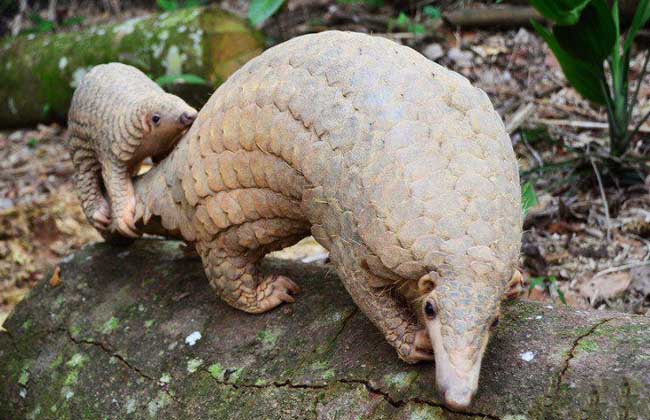
The Farming Value of Pangolins
Both the scales and the meat of the pangolin can be used medicinally. The scales are salty in taste and cool in nature, with the effects of reducing swelling and draining abscesses, dispelling wind and activating collaterals, and promoting menstruation and lactation. They mainly treat conditions such as carbuncles, sores and swellings, wind-cold-dampness impediment, stopped menstruation, and blocked milk flow. The meat is sweet and astringent in taste and warm in nature, with the effects of killing parasites, promoting blood circulation, and breaking up hard masses and dispersing blood stasis, mainly treating conditions such as impediment pain and amenorrhea; the blood is a specific remedy for treating gastric and duodenal ulcers. In addition, pangolin meat is edible, fine and delicious, and is a delicacy at banquets, so its farming value is extremely high!
The Living Habits of Pangolins
1. Environment: Pangolins live in tropical and subtropical regions, dwelling in moist areas of mixed woods in foothills, hills or plains. They especially favour earthen and muddy ground mixed with small stones, and dig burrows to live in. The burrows are often built in muddy ground, with a depth of 2-4 m and a nest at the end.
2. Activity: Pangolins usually hide in their burrows during the day and come out to move about at night. When walking, the back of the front feet faces the ground, and they walk on the backs of their claws. They can climb trees and often use the tail as a gripping organ. Their eyesight is relatively weak. When frightened by an enemy, they curl into a ball, using their scales to protect the head and belly, which makes them very easy to catch.
3. Diet: Pangolins mainly eat small insects such as termites, ants and bees. When foraging, they first break part of the nest with the long claws of the front feet, then insert the snout into the ant hole, and lick up the ants with their sticky, highly extensible tongue.
4. Reproduction: Pangolins usually live as male and female together. When body weight generally exceeds 2 kg, they enter the reproductive stage. Mating generally occurs from May to July each year, and young are born from November to December. The gestation period is 5-6 months. Estrus lasts a relatively long time; males remain in estrus throughout the estrus period and do not show periodicity, while females have 2-5 estrous cycles during the estrus period, with each estrous cycle lasting 12-25 days. Females no longer come into estrus after conceiving. During the estrus period, males roam everywhere seeking females. During the estrus and mating period, males and females live together and separate after mating. Pangolins produce 1 litter per year; under artificial rearing conditions, 3 litters can be produced in 2 years.
Preparation for Pangolin Farming
1. Site setup: For the pangolin rearing site, it is advisable to choose a cool place near water and beside hills to build the farm. First dig out the topsoil, then mix quicklime, coarse sand and yellow mud into mixed soil. After it dries in the sun, pour a smooth concrete floor, then use stones or bricks to build a 2 m high wall around the finished concrete floor, and plaster the surrounding surfaces with cement to make them smooth, so as to prevent pangolins from digging holes and escaping. Then put the topsoil back into the site and pile it into a rockery; plant trees, grapes, flowers and plants on the hill to regulate the microclimate within the site, achieving warm winters and cool summers. The rockery inside the wall must not exceed 1.5 m in height and must be kept more than 1 m away from the wall. Beside the rockery, build a small pool for pangolins to drink and swim. The size of the site depends on the number raised; generally 2 pairs are raised per 10 sq m.
2. Feed preparation: Pangolins have a special diet and feed exclusively on ants. Under artificial rearing conditions, relying on catching termites by hand to feed them is very difficult, because each pangolin needs to eat 80-120 g of termites per day, while generally a single termite colony does not exceed 1000 g at most. Moreover, termite nests are hard to find, and even if a nest exists, digging it out requires especially much labour. Therefore, the following measures must be taken.
① Artificial termite culture: The method of artificially culturing termites is to dig pits in the ground, use rotten pine trunks, branches and leaves, and introduce termite colonies for mass propagation.
② Artificially formulated feed: The artificially formulated feed must have a reasonable formula, and the proportions of various ingredients must be appropriate, so that the prepared feed is palatable and the pangolins are willing to eat it. Newly captured pangolins intended for breeding initially refuse to eat artificially fed feed and must be fed termites or black ants; afterwards, the feed proportion should be gradually changed until they slowly become accustomed to the artificial mixed feed. For the few that refuse food for a relatively long time, artificial tube feeding can also be carried out. On the rockery, some bait can often be placed to attract termites, ants and other insects, and blacklight lamps can also be installed in the site to attract moths and other insects for the pangolins to eat.
Pangolin Farming Techniques
1. Feeding of young: Newborn pangolins weigh 90-130 g, have closed eyes, no scales, and are light white in colour; they open their eyes at half a month of age. After 1 month, they gain 200-500 g, and the scales gradually keratinise, mostly becoming dark brown. After 2 months, they can go out foraging with the mother pangolin. At 6 months, the young weigh 1500-2000 g and can leave the mother to live independently. Young born in the first year can reach sexual maturity in the second year and be used for mating and reproduction.
2. Rearing management: The rearing room must be disinfected regularly; drinking water and the soil of the manure pit should be changed frequently; the food basin should be washed once a day; mouldy feed must not be used; and feeding should be carried out once a day at a fixed time and in a fixed amount, with 150-200 g of artificially formulated feed each time. After feeding, put the pangolins into the activity area to move about for 2-3 hours. Because pangolins are accustomed to a wild burrowing life, their ability to adapt to changes in ground temperature differences is relatively poor. Once the temperature and humidity of the rearing room are not controlled properly, they are prone to catching a chill, which can cause pneumonia and death. Room temperature should be controlled at 18-25°C, and relative humidity should be controlled at 60%-70%, so that the rearing room can basically achieve warm winters and cool summers, which is beneficial to the growth and development of pangolins.
3. Disease prevention and control: When pangolins change from wild to domestic rearing, both food and environmental conditions undergo major changes, which sometimes causes temporary physiological maladaptation. Pile some disinfected river sand in the site, that is, mix 90% crystal trichlorfon 1000-fold solution into the river sand, and after mixing evenly, let the pangolins take sand baths. This can prevent the occurrence of diseases and also make the pangolins' scales smooth and plump.
① Lice disease: Occurs on the body surface. Use 10 ml of lice-removing essence mixed with 3-4 kg of water to carry out a medicinal bath on the body surface.