What are the main types of meteorological disasters in China?
Meteorological disasters are the most frequent and severe among natural disasters. China is a country where natural disasters occur very frequently and where there are many types of disasters. Every year, disasters such as droughts, floods, typhoons, rainstorms and hail endanger people's lives and property, and the national economy also suffers tremendous losses. Below, let us take a look at what meteorological disasters there are in China!
Drought
Drought is a disastrous weather phenomenon in which, over a sufficiently long period, precipitation is seriously insufficient, causing the soil to lose water through evaporation, reducing river flow, and disrupting normal crop growth and human activity. Its consequences include reduced yields of crops and fruit trees, difficulties in obtaining drinking water for people and livestock, and shortages of industrial water, among other disasters. Drought is the meteorological disaster that most severely affects agriculture in China, and the losses it causes are quite serious. According to statistics, the average area of crops affected by drought in China each year reaches more than 300 million mu, with 120 million mu of disaster-affected area. The average annual reduction in production due to drought reaches 10 billion to 15 billion kg, and the annual economic loss caused by water shortage reaches 200 billion yuan. More than 420 cities in China have problems with drought and water shortage, and 110 cities have relatively serious water shortages. Nationwide, the annual impact on output value due to urban water shortage reaches 200 billion to 300 billion yuan.
Rainstorm
A rainstorm is a short-term or continuous process of heavy precipitation. In low-lying areas with enclosed terrain, rainwater cannot drain quickly, causing waterlogging of farmland and excessive saturation of soil moisture, bringing disaster to agriculture; it can even cause mountain torrents, river flooding and dam breaches, causing major economic losses to the people and the country. China's meteorological department stipulates that rain with 24-hour precipitation of 50 mm or more is called a “rainstorm”. The Yangtze River basin is an area prone to rainstorms and flood disasters, with the Two Lakes basin and the Yangtze River Delta region being especially frequently affected. Severe rainstorm and flood disasters occurred in 1983, 1988, 1991, 1998 and 1999, among others.
Typhoon
A typhoon is the general term for an intense vortex formed in the tropical ocean atmosphere with a high central temperature and low pressure. It causes severe weather such as gales, rainstorms, huge waves and storm surges, and is a weather phenomenon with very strong destructive power. Because the losses it causes average more than 10 billion yuan per year, a single event such as “Yunna”, which made landfall in Zhejiang in 2004, caused losses of more than 10 billion yuan. In addition, the strong winds and heavy rainfall brought by “Talim”, “Khanun” and “Bolaven” also had a relatively large impact on agricultural and fishery production. Among them, “Talim” affected 3,900 hectares of crops in 13 counties (districts and cities) across 6 cities including Fuzhou, Nanping, Sanming, Zhangzhou and Longyan in Fujian Province, while “Bolaven” had the heaviest impact on Northeast China.
Low temperature
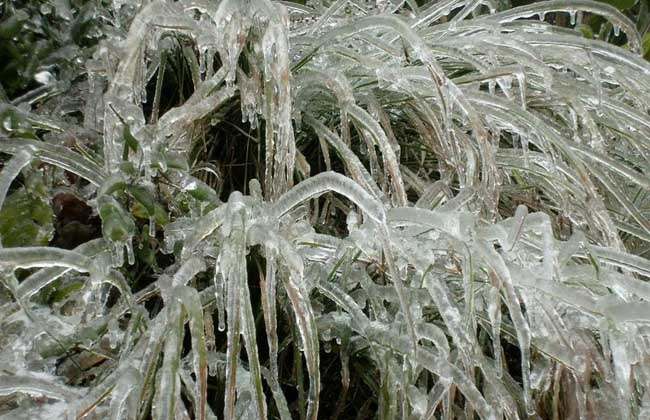
Low-temperature freezing disasters are mainly agricultural meteorological disasters in which cold air and cold waves invade and cause temperatures to drop for several consecutive days, resulting in crop damage and reduced yields. In years of severe freezing damage, such as 1968, 1975 and 1982, the area of seedlings killed and fields destroyed by freezing damage reached more than 20%. From October 25 to 29, 1977, a strong cold wave caused snow 0.5 m deep in Inner Mongolia, burying grasslands and causing massive livestock deaths. In December 2011, a frost disaster occurred in northeastern Guangxi. In January 2012, two large-scale low-temperature rain, snow and freezing weather events occurred in southern China; rapeseed and other crops and open-field vegetables suffered frost and freezing damage, and in some areas of southwestern Yunnan, rubber, coffee and bananas also suffered low-temperature cold damage. In north-central South China, the number of low-temperature days reached 5 to 9, and sugarcane and unharvested bananas suffered mild to moderate cold damage. The low-temperature cold damage caused potatoes to freeze and tomato fruits to split, and also had a certain impact on some poultry, livestock and aquaculture.
High temperature
Due to the frequent occurrence of high-temperature heatwave weather in recent years, the disasters brought by high temperatures have become increasingly serious. For this reason, China's meteorological department has specially formulated high-temperature warning signals for the prevention of high-temperature weather. In the summer of 1994, most areas of China experienced unusually hot weather not seen since 1949. On June 24, high-temperature weather with a daily maximum temperature >=35°C first appeared in Jiangnan and the Huaibei region. By July 11, the high temperatures had gradually expanded to the entire region of the middle and lower reaches of the Yangtze River and the Huai River basin. In many places in Jiangnan, the maximum temperature reached 39~40°C. From August 2 to 4, the largest and most intense high-temperature zone appeared, and local maximum temperatures in eastern Sichuan and southwestern Hubei once reached 42°C.
Summary: Meteorological disasters are the most frequent and severe among natural disasters. China is a country where natural disasters occur very frequently and where there are many types of disasters. Every year, disasters such as droughts, floods, typhoons, rainstorms and hail endanger people's lives and property, and the national economy also suffers tremendous losses. Below, let us take a look at what meteorological disasters there are in China!
Snow disaster
A natural phenomenon in which heavy snowfall over a long period causes large-scale snow accumulation and disaster, seriously affecting or even destroying lifeline projects such as transportation, communications and power transmission lines, and having a huge impact on people's production and lives. In December 2005, Weihai and Yantai in Shandong encountered the largest snowstorm in 40 years, which caused direct economic losses of 371.43 million yuan. In January 2008, southern China suffered a rare large-scale freezing rain and snow disaster in history. Large areas of agriculture had total crop failure or reduced harvests, power grids in some provinces and cities were paralyzed, and the Beijing-Guangzhou trunk line was once interrupted. Data showed that by the end of February, 129 people had died due to the disaster, 1.66 million people had been urgently relocated, and direct economic losses exceeded 150 billion yuan. This severe snow and freezing disaster, with such a wide scope, such a long duration and such heavy damage, can undoubtedly be listed among the world's major typical “extreme climate events”.
Wind and hail
Wind and hail disasters refer to disasters caused by ice blocks condensing and forming in cumulonimbus clouds and falling from the sky under the control of convective weather. Hail often destroys large areas of crops and orchards, damages buildings and threatens human safety. It is a serious natural disaster and usually occurs in summer and autumn. Wind and hail disasters occur in a very wide range of regions in China. According to statistics, in a severe disaster year the area of agriculture affected by wind and hail reached more than 99 million mu (1993), and even in a light disaster year it was more than 56 million mu (1994).
Mountain torrents
Mountain torrents refer to flash floods that occur in mountain streams and gullies. Mountain torrents are sudden, with concentrated water volume, high flow speed and strong scouring and destructive power. The water flow carries mud, sand and even rocks, often causing localized flooding. They are generally divided into rainstorm mountain torrents, snowmelt mountain torrents and glacier mountain torrents. In Dongdang Village, Pingshun County, Shanxi Province, China, heavy rain fell from August 2 to 3, 1956, and a mountain torrent broke out in Langjiao Gully, which has a watershed area of only 1 km, causing the gully cliff to collapse and block the channel, forming a natural reservoir. Subsequently, the water-blocking dam body suddenly burst, and 92 people from 43 households and 109 houses in the village, along with their property, were all destroyed.
Thunderstorm
A thunderstorm refers to contact between one part of a cloud layer carrying ionized particles and another part of a cloud layer carrying opposite charges, or the rapid discharge of a cloud layer carrying ionized particles to the ground. The latter, that is, cloud-to-ground discharge, causes great harm to buildings, human bodies and electronic equipment, and how to avoid the harm caused by discharge is the main subject of human research. Thunderstorms have enormous energy. The electrical energy released by lightning in thousandths to tenths of a second can reach billions to hundreds of billions of watts, with temperatures of 10,000 to 20,000°C.
Sandstorm
A sandstorm, also called a dust storm or duststorm, refers to a weather phenomenon in which strong winds lift dust and sand from the ground, making the air very turbid, with horizontal visibility of less than 1 km. When it occurs, yellow sand rolls and the sky and sun are darkened. In winter and spring, it is common in desert areas in the afternoon and on dry, loose land that has long lacked rain. In many areas of China's northwestern interior, the number of sandstorm days each year reaches more than 30, while it is rare in the southeastern region.