What soil classifications exist in China? A detailed introduction to the main soil types
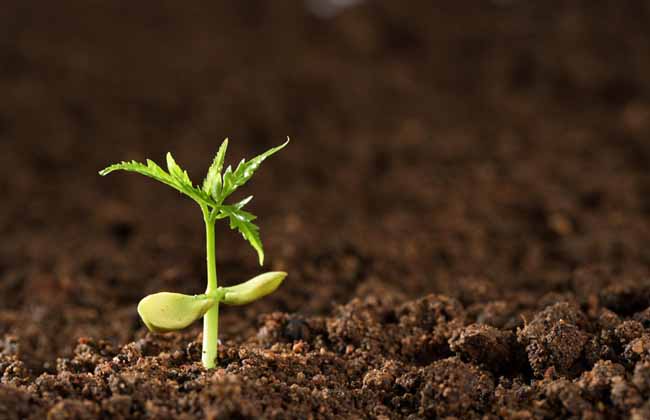
Soil is the unfixed structural layer on the surface of the Earth's land, composed of minerals, organic matter, water, air, and organisms, with fertility and the ability to grow plants. China's soil resources are rich and its types are numerous, which is rare in the world. According to soil texture classification, soil is generally divided into three major categories: sandy soil, clayey soil, and loam soil. Now let us take a look at what soil classifications exist in China!
Latosol
Latosol is distributed in Hainan Island, the Leizhou Peninsula, Xishuangbanna, and southern Taiwan Island, roughly in the area south of 22°N. It has a tropical monsoon climate, with an annual average temperature of 23-26°C and an annual average precipitation of 1600-2000 mm. The vegetation is tropical seasonal rainforest. Weathering and leaching are intense, readily soluble inorganic nutrients are heavily lost, and iron and aluminum remain in the soil, giving it a red color. The soil layer is deep, the texture is sticky and heavy, fertility is poor, and it is acidic to strongly acidic.
Lateritic red soil
Lateritic red soil is distributed in most of southern Yunnan, southern Guangxi and Guangdong, southeastern Fujian, and the central and southern parts of Taiwan Province, roughly between 22°N and 25°N. It is a transitional type between latosol and red soil, in the southern subtropical monsoon climate zone. Temperatures are slightly lower than in latosol areas, with an annual average temperature of 21-22°C and annual precipitation of 1200-2000 mm. The vegetation is evergreen broad-leaved forest. Weathering and leaching are slightly weaker than in latosol, and the color is red. The soil layer is relatively thick, the texture is relatively sticky and heavy, fertility is relatively poor, and it is acidic.
Red soil and yellow soil
Red soil and yellow soil are distributed in most areas south of the Yangtze River and in the mountainous areas around the Sichuan Basin, in the mid-subtropical monsoon climate zone, with a warm climate and abundant rainfall. The annual average temperature is 16-26°C, annual precipitation is around 1500 mm, and the vegetation is subtropical evergreen broad-leaved forest. The heat conditions for the formation of yellow soil are slightly poorer than those of red soil, while the moisture conditions are better. The sources of organic matter are abundant, but decomposition is fast and losses are high, so the soil has little humus and is relatively sticky. Because leaching is strong, potassium, sodium, calcium, and magnesium accumulate little, while iron and aluminum content is high, and the soil is uniformly red. Because the iron oxide in yellow soil is hydrated, the soil layer appears yellow.
Yellow-brown soil
Yellow-brown soil is distributed from the Qinling Mountains and Huaihe River in the north to the Daba Mountains and the Yangtze River in the south, from the southeastern edge of the Qinghai-Tibet Plateau in the west to the lower reaches of the Yangtze River in the east. It is a transitional soil type between yellow-red soil and brown soil, at the northern edge of the subtropical monsoon zone. Summers are hot and winters are relatively cold, with an annual average temperature of 15-18°C and annual precipitation of 750-1000 mm. The vegetation is deciduous broad-leaved forest, but evergreen broad-leaved tree species are also mixed in. It has both the characteristics of aluminum enrichment in yellow soil and red soil and the characteristics of argillation in brown soil. It shows a weakly acidic reaction, and natural fertility is relatively high.
Brown soil
Brown soil is distributed in the Shandong Peninsula and Liaodong Peninsula, in a warm temperate semi-humid climate. Summers are warm and rainy, winters are cold and dry, the annual average temperature is 5-14°C, annual precipitation is about 500-1000 cm, and the vegetation is warm temperate deciduous broad-leaved forest and mixed coniferous-broad-leaved forest. Argillation in the soil is strong, and relatively obvious leaching also occurs, causing potassium, sodium, calcium, and magnesium to be leached away and clay particles to be deposited downward. The soil layer is relatively thick, the texture is relatively sticky and heavy, the surface organic matter content is relatively high, and it shows a slightly acidic reaction.
Summary: Soil is the unfixed structural layer on the surface of the Earth's land, composed of minerals, organic matter, water, air, and organisms, with fertility and the ability to grow plants. China's soil resources are rich and its types are numerous, which is rare in the world. According to soil texture classification, soil is generally divided into three major categories: sandy soil, clayey soil, and loam soil. Now let us take a look at what soil classifications exist in China!
Dark brown soil
Dark brown soil is distributed in the eastern slope of the Greater Khingan Mountains, the Lesser Khingan Mountains, the Zhangguangcai Range, and the Changbai Mountains in Northeast China, in a mid-temperate humid climate. The annual average temperature is -1 to 5°C, winters are cold and long, and annual precipitation is 600-1100 mm. It is a soil formed under temperate mixed coniferous-broad-leaved forest. The soil shows an acidic reaction. Compared with brown soil, its surface layer has richer organic matter and greater humus accumulation, making it a relatively fertile forest soil.
Cold brown soil
Cold brown soil is distributed in the upper part of the northern section of the Greater Khingan Mountains, wide in the north and narrow in the south, in a cold temperate humid climate. The annual average temperature is -5°C, annual precipitation is 450-550 mm, and the vegetation is subarctic coniferous forest. Through podzolization (the bleaching process in which iron oxide is reduced and lost with water, and the podzolic process in which iron and aluminum oxides form chelates with humic acid, leach downward, and are deposited), the soil is highly acidic, the soil layer is thin, organic matter decomposition is slow, and available nutrients are few.
Cinnamon soil
Cinnamon soil is distributed in the hilly and low mountain areas where Shanxi, Hebei, and Liaoning meet, and in the Guanzhong Plain of Shaanxi, in a warm temperate semi-humid and semi-arid monsoon climate. The annual average temperature is 11-14°C, annual precipitation is 500-700 mm, more than half of which is concentrated in summer, and winters are dry. The vegetation is mainly mesophytic and xerophytic forest shrubs. Leaching is not very strong, and a small amount of calcium carbonate is deposited. The soil shows a neutral to slightly alkaline reaction, minerals and organic matter accumulate relatively abundantly, the humus layer is relatively thick, and fertility is relatively high.
Chernozem
Chernozem is distributed on the east and west sides of the central and southern sections of the Greater Khingan Mountains, in the central part of the Songnen Plain in Northeast China, and in the watershed area of the Songhua River and Liaohe River. It has a temperate semi-humid continental climate, with an annual average temperature of -3 to 3°C and annual precipitation of 350-500 mm. The vegetation is temperate steppe and meadow steppe with the highest grass yield. It has the richest humus content and a thick humus layer. The soil color is mainly black, shows a neutral to slightly alkaline reaction, is also relatively rich in inorganic nutrients such as calcium, magnesium, potassium, and sodium, and has high soil fertility.
Chestnut soil
Chestnut soil is distributed in the vast steppe areas of the eastern and central Inner Mongolia Plateau. It is the most widely distributed and largest soil type among calcareous soils. It has a temperate semi-arid continental climate. The annual average temperature is -2 to 6°C, and annual precipitation is 250-350 mm. The grassland is typical dry steppe, and growth is less dense than in chernozem areas. Humus accumulation is weaker than in chernozem, but it is still quite rich, and the thickness is also relatively great. The soil color is chestnut. The soil layer shows a weakly alkaline reaction, and alkalinization occurs in some areas. The soil texture is mainly fine sand and silt, and desertification in the area is relatively serious.
Summary: Soil is the unfixed structural layer on the surface of the Earth's land, composed of minerals, organic matter, water, air, and organisms, with fertility and the ability to grow plants. China's soil resources are rich and its types are numerous, which is rare in the world. According to soil texture classification, soil is generally divided into three major categories: sandy soil, clayey soil, and loam soil. Now let us take a look at what soil classifications exist in China!
Brown calcareous soil
Brown calcareous soil is distributed in the central and western Inner Mongolia Plateau, the Ordos Plateau, the northern part of the **Junggar Basin, and the outer edge of the Tarim Basin. It is the most arid soil among calcareous soils and one that transitions toward desert zones. The climate is drier and more continental than in chestnut soil areas. The annual average temperature is 2-7°C, and annual precipitation is 150-250 mm. Crops cannot be grown without irrigation. The vegetation is desert steppe and steppe desert. It has the least humus accumulation and the thinnest humus layer among calcareous soils. The soil color is mainly brown, the soil shows an alkaline reaction, the ground is generally rich in gravel and sand, and it gradually transitions to desert soil.
Dark loessial soil
Dark loessial soil is distributed in northern Shaanxi, southern Ningxia, and eastern Gansu, in loess yuan areas of the Loess Plateau where soil erosion is relatively light and the terrain is relatively flat. It has a warm temperate semi-arid and semi-humid climate. The annual average temperature is 8-10°C, and annual precipitation is 300-500 mm, similar to chernozem areas, but because the temperature is higher, relative humidity is lower. It is formed from loess parent material. The vegetation is similar to that of chestnut soil areas. Most of it has already been reclaimed as farmland. Humus accumulation and organic matter content are not high, and the color of the humus layer differs considerably from top to bottom: the upper part is yellow-brown-gray, and the lower part is gray with a brown tint, as if dark loessial soil were ancient soil buried below.
Desert soil
Desert soil is distributed in Inner Mongolia, western Gansu, most of **, the Qaidam Basin in Qinghai, and other areas. It covers a very large area, accounting for nearly 1/5 of the country's total area. It has a temperate continental arid climate. Annual precipitation in most areas is less than 100 mm. Vegetation is sparse, mainly very drought-tolerant succulent semi-shrubs. The soil basically has no obvious humus layer, is loose in texture, lacks moisture, and the soil profile is almost entirely gravel. Calcium carbonate accumulates at the surface, gypsum and salts accumulate heavily, and the degree of soil development is poor.
Alpine meadow soil
Alpine meadow soil is distributed in the eastern and southeastern Qinghai-Tibet Plateau, in the Altai Mountains, the mountains west of the Junggar Basin, and the Tianshan Mountains. The climate is cool and relatively humid, with an annual average temperature of about -2 to 1°C and annual precipitation of about 400 mm. The vegetation is alpine meadow. The profile consists of a sod layer, humus layer, transition layer, and parent material layer. The soil layer is thin, the soil freezing period is long, aeration is poor, and the soil shows a neutral reaction.
Alpine desert soil
Alpine desert soil is distributed in the northwestern part of the northern Tibet Plateau, the Kunlun Mountains, and the Pamir Plateau. The climate is dry and cold, with an annual average temperature of about -10°C, winter minimum temperatures reaching -40°C, and annual precipitation below 100 mm. Vegetation coverage is less than 10%. The soil layer is thin, with much gravel and little fine soil. Organic matter content is very low, the degree of soil development is poor, and the reaction is alkaline.