What does China's national standard for organic agriculture contain?
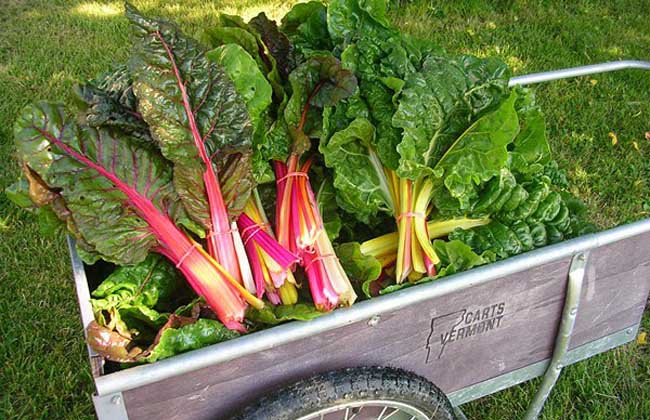
Organic agriculture refers to farming that completely or basically does not use artificially synthesized fertilizers, pesticides, growth regulators and livestock and poultry feed additives, but instead uses organic fertilizer to meet crop nutrient needs, or livestock farming that uses organic feed to meet livestock and poultry nutrient needs. China's national standard for organic agriculture was officially issued jointly by the General Administration of Quality Supervision, Inspection and Quarantine and the Standardization Administration of China on January 19, 2005, and was officially implemented starting April 1, 2005.
Contents of the national standard for organic agriculture
1. Production standard: It specifies the general specifications and requirements for organic production of crops, edible fungi, wild plants, livestock and poultry, aquatic products, bees and their unprocessed products. It applies to the entire process of organic production, mainly including crop cultivation, edible fungus cultivation, wild plant collection, livestock and poultry farming, aquaculture, bee keeping, and the transport, storage and packaging of their products.
2. Processing standard: It specifies the general specifications and requirements for organic processing. It applies to the entire process of processing, packaging, storage and transport using unprocessed products produced in accordance with GB/T19630.1 as raw materials, and also includes the content on organic textiles. The scope of application of this part is products made of cotton or silk fiber materials, excluding products such as wool.
3. Labeling and sales: It specifies the general specifications and requirements for the labeling and sale of organic products. It applies to the labeling and sale of products produced or processed in accordance with GB/T19630.1 and GB/T19630.2 and having obtained certification.
4. Management system: It specifies the general specifications and requirements for the management system that should be established and maintained in the production, processing and operation of organic products. It applies to producers, processors, operators of organic products and related supply links.
Environmental standards for organic agricultural production sites
1. According to the organic product standard GB/T19630-2005, organic production needs to be carried out under suitable environmental conditions.
2. Organic production bases should be far away from urban areas, industrial and mining areas, main traffic lines, industrial pollution sources, domestic waste sites, etc.
3. The environmental quality of the base should meet the following: soil environmental quality should comply with the Grade II standard in GB15618-1995, farmland irrigation water quality should comply with the provisions of GB5084, and ambient air quality should comply with the Grade II standard in GB3095-1996 and the provisions of GB9137.
Conversion period standards for organic agriculture
1. The starting time of the conversion period is counted from the date of submitting the certification application. The conversion period for annual crops is generally no less than 24 months, and the conversion period for perennial crops is generally no less than 36 months.
2. Newly reclaimed land, land left fallow for a long time, land cultivated in the traditional agricultural way for a long time, or farmland with sufficient evidence proving that prohibited substances have not been used for many years should also undergo a conversion period of at least 12 months.
3. During the conversion period, management must be carried out completely in accordance with the requirements of organic agriculture.
Summary: Organic agriculture refers to farming that completely or basically does not use artificially synthesized fertilizers, pesticides, growth regulators and livestock and poultry feed additives, but instead uses organic fertilizer to meet crop nutrient needs, or livestock farming that uses organic feed to meet livestock and poultry nutrient needs. China's national standard for organic agriculture was officially issued jointly by the General Administration of Quality Supervision, Inspection and Quarantine and the Standardization Administration of China on January 19, 2005.
Selection of seeds and seedlings for organic agriculture
1. Organic seeds or seedlings should be selected. When organic seeds or seedlings cannot be obtained from the market, conventional seeds or seedlings that have not been treated with prohibited substances may be used, but a plan to obtain organic seeds and seedlings should be formulated.
2. Crop types and varieties that are adapted to local soil and climate characteristics and resistant to pests and diseases should be selected. In variety selection, full consideration should be given to protecting the genetic diversity of crops.
3. The use of seeds and seedlings treated with prohibited substances and methods is forbidden.
Prevention and control of pests, diseases and weeds in organic agriculture
1. Select suitable resistant varieties, formulate appropriate fertilizer and water management, crop rotation and diversified intercropping and relay cropping plans, and improve the natural control capacity of natural enemies by building hedgerows, creating nests, promoting vegetation diversity and other methods.
2. Use mechanical control (such as traps, barriers, light and sound, etc.), biological control (such as releasing natural enemies) and physical protection (such as insect-proof nets, solar soil disinfection) to control pests and diseases, and use manual hoeing, mechanical weeding, thermal weeding, mulching and mowing, and grazing animals to control weeds.
3. Only in emergency situations is the use of the substances listed in Appendix B of GB/T19630-2005 permitted.
4. The use of artificially synthesized fungicides, insecticides, herbicides and plant growth regulators is forbidden, and the use of any form of genetically engineered products is forbidden.
The conceptual meaning of organic products
1. The principle of organic agriculture is to produce under a closed-cycle state of agro-ecosystem energy, using agricultural resources throughout the entire process, without using energy from outside agriculture (chemical fertilizers, pesticides, production regulators and additives, etc.) to influence and change the energy cycle of agriculture. It is a production system that completely or basically does not use artificially synthesized chemical fertilizers, pesticides, production regulators and feed additives. The production method uses the effective cycle of the four production factors within the ecosystem - animals, plants, microorganisms and soil - and does not break the biological cycle chain.
2. Organic products are products produced and processed according to the standards of organic agriculture and the International Federation of Organic Agriculture Movements (IFOAM). Production must establish a strict quality management system, production process control system and traceability system. In the production and processing process, the standards for organic product production, collection, processing, packaging, storage and transport must be strictly followed. The use of chemically synthesized pesticides, chemical fertilizers, hormones, antibiotics, food additives, etc. is forbidden, and the use of genetic engineering technology and the products and derivatives of that technology is forbidden. Production bases need a conversion period, and within the first 2 to 3 years before starting organic product production, pesticides and chemical fertilizers must not be used.
3. It has been certified by the organic product certification organization "IFOAM Accredited Body" (IAP for short), and a certificate has been issued.
4. Organic food is truly pure natural, pollution-free, high-grade, high-quality, safe and nutritious healthy food, including agricultural and sideline products and their initially processed and deeply processed products, such as grains, vegetables, fruits, beverages, milk, poultry and livestock products, aquatic products, seasonings, oils, fruits, honey, medicines, alcoholic drinks and so on. In addition to organic food, organic products also broadly include various truly pure natural, pollution-free, high-grade, high-quality, safe non-human food products, such as organic textiles, leather, cosmetics, forest products, furniture and other means of living, as well as feed, biological pesticides, fertilizers and other organic means of production.