What Are the Types of Agricultural Regions? A Detailed Explanation of the Main Types
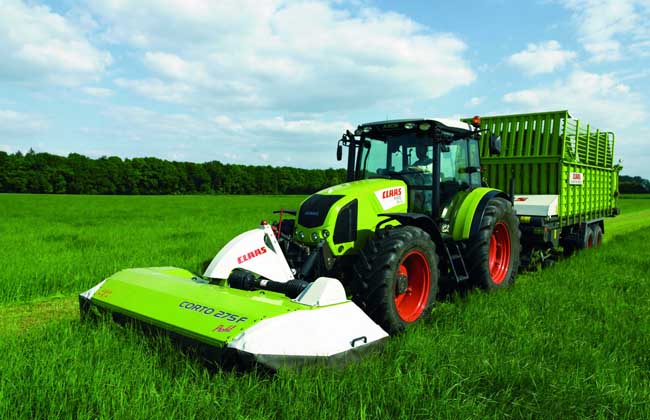
Agriculture is an industry that uses the growth and development patterns of animals and plants to obtain products through artificial cultivation. Due to the different regional distributions of animals and plants as well as regional differences in natural conditions and socioeconomic conditions, various relatively stable, regional agricultural types have formed in certain areas around the world. Let's take a look below at what types of agricultural regions there are!
Shifting cultivation in tropical rainforests
Shifting cultivation is an ancient and relatively primitive method of agricultural production. This farming method has no fixed farmland; the cultivated land is chosen in areas with dense forest and grassland. Farmers clear a patch of land in the forest by cutting and burning, and grow crops using primitive methods. When the soil fertility of this land declines and it can no longer support plant growth, the farmers abandon it and go develop another patch of land, which is why it is called shifting cultivation. This type of agriculture easily causes soil erosion and leads to the destruction of ecological balance.
Rice farming
Rice farming is a unique type of agriculture in humid tropical and subtropical regions. It is mainly concentrated in the monsoon regions of East Asia, Southeast Asia, and South Asia as well as the tropical rainforest regions of Southeast Asia. It is an intensive agriculture that requires large inputs of labor and careful cultivation. Rice farming in Asia has the following characteristics: first, smallholder management; second, high yield per unit area but a low commodity rate; third, a low level of mechanization; fourth, a large amount of water conservancy engineering; fifth, a low level of science and technology. The solutions are to increase investment in science and technology and appropriately expand the scale of cultivation.
Plantation agriculture
Plantation agriculture is large-scale, intensive commercial agriculture in tropical regions that grows a single cash crop. It is widely distributed in Latin America, Southeast Asia, South Asia, and sub-Saharan Africa. Although the state-run rubber farms on Hainan Island in China are similar to plantations in production form, they differ greatly from plantations in nature, scale, and management methods. Plantation agriculture usually involves large-scale production, and the plantation has a complete set of production and living facilities. Many plantations not only have agricultural and transport machinery, but also road systems, agricultural product processing plants, farm machinery repair shops, power and water supply, and educational and health facilities.
Commercial grain farming
Commercial grain farming is the main regional type for producing commercial grain in the world. It is a market-oriented type of agriculture, and the crops grown are mainly wheat and corn. The main distribution areas include the United States, Canada, Argentina, Australia, Russia, Ukraine, and other countries. Commercial grain farming in these countries is generally family-run, while in China it is generally state-run.
Summary: Agriculture is an industry that uses the growth and development patterns of animals and plants to obtain products through artificial cultivation. Due to the different regional distributions of animals and plants as well as regional differences in natural conditions and socioeconomic conditions, various relatively stable, regional agricultural types have formed in certain areas around the world. Let's take a look below at what types of agricultural regions there are!
Ranch grazing
Ranch grazing is an agricultural regional type that carries out large-scale commercial livestock production. This kind of agriculture is often distributed in arid and semi-arid climate zones with vast land and sparse population, where the land surface is mainly grassland vegetation, thus forming the agricultural regional type of ranch grazing. The main distribution areas include the United States, Australia, New Zealand, Argentina, South Africa, and other countries and regions.
Dairy farming
Dairy farming is a market-oriented agricultural regional type that emerged with the development of cities. Its production object is dairy cows, and its products are mainly milk and milk products such as milk powder, butter, and cheese. The distance to the market and the supply of feed are two important factors affecting dairy farming production. Dairy farming in the world is mainly distributed around the Great Lakes region of North America, Western Europe, Central Europe, and Australia and New Zealand. Dairy farming has also developed around large cities such as Beijing and Shanghai in China, where the products are mainly fresh milk.
Mixed farming
Mixed farming is an agricultural production regional type that organically combines crop cultivation and livestock raising on the same farm. It has diverse forms, but the only one with relatively stable production forms, wide distribution, and commercial production of a certain scale is the mixed grain and livestock farming of economically developed countries. Therefore, what is usually called mixed farming refers to mixed grain and livestock farming. The main distribution areas are Europe, North America, South Africa, Australia, and New Zealand. The dike-pond production in the Pearl River Delta of China is a novel type of mixed farming.
Nomadic herding
Nomadic herding refers to a subsistence type of agriculture mainly based on grazing livestock. It is a typical extensive agriculture, and this production method is suitable for arid climate areas where settled agriculture is difficult.
Summary: Agriculture is an industry that uses the growth and development patterns of animals and plants to obtain products through artificial cultivation. Due to the different regional distributions of animals and plants as well as regional differences in natural conditions and socioeconomic conditions, various relatively stable, regional agricultural types have formed in certain areas around the world. Let's take a look below at what types of agricultural regions there are!
Horticulture
Horticulture is commercial agriculture that provides vegetables, fruits, flowers, and so on to cities. The rise and development of this kind of agriculture is related to the acceleration of modern global urbanization. Farmers engaged in horticulture carry out intensive and specialized production. Some only produce vegetables, and some even produce only one product for a specialized use. This kind of agriculture is generally distributed around large cities. Later, with the development of transportation and fresh-keeping technology, horticulture also developed in areas far from cities but with suitable climate conditions.
Grain and livestock farming
Grain and livestock farming is an agricultural type that combines dryland cereal cultivation with livestock raising. It is basically concentrated in Asia, including North China and Northeast China in eastern China, the plateau areas of the Indochinese Peninsula, the southern plateau and western regions of India, Pakistan and Afghanistan, and the areas near the Tigris-Euphrates basin in West Asia. In Africa, it appears only on the Ethiopian Plateau and in Lesotho in South Africa and its nearby areas. In this agricultural region, among crops, wheat is absolutely dominant, followed by barley, oats, rye, millet, sorghum, corn, potatoes, and other food crops. Among legume crops, soybeans occupy an important position. Cash crops include cotton, tobacco, flax, hemp, and sugar beets. Due to the arid climate and unstable rainfall, irrigation plays a very important role in ensuring stable and increased yields. In livestock raising, cattle and sheep are mainly raised in India and West Asia, while in China pigs, cattle, and sheep are mainly raised, and the numbers of horses, mules, and donkeys vary from region to region. In addition to providing labor, livestock are also the main source of meat and of hides and wool.
Mediterranean agriculture
The areas around the Mediterranean have a special climate type. The climate there is hot and dry in summer and mild and rainy in winter. The obvious inconsistency between precipitation and temperature levels is its prominent feature, and crops are characterized by drought-tolerant varieties. Among crops, wheat and barley are the main ones, followed by oats and corn. Grapes, woody crops such as olive trees, and figs are widely planted cash crops in the region. The livestock raised include sheep, goats, and pigs. Therefore, the combination of drought-tolerant crops, woody cash crops, and livestock raising is the characteristic of agriculture in the Mediterranean region. In Mediterranean agriculture, the production areas of crops, fruit trees, and livestock are separated from one another in space. Farmland growing food crops is mostly distributed on flat land and gentle slopes, vineyards and olive and fig trees are mostly planted on hilly land, and the higher hillsides are places for grazing. Because livestock grazing and agriculture are separated regionally, barnyard manure cannot be used to supplement the nutrient elements of farmland, and farmland mostly relies on fallowing to restore soil fertility.
Tropical settled agriculture
Settled agriculture that gradually developed in the areas surrounding tropical shifting cultivation is called tropical settled agriculture. In Africa, tropical settled agriculture is distributed along the coast of the Gulf of Guinea in West Africa and in the drier subtropical areas to its north and on the East African Plateau. In Latin America, it is found in the Andean plateau areas north of Bolivia and in southern Mexico and the southern part of the Yucatan Peninsula. Compared with the tropical shifting cultivation areas near the equator, the natural conditions of this agricultural distribution area have lower rainfall and temperature in climate, with a distinction between dry and wet seasons. In terrain, it is mostly plateaus and mountainous areas with a small amount of river valley lowland, and there is relatively little lowland. Soil leaching is weak, the rate at which organic matter is decomposed is reduced, and the organic matter content is relatively high. Overall, the agricultural conditions are relatively favorable.