Detailed Explanation of Five Models of Creative Agriculture Abroad
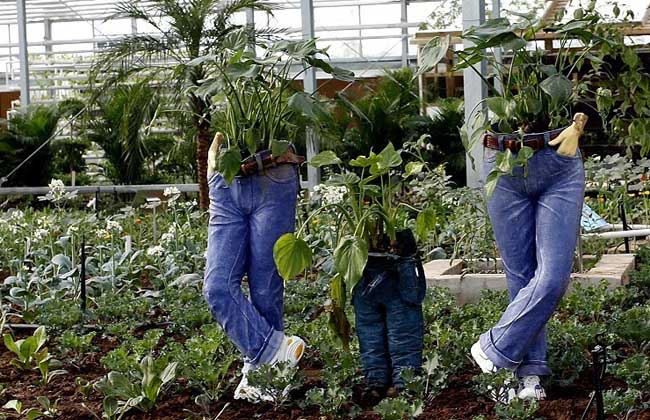
Creative agriculture originated in the late 1990s. Due to the innovative development of agricultural technology and the expansion of agricultural functions, sightseeing agriculture, leisure agriculture, refined agriculture and ecological agriculture developed one after another. At the same time, the concept of the creative industry also took shape in countries and regions such as the United Kingdom and Australia and rapidly expanded globally. Now let us take a look at five models of creative agriculture abroad!
Dutch model: high-tech foreign-exchange-earning type
The Netherlands is a world-famous lowland country. A quarter of the country's land area lies below sea level, and the per capita arable land area is only a little more than one mu. Relatively poor agricultural conditions prompted the Netherlands to continuously innovate in agriculture, thus embarking on the path of creative agriculture and becoming a world-leading agricultural power, ranking 3rd in the world after the United States and France.
The scientific and technological content of Dutch creative agriculture is world-leading. On the basis of developed facility agriculture and precision agriculture, it intensively produces high-value-added greenhouse crops and horticultural crops and possesses a complete creative agricultural production system. The Netherlands' flower industry is world-famous, and the fundamental reason lies in the outstanding scientific research development of the flower industry. The development strategy of the flower industry is centered on technology, emphasizing moderate-scale operation, highly intensive management, the development of high-tech products, and occupying the technological high ground.
The foreign-exchange-earning economic function of Dutch creative agriculture is prominent. Many Dutch agricultural products rank among the top in the world in per-unit yield, and the export values of tomatoes, potatoes, dried onions and others all rank first in the world. The Netherlands is the world's largest producer of mushrooms, exporter of dairy products, exporter of poultry eggs and producer of flowers. 67% of the world's flower import and export trade comes from the Netherlands. Since the 1990s, the Netherlands' annual net export value of agricultural products has remained at more than 13 billion US dollars, accounting for about 10% of the world agricultural trade market share. The Netherlands ranks first in the world in per capita foreign exchange earned from agricultural exports.
British model: tourism and environmental protection type
The United Kingdom is a pioneer country in the world in developing agricultural tourism. On the one hand, highly developed urbanization provided a huge target market for agricultural tourism. As the earliest country in the world to begin industrialization, by the 1970s the urban population of the United Kingdom already accounted for more than 80% of the national population. Because urban residents had long been away from nature, they developed a common psychological demand to go into the countryside, get close to nature, relieve psychological pressure and participate in outdoor activities. In particular, urban children, being very unfamiliar with the countryside and agriculture, were even more eager to experience rural life. On the other hand, rapid and sustained economic growth also gave rise to agricultural tourism. Many factors, such as a substantial increase in people's disposable income, more leisure time, an increase in private car ownership and a higher level of consumer demand, made British agricultural tourism emerge at the historic moment and develop rapidly.
In 1992, the United Kingdom had 186 farm attractions, 81 vineyards and 209 country parks, accounting for one tenth of Britain's man-made attractions. At present, nearly a quarter of all farms in the United Kingdom directly carry out agricultural tourism. The vast majority of agricultural tourism operators are farm owners. Each farm attraction provides tourists with the opportunity to participate in rural production and life and experience the scenery and atmosphere of the farm. A farm generally has an agricultural exhibition hall with a guide and commentary, introducing agricultural work, and is equipped with farm-specific handicrafts and provides food and accommodation services. Most attractions have children's entertainment programs.
Although the income from agricultural tourism may be greater than the income from agricultural production, the dominant position of agricultural production has not been weakened, and agricultural tourism has always been one aspect of farm business diversification. Starting from the farm's operating scale, operating efficiency and market demand characteristics, all attractions adhere to the orientation of small-scale operation and private management. Since more than 90% of agricultural tourists are local residents, all attractions generally use localized market strategies to expand the market and maximize profits. Most importantly, British agricultural tourism is closely combined with cultural tourism, enabling visitors to appreciate the national culture accumulated over thousands of years while enjoying picturesque rural scenery.
British farms also protect the farm environment and rural ecological environment through tourism development. As of 2009, about 25,000 farm owners in the United Kingdom had participated in agri-environmental schemes mainly aimed at protecting the rural landscape, planted hedgerows with a total length of 40,000 km, and also managed 230,000 agricultural ponds, greatly enriching agricultural tourism resources.
Summary: Creative agriculture originated in the late 1990s. Due to the innovative development of agricultural technology and the expansion of agricultural functions, sightseeing agriculture, leisure agriculture, refined agriculture and ecological agriculture developed one after another. At the same time, the concept of the creative industry also took shape in countries and regions such as the United Kingdom and Australia and rapidly expanded globally. Now let us take a look at five models of creative agriculture abroad!
German model: social life function type
Since the 1990s, while advocating environmental protection, the German government has vigorously developed creative agriculture. The main forms are allotment gardens and leisure farms.
Allotment gardens use agricultural land in cities or nearby areas, planned into small plots and rented out to citizens. Lessees can plant flowers, grass, vegetables, fruit trees and so on on the agricultural land or engage in family horticulture. Through hands-on cultivation, citizens can enjoy the pleasure of returning to nature and rural life. During the planting process, mineral fertilizers and chemical protective agents are absolutely prohibited.
Leisure farms are mainly built in forest areas or grassland areas. The forests here not only perform the environmental protection functions of water conservation, wind protection, air purification and prevention of soil erosion, but also perform the functions of popular science and environmental protection education. Schools and kindergartens often bring children here, and adults also come to participate in forest leisure tourism, coming into contact with the forest, getting to know the forest and understanding the forest under the leadership of forest rangers. Some enterprises even move projects such as team spirit training and creativity training from the company's closed conference rooms to the open forest, producing unexpected training effects. The suburbs of Munich have become a resort that people yearn for because of their unique "riding therapy project" and the series of action plans of the "green belt project" they implement.
French model: environmental protection and ecological type
France's agriculture is very developed. It is the world's second-largest exporter of agricultural products after the United States, and its agricultural output and output value both rank first in Europe. In France, from national leaders to ordinary people, there is a natural affinity for agriculture. French creative agriculture belongs to creative agriculture mainly oriented toward environmental protection and ecological functions. It is dominated by field crops, adopts relatively large-scale specialized farm production, and gradually reduces small farms.
The Greater Paris region of France is a highly urbanized area, but it still has very developed agriculture and is France's third-largest corn-producing area and a major producing area for fruits, vegetables and fresh flowers. However, the function of Paris's creative agriculture in supplying urban food is not obvious. Various food supplies for Paris are mainly completed through the extensive expressway network from all parts of the country and even other European countries. Therefore, Paris's creative agriculture breaks through self-sufficient production and highlights the ecological function of agriculture, using agriculture to separate polluted areas such as expressways and factories from residents and create a quiet and clean living environment. Agriculture is used as urban landscape, or to grow fresh fruits, vegetables, flowers and other products needed by residents, and some is used as places for citizens' sports and leisure, while some is used as educational bases for young people. In French vineyards and winemaking workshops, tourists can not only visit, but also participate in agricultural experience tours, take part in the entire winemaking process, make wine themselves and take the wine away, enjoying a different kind of pleasure.
Japanese model: multifunctional wealth-creation type
In response to the development dilemma previously faced by Japanese agriculture, Naokichi Imamura, honorary professor at the University of Tokyo and agricultural expert, first proposed the concept of the "sixth industry" as early as the 1990s, pointing out that through the mutual integration of 3 industries, the added value of agricultural products could be enhanced and the prospects for agricultural development could be changed. The "sixth industry" is a new type of agriculture that Japan is currently striving to promote. The birth of the "sixth industry" has allowed people to discover the possibilities of creative agriculture and, by stimulating agricultural vitality, has enhanced the driving force for local economic development. Therefore, more and more enterprises, capital and talent in Japan are beginning to enter the increasingly active "sixth industry."
Japanese creative agriculture is characterized by the "multifunctional wealth-creation type" and vigorously develops the ecological, experiential and leisure functions of agriculture. The "one village, one product" movement in Oita Prefecture, Japan, is a pioneer of creative agriculture. The prefecture, adapting measures to local conditions, turned some of its unique things (which could be a certain agricultural product, or a culture or a ballad) into famous products nationwide in Japan and even worldwide.
The development focus of Japanese creative agriculture is facility agriculture, processing agriculture, sightseeing and leisure agriculture and diversified agriculture. It belongs to comprehensive-function creative agriculture, with emphasis on developing the green, environmental protection, experiential, leisure and demonstrative functions of agriculture, and building "green island agriculture" with high-tech industries and mosaic multifunctional features as its two major characteristics. Japan's creative agriculture is mainly concentrated in three major metropolitan circles, namely the Tokyo circle, the Osaka circle and the Chukyo circle, and is mainly based on the production of vegetables, fruits, multiple crops and multiple varieties, mainly providing citizens with high-quality agricultural products and meeting the needs of greening the environment.