16 little-known facts about green tea, explained in detail by Tea Encyclopedia
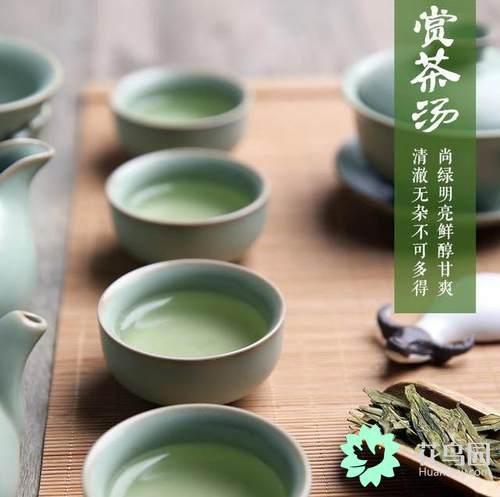
Green tea is China's national drink and ranks first among the six healthy beverages recommended by the United Nations. Why does green tea hold such a high status? Today, the editor shares with you 16 little-known facts about green tea.
Do you know all the basics about green tea?
▼
▌01
China is the homeland of tea. As early as 3000 years ago during the Xia, Shang and Zhou dynasties, there were already records of tea drinking. China's earliest local history book, "Records of Huayang Kingdom," was the first to record the history of tea cultivation in China, proving that the Emei Mountain and Mengding Mountain areas of Sichuan were the earliest tea-growing regions in China. However, in terms of production, the number one spot goes to India, not China.
▌02
Currently, more than 160 countries and regions around the world, with nearly 3 billion people, enjoy drinking tea, but the ranking of major tea-drinking countries is as follows: Turkey, Ireland, the United Kingdom, Russia, Morocco, New Zealand, Egypt, Poland, Japan, Saudi Arabia, South Africa, the Netherlands, Australia, Chile, the United Arab Emirates, Germany, Hong Kong, China, Ukraine, China... (world annual per capita tea consumption ranking and pounds).
▌03
Japan's tea trees were brought over from China. After Lu Yu's "Classic of Tea" was introduced to Japan, it developed into the Japanese tea ceremony. "Zen and Tea Are One Flavor," written by the famous eminent monk Master Yuanwu of Zhaojue Temple, was introduced to Japan over 300 years ago and is still treasured as a supreme treasure by the Japanese tea ceremony today.
▌04
Matcha, which flourished in Japan, originated in China during the Sui and Tang dynasties as powdered tea: the tender leaves of spring green tea were steamed to kill the green, then pressed into cake tea for storage, and ground into powder when consumed. In the Ming dynasty, Chinese people invented the pan-firing method of tea production, abandoned powdered tea and switched to the brewing method, which allows one to both appreciate the natural, unadorned beauty of green tea and fully enjoy its fresh fragrance.
▌05
Chengdu has more than 30,000 teahouses, and more than half of Chengdu's business deals are closed in teahouses! Chengdu people are passionate about green tea and scented tea, and their favorites are Sichuan-produced Zhuyeqing and Bitan Piaoxue. The tea drunk by Chengdu people each year could fill seven West Lakes.
Why green tea is the healthiest
▼
▌06
Green tea is China's national drink. A survey of centenarians found that four out of ten centenarians attribute their longevity to a lifelong love of tea, and eight out of ten centenarians have a tea-drinking habit. Japan is one of the countries with the longest average life expectancy in the world, which is not unrelated to their widespread drinking, eating and use of tea.
▌07
In August 1945, in the decades after the atomic bombing of Hiroshima, Japan, Japanese statistics departments found that among groups with low cancer incidence, tea farmers and habitual tea drinkers made up the majority. It can be seen that people who regularly drink tea can resist or avoid cancer. At the same time, research found that taking tea together with anti-cancer drugs can improve the drugs' efficacy.
▌08
British and American scientists reported in the journal "Allergy and Clinical Immunology" that the polyphenol compound EGCG in tea can effectively block the transmission of HIV in the human body; once immunity is established, HIV will have no chance to get close.
▌09
Green tea can prevent Parkinson's disease. Researchers from the National University of Singapore conducted a 12-year follow-up study of 63,257 Chinese Singaporeans aged 45 to 75. They found that compared with people who had no tea-drinking habit, middle-aged and elderly people who regularly drank tea had a 71% lower probability of developing Parkinson's disease.
▌10
Green tea can alleviate diabetes. Researchers from Toyama Medical and Pharmaceutical University in Japan found that: 1,300 diabetes patients who drank green tea brewed with cool boiled water for half a year, 82% of the diabetes patients' symptoms were noticeably reduced, and about 9% of the diabetes patients' blood sugar levels returned completely to normal.
Why green tea is the best for beauty
▼
▌11
Green tea is the healthiest for fat reduction and weight loss. Green tea is rich in aromatic compounds that can dissolve fat, clear turbidity and remove greasiness. Without any dieting, exercise or other means, drinking 8-10 grams of tea leaves every day, within 12 weeks the fat reduced by the tea's own effect alone is about 3 jin. Among all weight-loss products in Japan, Europe and the United States, tea products rank first.
▌12
Green tea retains the most natural nutrients in fresh leaves, is rich in tea polyphenols, and its anti-aging ability is 18 times stronger than that of VE.
▌13
Green tea provides sun protection and whitening. Green tea contains a large amount of catechins for sun protection, and VC for whitening and anti-oxidation, making it the most elegant beauty tool for summer without leaving home. Its antioxidant tests confirmed that a cup of 300 ml green tea has an antioxidant function ≈ 1.5 bottles of red wine ≈ 12 bottles of white wine ≈ 12 cups of beer ≈ 4 apples ≈ 5 onions ≈ 7 cups of fresh orange juice.
Summer pairs better with green tea
▼
▌14
In the hot summer, rather than cooling down, drinking a cup of hot tea can lower body temperature by 1-2°C after 10 minutes. In addition, green tea strengthens teeth. Green tea is rich in fluorine, tannic acid and catechins, which clear heat and kill bacteria, strengthen teeth and freshen the mouth.
▌15
Drinking tea will make you inexplicably happy. The amino acids in green tea promote the secretion of large amounts of dopamine, and dopamine is a substance that governs human emotions, pleasure and so on, making tea drinkers feel relaxed and joyful.
▌16
Green tea is a treasure from head to toe. The used tea dregs can remove fishy smells, remove scale, oil stains and odors, and can also be used as fertilizer to promote plant growth.