How to cultivate azaleas for high quality
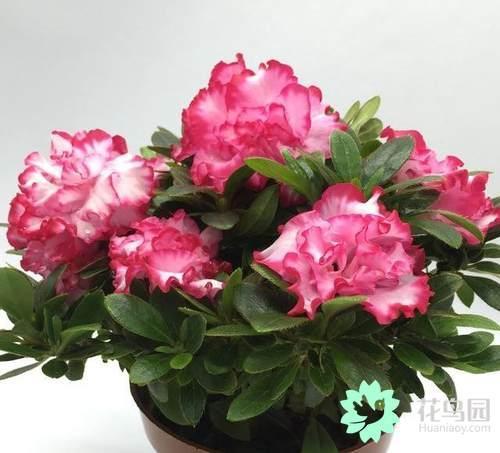
Azalea, also known as yingshanhong, is one of the ten traditional famous flowers of our country, and has the reputation of "Xi Shi among flowers." Its cultivation history is long, and its horticultural varieties are extremely rich. Because its branches and leaves are dense, it stays green through all four seasons, and its flower colors are numerous and dazzlingly bright, it can be used in garden landscaping anywhere and is suitable for potting anywhere. It has extremely high ornamental value and is deeply loved by people.
Propagation methods
Propagation can use methods such as layering, cuttings, grafting and sowing. Growing seedlings from seed is relatively slow, so unless new varieties are being bred, it is generally not used.
Layering From April to May, select robust branches in the middle part of the plant, and at 6 cm to 7 cm from the branching point, perform ring-barking of about 3 cm to 4 cm, to the extent that the xylem is injured. Wrap with plastic film in the shape of a bag, fill the bag with culture soil, and keep the soil moist regularly. Generally by October to November it can be cut and transplanted.
Cuttings From June to July, carry out softwood cuttings. Select vigorous branches of the current year with short internodes, cut them into cuttings 3 cm to 5 cm long, keep 2 to 3 leaves at the top, and insert them into loose acidic soil rich in humus. After insertion, maintain a temperature of 25°C to 30°C, and cover with a curtain to shade from sunlight. After about one month they root. The seedlings are transplanted into pots in the following spring, and can bloom in the third year. This method has a fairly high survival rate.
Sowing During flowering, carry out artificial pollination and harvest the seeds. Evergreen species should be sown promptly in a greenhouse in the same year; deciduous species can be stored until spring for sowing. For the sowing soil, mountain soil from the azalea's growing area is best, or acidic leaf mold and loam mixed in equal halves can also be used. Because the seeds are tiny, sow them carefully in a warm bed or flowerpot, maintain 18°C to 20°C, and they germinate after about half a month. After 5 to 6 months of cultivation they can be transplanted.
Division and grafting The grafting method is mainly used to propagate valuable varieties, and the survival rate can reach more than 90%. Generally from April to August, use two-year-old thick azalea as rootstock and adopt softwood cleft grafting. After grafting, they can survive in 40 to 50 days, and are cut from the mother plant after about 60 days. In winter, move them indoors to a sunny place for care, and they can bloom in 1 to 2 years.
Requirements for soil and containers
Azaleas are suitable for growing in fertile, loose acidic soil, requiring soil with good drainage, water retention and aeration, high humus content, good granular structure, rich nutrients, and good water and fertilizer retention, with a pH value of 4.5 to 6.5. Azalea culture soil can be natural humus soil selected from forests, or it can be prepared artificially. Preparation method: 3 parts larch, 3 parts leaf mold or weeds, 4 parts turf soil, mix them evenly, pile them together and let them rot; alternatively, go to a forest where larch is concentrated and dig up the surface larch humus soil to use as natural culture soil for azaleas.
When cultivating in the open field, it is best to choose a place with slightly higher terrain and a slight slope to facilitate drainage; it can also be planted together with deep-rooted tree species, which is beneficial to the growth of the azalea root system and can also provide shade from the tree species. When planting, the seedlings must be kept with a soil ball, and the planting hole should be large. When planting, fill the bottom and surrounding areas with more fertile humus soil.
Potting and repotting care
Potting is most suitable from September to October (when the temperature is 15°C to 20°C), and can also be done in March before the flower buds begin to swell. After potting, place in semi-shade, water thoroughly, and it is best to maintain soil moisture content at about 30%; if too wet, it easily causes root rot. Before the azalea's leaf buds begin to swell, apply dilute cake fertilizer water once every 20 days (5% to 10% fertilizer, 95% to 90% water); after flowering, apply supplementary fertilizer once every ten days (20% fertilizer, 80% water) to promote lush new shoots and leaves. Azaleas are averse to direct sunlight and the slanting sunlight of summer evenings. From early summer to early autumn, under conditions of daytime temperature above 27°C and nighttime temperature of 18°C, flower buds can form in large numbers.
The azalea root system expands slowly, so it does not need repotting every year. However, to prevent a decline in the fertility of the potting soil and deterioration of the soil structure, it should be repotted once every 2 to 3 years. The best time for repotting is after flowering, that is, from early May to late June. At this time it is warm and humid, which is the period of most vigorous growth for azaleas, and some root damage during repotting does not greatly affect their growth.
Watering
Azaleas like moisture and fear drought, but they are not tolerant of waterlogging and are especially sensitive to water. During the growing period, relative humidity should be maintained at 60% to 70%, and near flowering the relative humidity can reach about 80%. Therefore, when cultivating azaleas, special attention must be paid to controlling water and air humidity. For watering, acidic, clean and hygienic river water or pond water is best. The principle is to water when dry and stop when wet, with emphasis on watering thoroughly. Avoid insufficient watering many times, wetting only the surface soil and forming "waist-cut water," which causes the lower root system to lack water and affects normal growth; however, do not water too much either, as this causes root rot.
For newly potted or newly repotted azaleas, the first watering should be thorough. Generally it should be watered twice, and sometimes it needs to be watered several times. During the vigorous growth period and the flowering and bud-setting period, the amount of watering should be appropriately increased, but do not sprinkle water on the flowers. Generally, watering once each in the morning and evening is suitable. During slow growth and in winter, it is enough to keep the soil from drying out. To judge whether the soil is dry or wet, do not only look at the surface layer of the soil; touch the soil with your hand to feel whether it is dry and hard. If your finger cannot push into it, it means it is already very dry and you should water immediately. If it is in a pot, a dark pot wall indicates that the potting soil is moist; if the pot wall turns white, then it should be watered.
Azaleas have relatively high requirements for air humidity. Frequently spraying water on the leaves can increase air humidity and lower temperature. In hot seasons, the frequency of spraying water should be increased.
Fertilization
The azalea's root system is fibrous, as fine as hair, so as long as the fertilizer concentration is even slightly improper, it will cause fertilizer damage. In particular, using raw fertilizer, applying excessive fertilizer, and fertilizing during the high-temperature dormant period will cause even more fertilizer damage.
When fertilizing, grasp the principle of light fertilizer applied frequently. In spring from March to April, apply phosphorus fertilizer once, and apply alum fertilizer water once every 10 days. From May to July, apply alum fertilizer water twice a month. Before flowering, apply phosphorus fertilizer once every 10 days, for 2 to 3 times in succession. After flowering, apply nitrogen-phosphorus mixed fertilizer 1 to 2 times.
In midsummer, azalea growth gradually slows and enters a semi-dormant state. To prevent old leaves from falling and new leaves from turning yellow, fertilization should not be applied. When entering the second vigorous growth period, apply 1 to 2 times liquid fertilizer mainly based on phosphorus fertilizer to meet the needs of growth and bud setting. The fertilization interval is about half a month, and the fertilizer must be thoroughly decomposed and mixed with 90% water. After each fertilization, water once with clear water, and loosen the soil promptly to facilitate aeration. Fertilization should be stopped during winter dormancy and the plum rain season.
Pay attention to heat protection and cold resistance
Azaleas fear both intense heat and severe cold. The most suitable growth temperature is 12°C to 25°C. When the temperature exceeds 30°C or falls below 5°C, growth stagnates and enters a dormant state. Therefore, in summer they should be protected from the sun and shaded, and in winter attention should be paid to cold protection and warmth.
In summer, to prevent direct sunlight, the flowerpots can be placed indoors, but because indoor light is too weak and ventilation and humidity are insufficient, sometimes a large number of leaves fall, so at night they should be moved outdoors.
For open-field cultivation in winter, film should be used at night for cold protection to prevent frost damage.
Pruning and shaping
Azalea plants are low, with strong sprouting ability, dense branches, and many overlapping and horizontally growing branches, which are unfavorable for ventilation and light transmission and also affect ornamentation. Therefore, the plant needs to be adjusted through pruning to maintain a perfect plant shape.
Pinching is mostly carried out on young plants, artificially removing the terminal buds, or removing a small section of young shoots, to control plant height and promote the sprouting of side branches. Bud removal is to control overly early and excessive flowering and reduce nutrient consumption. From autumn and winter to before flowering, removing part or all of the flower buds is beneficial for shoot growth and cultivating the crown.
Pruning is generally carried out after flowering in spring and in autumn, removing dead branches, inward-facing branches, weak branches and leggy branches, as well as some overlapping and crossing branches. According to the actual growth of the plant shape, azaleas can be pruned into umbrella and pagoda shapes.
To cultivate the umbrella shape, the lower main trunk should be encouraged to produce more side branches and extend in all directions. When shaping, first use thick galvanized wire to make an umbrella-shaped frame on the pot, then distribute the branches evenly on it and bind them with plastic strips. When flowering, the flowers form a large flower ball, which is very beautiful and spectacular.
To cultivate the pagoda shape, pruning should begin when the trunk is determined. First shape the bottom layer of branches, then prune upward layer by layer, finally making the entire plant shape appear pagoda-like.
Management after flowers fade
Potted azaleas often fail to continue blooming the next year, and some even wither and die. The cause is poor management, so strengthening management after the flowers fade is especially important.
After the azalea flowers fade, it should gradually be placed in a shaded place, and water should be sprayed frequently, letting it receive direct sunlight in the morning and evening. After the flowers fade, promptly cut off the remaining flowers and the lower old leaves to reduce nutrients consumed by seed formation and promote growth and the formation of new flower buds. After the flowers fade, repot and change the soil according to the situation. Ten days after repotting, apply liquid fertilizer once every 10 days, mainly nitrogen fertilizer supplemented by phosphorus fertilizer, and it is better to apply it dilute rather than concentrated. After entering November, let it see more sunlight and pay attention to ventilation. Stop fertilizing, and just keep the potting soil slightly moist.
Before the new buds begin to swell in early spring, old plants should also be pruned for rejuvenation. Leave the branches about 30 cm and cut off the upper part. However, note that this should not be done all at once; it can be pruned in stages, each time selecting 1/5 to 1/3 of the branches for short pruning, so that flower viewing is not affected. After pruning, fertilizer should be added and careful management carried out to promote flower bud development and bring them into a normal growth state.