This flower has three colors on one plant and a fragrance like jasmine, blooms for more than 300 days, and anyone can grow it well
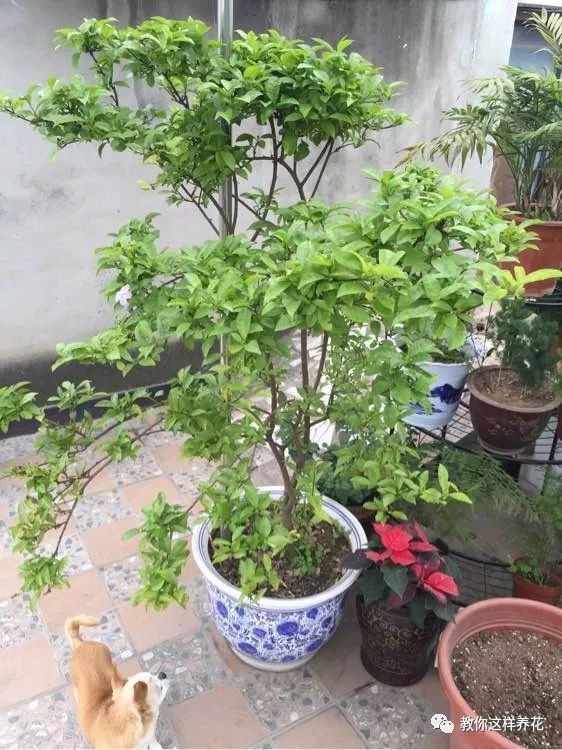
Two-color jasmine, also called yesterday-today-and-tomorrow, is a flower of the Solanaceae family, genus Brunfelsia, and has nothing to do with jasmine. The blooming of two-color jasmine is quite interesting: the flowers are deep blue when they first open, then turn light purple, and finally white. Because they bloom at different times, you can see multiple colors on the same plant, very beautiful.
“
Two-color jasmine"
Two-color jasmine is native to the Americas. Because it smells of jasmine from a distance, and one plant has multiple colors, it was named two-color jasmine, or yesterday-today-and-tomorrow. Two-color jasmine blooms twice a year: the first time in early spring, with many flowers and strong fragrance; the second time in golden autumn, with fewer flowers. But if managed well with sufficient fertilizer, it can bloom from March to October, once every month. Two-color jasmine is fragrant and beautiful, and is an excellent potted plant.
-Soil-
Two-color jasmine can be grown in loose, breathable, well-drained, slightly acidic soil. Generally, garden soil, leaf mold, coarse sand and an appropriate amount of organic fertilizer are mixed together, and the pot can be repotted once every spring.
-Watering-
Two-color jasmine likes a humid environment. During the growing season, water when the soil is dry and let it dry out between waterings, but it must not stay too wet for long or have standing water; two-color jasmine is not tolerant of waterlogging and will rot its roots. In high summer temperatures, you should also spray the leaves 2-3 times and sprinkle water around it to increase air humidity and lower the temperature. When the temperature drops in autumn and winter, watering should be controlled; keeping the potting soil on the dry side makes it easier to get through winter. After each flowering, when new shoots grow to about 3 cm, control watering to promote flower bud differentiation, which helps it bloom every month.
-Fertilizing-
Two-color jasmine likes fertilizer fairly much. Normally, fertilize about once every 10 days, mainly with phosphorus and potassium fertilizer, and you can also spray 0.2%-0.3% monopotassium phosphate on the leaves together with watering to promote flower bud differentiation. If symptoms such as yellow leaves caused by chlorosis appear, also apply more ferrous sulfate solution. After each flowering, apply 1 topdressing of thin cake fertilizer water to help it recover. Fertilizing should stop in winter to help it overwinter safely.
-Temperature-
Two-color jasmine is not very cold-tolerant. Its suitable growing temperature is 20-30°C; at this temperature its branches and leaves are lush and it grows vigorously. When the winter temperature is below 10°C, growth stops. Move it indoors promptly in winter, at least keeping it above 0°C, to avoid cold damage.
-Light-
Two-color jasmine likes a sunny environment. Daily light exposure must not be less than 4 hours, which ensures abundant flowering. It dislikes harsh sun exposure, so appropriate shading is needed in summer. With excessive exposure, the flowers and leaves easily curl.
-Propagation methods-
Two-color jasmine can be propagated by sowing, cuttings and layering.
As long as the temperature is suitable, two-color jasmine can be sown all year round. First pre-germinate the seeds by soaking them for 12-24 hours. After the seeds absorb water and swell, put them into loose, well-drained potting soil, cover with a thin layer of soil, moisten the soil, and wait for germination.
Two-color jasmine cuttings can be taken in late spring or early autumn. Choose branches of the current year and cut them into sections 5-15 cm long, each section with more than 3 leaf nodes. Insert them into coarse sand or vermiculite granules and keep them moist; at around 20°C, they can take root in 2-3 months.
It can also be propagated by layering, and roots can form in about 4-6 weeks.
Two-color jasmine is really beautiful
It is a great potted flower
If you like it too, grow a pot of it
Show it to flower lovers who need it!